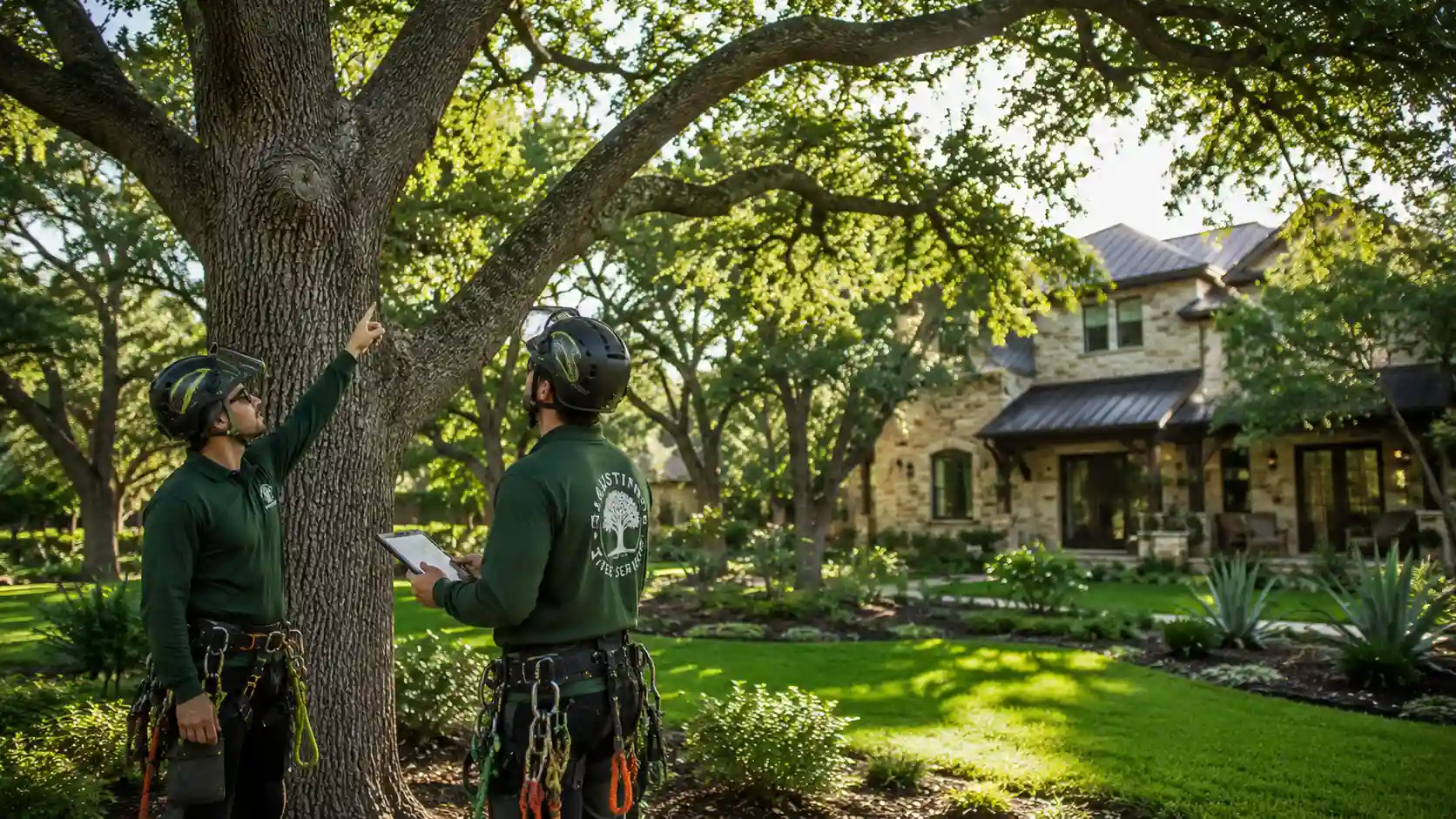
Austin Arborist Services
Austin Tree Services TX provides certified arborist services to homeowners and commercial property owners across Austin and Central Texas. Our arborists apply ISA credentials and ANSI A300 standards to tree health assessment, disease diagnosis, structural risk evaluation, and City of Austin Tree Ordinance documentation — the services that require trained expertise, not just equipment. Call (512) 729-9018 for a free on-site assessment.
What is a certified arborist in Austin, TX?
A certified arborist in Austin, TX is a tree care professional who has passed the International Society of Arboriculture (ISA) certification examination covering tree biology, soil science, disease diagnosis, pruning standards, risk assessment, and safety practices. ISA certification requires 3 years of full-time arboricultural experience and ongoing continuing education units (CEUs) to maintain.
ISA certification is the primary professional credential in arboriculture. It is distinct from general tree service licensing. A licensed tree service company may hold a business license, carry insurance, and operate legally in Austin — but none of those requirements include training in tree biology, disease identification, or arboricultural science. The ISA credential requires demonstrated knowledge in all of those domains, validated through a proctored examination administered by the ISA Credentialing Council.
ISA Certification — Examination Subject Areas
The ISA Certified Arborist examination tests competency across 8 domains of arboricultural knowledge:
- Tree biology — growth patterns, cambium function, vascular system anatomy, wound response
- Soil science — soil composition, nutrient availability, pH effects on root health (critical in Austin’s alkaline limestone soils)
- Tree identification — species recognition, native vs introduced species, growth habit characteristics
- Diagnosis of tree problems — disease, pest, abiotic disorder, mechanical damage identification
- Pruning — ANSI A300 standards, cut placement, timing, species-specific protocols
- Tree risk assessment — structural failure probability, consequence of failure, acceptable risk thresholds
- Tree installation and establishment — planting depth, root zone management, post-planting care
- Urban forestry — soil compaction, hardscape impact, construction damage mitigation
ANSI A300 is the American National Standard for tree care operations. It defines how pruning cuts should be placed relative to the branch collar, how much canopy can be removed in a single pruning event (maximum 25% for most species), and how fertilization and soil treatments should be applied. ISA-certified arborists are tested on ANSI A300 standards. General tree crews are not required to know them. Learn more about Austin Tree Services TX and our team’s qualifications.
What does an Austin arborist do that a tree crew cannot?
An ISA certified arborist in Austin performs 5 services that a general tree crew cannot: disease diagnosis using laboratory-confirmed identification methods, City of Austin TORA documentation for protected and heritage tree permits, formal structural risk assessment using ISA Tree Risk Assessment Qualification (TRAQ) methodology, fungicide treatment planning, and ANSI A300-compliant pruning specification. These are professional services requiring credentialed expertise.
The distinction matters most in 5 specific situations that Austin homeowners regularly encounter:
| Situation | What a general crew does | What a certified arborist does |
|---|---|---|
| Suspected oak wilt | Removes visually declining branches or recommends full removal based on leaf appearance alone | Identifies veinal necrosis pattern, assesses canopy progression rate, determines whether propiconazole injection or root trench suppression is indicated, and documents the diagnosis |
| Protected or heritage tree removal | Cannot provide the documentation the City of Austin requires for a TORA application — the permit cannot proceed without a certified arborist report | Assesses the tree, documents species, size, DBH, condition, and justification for removal in a written arborist report that satisfies City of Austin Development Services requirements |
| Tree showing structural weakness | Recommends removal or basic trimming based on visual assessment without quantifying failure probability | Performs an ISA TRAQ-methodology risk assessment that assigns a probability of failure, consequence category, and risk rating — producing a defensible written record |
| Canopy thinning request | May remove more than 25% of canopy (the ANSI A300 maximum), apply improper topping cuts, or prune at the wrong seasonal window for oak wilt risk | Specifies pruning to ANSI A300 standards, seals oak wounds immediately, and schedules pruning outside the February–June oak wilt transmission window |
| Decline of unknown cause | Treats visible symptoms without identifying the underlying cause — often resulting in repeat service calls that address symptoms but not the source | Diagnoses root cause using visual assessment, soil testing, and — when oak wilt or fungal disease is suspected — Texas A&M Plant Pathology Lab sample submission |
Our tree surgeon team in Austin works alongside arborist assessments to execute structural interventions — removal, heavy pruning, cabling — based on the arborist’s written diagnosis and recommendation. The arborist determines what needs to be done; the tree surgeon crew executes it safely.
When does an Austin homeowner need to hire an arborist?
An Austin homeowner needs to hire a certified arborist in 6 specific situations: suspected oak wilt infection, planned removal of a protected or heritage tree requiring City of Austin TORA documentation, construction activity within 20 feet of a regulated tree’s critical root zone, structural risk concern on a tree near occupied structures, post-storm damage assessment to determine preservation vs removal, and pre-purchase property inspection of a home with mature trees.
-
01
Suspected oak wilt infection.
Oak wilt (Ceratocystis fagacearum) is Central Texas’s most destructive tree disease. Live oak is the most frequently infected species in Austin. Symptoms — veinal necrosis, rapid canopy thinning, leaf drop outside of normal seasonal timing — overlap with drought stress, hypoxylon canker, and alkaline soil chlorosis. Accurate diagnosis requires a certified arborist who can distinguish between these conditions by assessing the pattern of spread across the property. Misdiagnosis leads to either unnecessary tree removal or failed treatment of an active oak wilt infection that spreads underground through root grafts to neighboring trees within 50 to 100 feet.
-
02
Removal of a protected or heritage tree.
Austin’s Tree Ordinance (Land Development Code Section 25-8) classifies trees with a trunk diameter at breast height (DBH) of 19 inches or more as protected trees. Live oaks, Texas ash, and pecans with a DBH of 24 inches or more are heritage trees carrying additional protections. Removing either category without a City of Austin permit carries fines of up to $2,000 per caliper inch of trunk diameter — a fine that can reach $40,000 to $80,000 on a mature live oak. A certified arborist provides the written assessment report the City requires for a Tree Ordinance Review Application (TORA).
-
03
Construction activity near regulated trees.
Austin’s Environmental Criteria Manual defines a critical root zone extending 1 foot of radius per inch of trunk diameter from the tree’s base. Any soil disturbance — trenching, grade change, compaction from equipment — within this zone requires a Tree Ordinance Review Application and, for heritage trees, arborist oversight throughout the construction process. Homeowners planning additions, pool installations, or driveway expansions near large trees should have an arborist assess the root zone before any ground is broken.
-
04
Structural risk concern near occupied structures.
A tree with a visible crack at a branch union, co-dominant stems, or heavy overextended limbs over a rooftop or play area requires a formal structural risk assessment before any intervention is planned. An ISA TRAQ-qualified arborist assigns a failure probability rating, consequence category, and residual risk level — producing written documentation that informs the decision between cabling and bracing, crown reduction pruning, or tree removal.
-
05
Post-storm damage assessment.
After a Central Texas severe weather event, trees that sustained major crown damage but remain standing require arborist evaluation before any remediation work begins. A structurally compromised tree may appear stable and collapse unexpectedly under the next wind event. The arborist determines which trees can be preserved with corrective pruning or cabling, and which require removal. This assessment is also necessary for insurance claims documentation.
-
06
Pre-purchase property inspection.
A home purchase with established mature trees — particularly live oaks in Austin’s older neighborhoods like Tarrytown, Barton Hills, Hyde Park, and Travis Heights — should include an arborist inspection of the tree canopy. The inspection identifies active oak wilt infections, structural failure risks, and trees that fall under heritage protection thresholds (which affect what the new owner can legally do with them). Discovering a $40,000 heritage tree fine liability after closing is significantly more expensive than a pre-purchase arborist inspection.
How does an Austin arborist diagnose tree disease?
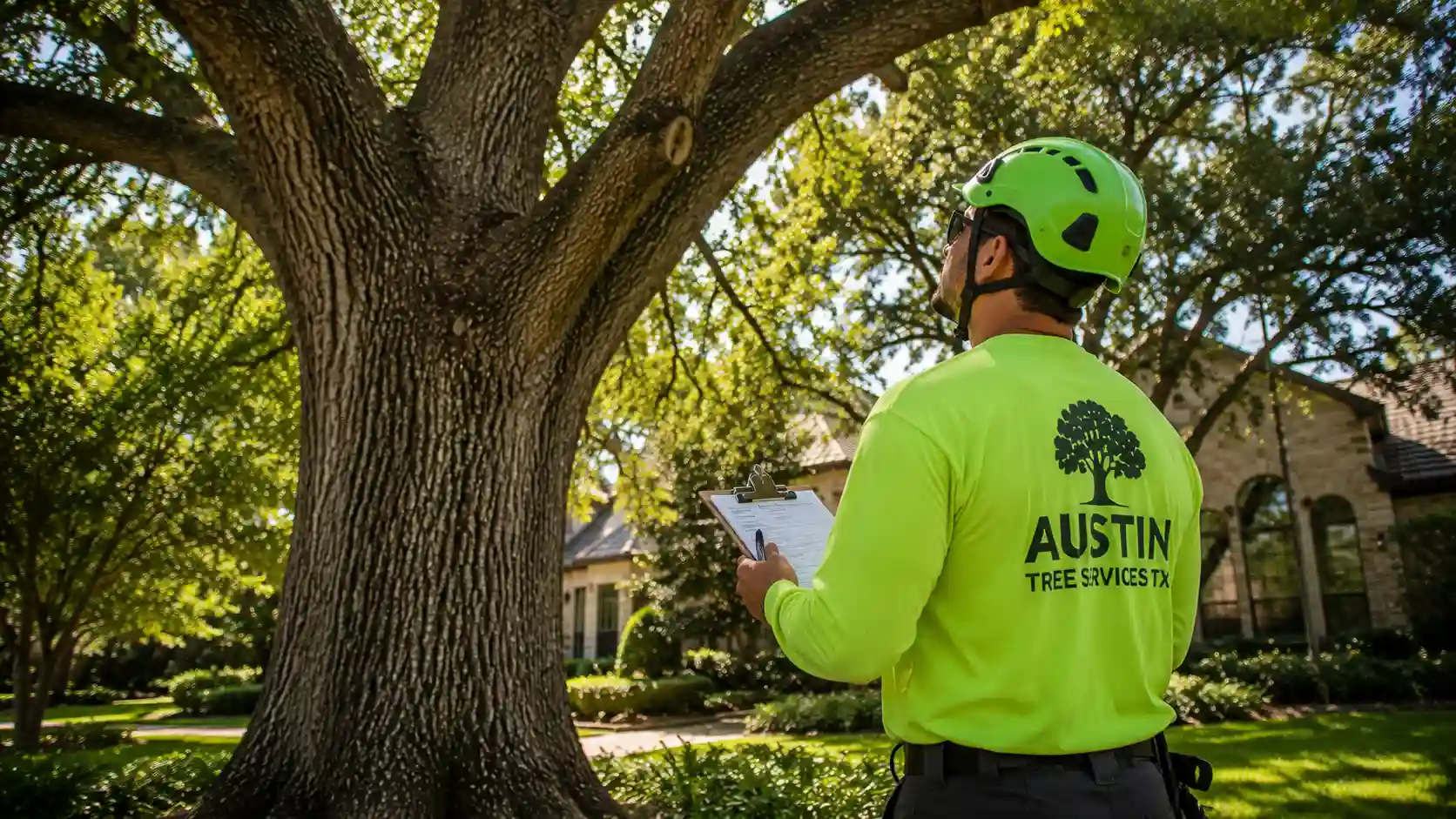
An Austin arborist diagnoses tree disease through a 3-stage process: visual symptom assessment of foliage, bark, and root collar; pattern-of-spread analysis across the property to distinguish infectious diseases from abiotic disorders; and laboratory sample submission to the Texas A&M Plant Pathology Lab when visual diagnosis cannot confirm or exclude oak wilt or other fungal pathogens. Accurate diagnosis precedes all treatment recommendations.
Austin’s tree population faces 4 primary disease and health challenges that certified arborists are trained to differentiate from each other and from drought stress — the condition that most frequently mimics disease symptoms in Central Texas:
-
01
Oak wilt (Ceratocystis fagacearum)
Central Texas’s most destructive tree disease. Transmitted by nitidulid beetles depositing spores in fresh pruning wounds (February–June peak risk) and through root grafts between live oaks within 50–100 feet of each other. Visual indicator in live oaks: veinal necrosis — yellow or brown discoloration following leaf vein structure. Confirmed by pattern of spread, not individual leaf appearance. Treatment: propiconazole (Alamo) trunk injection for early-stage infections; root trench suppression to break underground transmission between trees.
-
02
Hypoxylon canker (Hypoxylon atropunctatum)
Secondary fungal pathogen that attacks drought-stressed and declining oaks. Does not infect healthy trees — it is an opportunistic disease that confirms underlying stress. Visual indicators: peeling bark exposing silver-gray underlayer, black powdery fungal spores (conidia) on the exposed surface. No effective treatment once canopy is significantly affected. Management focuses on reducing predisposing stress (deep root fertilization, appropriate irrigation) in nearby healthy oaks. Infected trees are candidates for removal to reduce spore pressure.
-
03
Alkaline soil interveinal chlorosis
Not a disease — a nutrient availability disorder caused by Austin’s high-pH limestone-derived soils. Iron and manganese become chemically unavailable to trees at soil pH above 7.5. Visual indicator: yellowing between leaf veins (interveinal) while veins remain green, beginning in young leaves. Commonly misdiagnosed as oak wilt. Correctly diagnosed through soil pH testing and leaf tissue analysis. Treatment: deep root injection of chelated iron and manganese, soil acidification, and organic matter addition. Austin tree fertilization programs address this directly.
-
04
Root rot and fungal crown rot
Multiple fungal pathogens (Phytophthora, Armillaria, Ganoderma) attack root systems of trees in poorly drained soils, compacted clay, or areas with buried root collars. Common in Austin properties where grade changes during landscaping or construction have covered the root flare. Visual indicators: mushrooms or fungal conks at the base, softwood at the root collar, progressive canopy thinning from the top down. Diagnosis requires root collar excavation and, in advanced cases, laboratory identification of the specific pathogen.
When visual diagnosis cannot definitively confirm or exclude oak wilt — a situation that occurs when symptoms overlap with drought stress — Austin Tree Services TX submits tissue samples to the Texas A&M Plant Pathology Lab for laboratory confirmation. Treatment decisions for oak wilt require confirmed diagnosis because the intervention (propiconazole injection at $150 to $400 per tree; root trench suppression at $2,000 to $8,000 per property) is significant enough to justify certainty before proceeding.
Does Austin’s Tree Ordinance require an arborist report?
Yes. The City of Austin’s Tree Ordinance requires a certified arborist’s written assessment report for Tree Ordinance Review Applications (TORA) involving protected trees — those with a diameter at breast height (DBH) of 19 inches or more — and heritage trees (live oaks, Texas ash, and pecans with a DBH of 24 inches or more). Removing a regulated tree without an approved TORA carries fines of up to $2,000 per caliper inch of trunk diameter.
Austin passed one of the United States’ first tree protection ordinances in 1983. The Heritage Tree Ordinance followed in 2010. Under Land Development Code Section 25-8, tree regulation on private residential property operates across 3 classifications:
-
01
Regulated trees (8 to 18 inches DBH).
Trees in this size range require documentation when impacted by development requiring a building permit. They are not individually regulated for removal outside of permitted construction — but a certified arborist assessment is still recommended to confirm the tree’s size before any removal work begins. DBH measurement uses a flexible tape measuring circumference at 4.5 feet above ground, divided by 3.14.
-
02
Protected trees (19 inches DBH or more).
Removal or significant impact requires a Tree Ordinance Review Application (TORA) submitted through the City of Austin’s Austin Build + Connect (AB+C) Portal. The TORA application requires a certified arborist’s written report documenting species, measured DBH, tree condition, proximity to structures, and justification for removal. The City Arborist Program reviews the application — typical turnaround is 2 to 4 weeks for standard applications, longer for heritage tree cases. The arborist report is not optional; the application will not be processed without it.
-
03
Heritage trees (19 inches DBH+ for protected species; 24 inches DBH+ for live oaks, Texas ash, and pecans).
Heritage trees carry the highest level of protection under Austin’s ordinance. Removal requires demonstrating that the tree poses an imminent hazard, is dead or diseased beyond treatment, or that no feasible alternative exists. The arborist report must document the specific condition and justification with greater detail than for protected trees. Heritage tree violations carry fines up to $2,000 per caliper inch of trunk diameter — meaning an unpermitted removal of a 30-inch live oak could result in a fine of $60,000.
Emergency removal — trees posing imminent threat to life or property — can proceed without prior TORA approval, but the property owner must notify the City Arborist Program immediately after the emergency removal and provide documentation including photographs, the arborist’s assessment of the imminent hazard, and the circumstances of the emergency. Austin Tree Services TX manages the full TORA documentation process for protected and heritage tree removal projects — assessment, report preparation, application submission, and communication with the City Arborist Program.
What Austin tree services require a certified arborist?
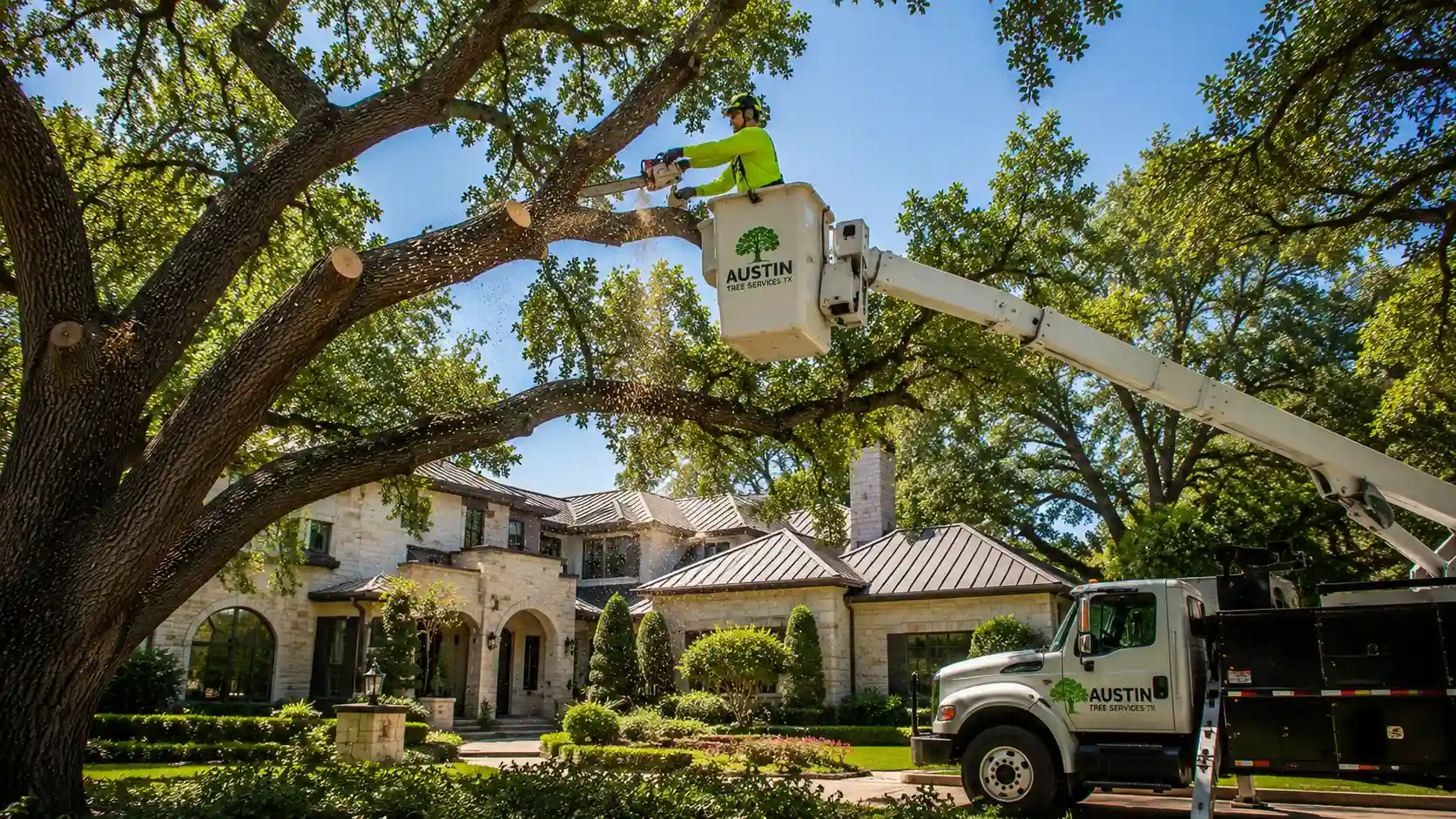
The Austin tree services that require or most benefit from certified arborist involvement are: structural risk assessment and cabling, tree health diagnosis and fertilization program design, protected and heritage tree removal with TORA documentation, post-storm damage evaluation, tree planting species selection for Austin’s climate and soil conditions, and ongoing tree health monitoring programs. Each service involves decisions that require arboricultural training to execute correctly.
-
01
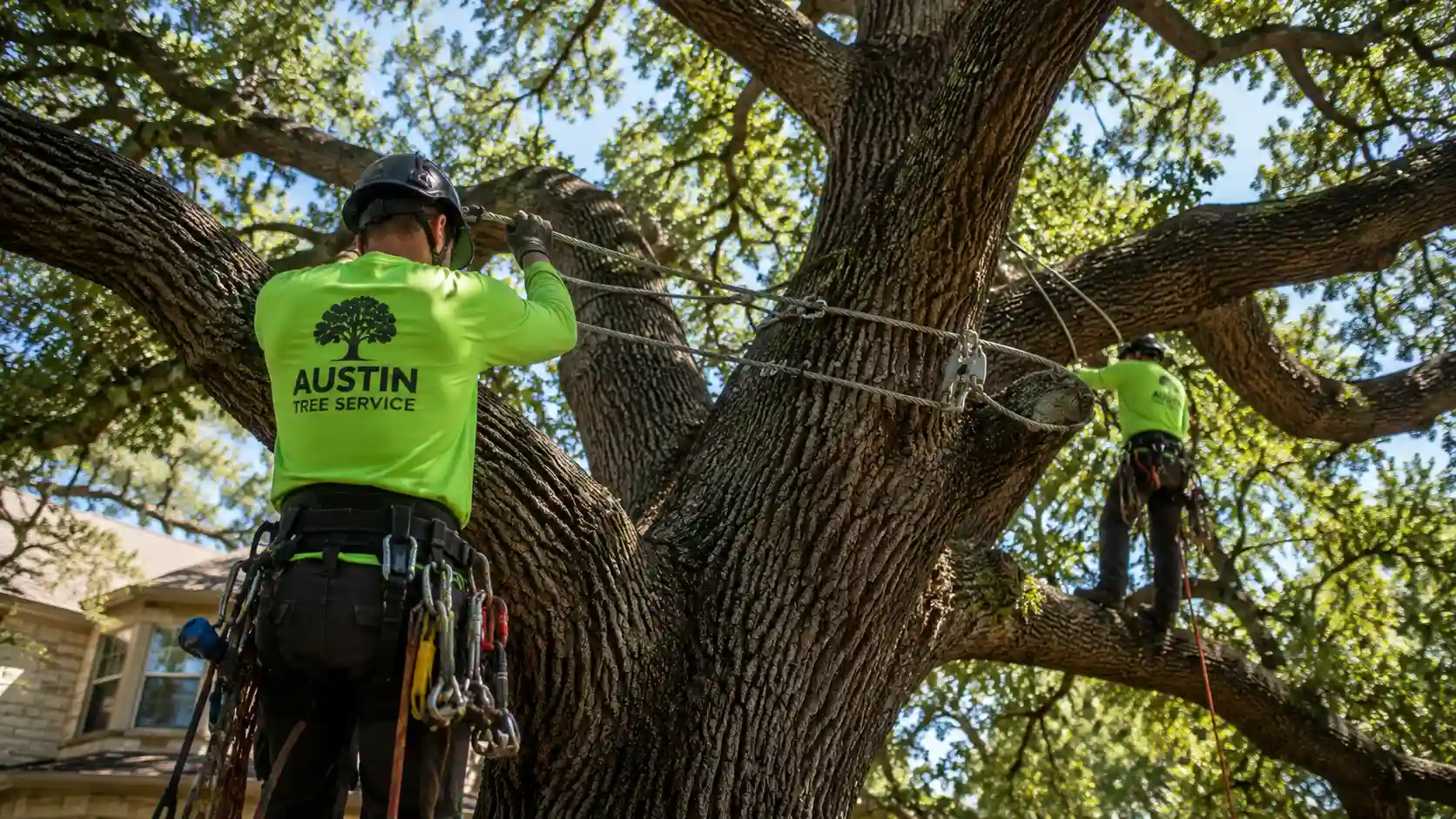
Tree Cabling & Bracing
An arborist determines whether cabling is the correct intervention for a structurally compromised tree, selects anchor points based on crown load analysis, and specifies cable tension to ISA standards. Cabling without arborist assessment risks installing support hardware on a tree that should be removed.
-
02
Tree Trimming & Structural Pruning
ANSI A300 pruning standards specify cut placement, canopy removal limits (25% maximum), and the seasonal timing required to avoid oak wilt transmission. An arborist specifies the pruning scope and supervises execution on complex or high-value trees — preventing topping, lion-tailing, and flush cutting that shorten tree lifespans.
-
03
Tree Removal (Protected & Heritage Trees)
Protected and heritage tree removal in Austin requires a certified arborist’s written report for the City of Austin TORA application. The arborist documents species, DBH, condition, and removal justification. Without this report, the TORA application cannot be processed and the removal cannot proceed legally.
-
04
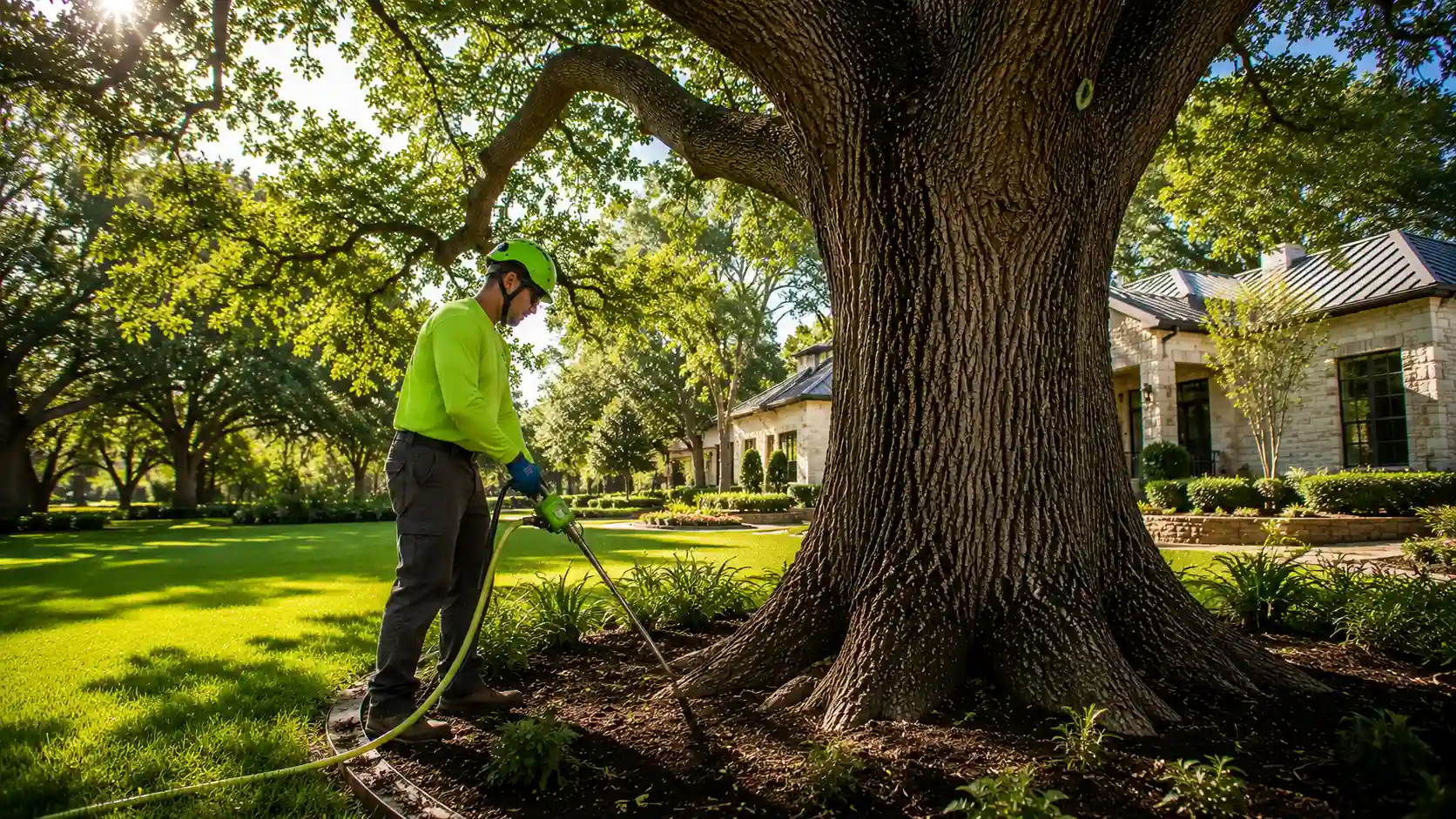
Tree Fertilization & Soil Health
Austin’s alkaline limestone-derived soils create iron and manganese deficiencies that cause interveinal chlorosis in oaks and elms. An arborist diagnoses whether canopy yellowing is soil-related or disease-related before prescribing a fertilization program — preventing the waste of treating the wrong condition.
-
05
Tree Planting
Species selection for Austin’s clay soils, limestone substrates, drought cycles, and oak wilt pressure requires arboricultural expertise. An arborist recommends species resistant to Austin’s primary disease pressures, specifies planting depth to avoid root collar burial, and designs the root zone management program for establishment.
-
06
Stump Grinding
Stumps from oak wilt-infected trees require specific handling — grinding and rapid debris disposal — to prevent nitidulid beetles from using the stump as a sporulation site that transmits oak wilt to nearby healthy oaks. An arborist advises on post-removal stump management when oak wilt is confirmed or suspected.
-
07
Stump Removal
Root system assessment prior to stump removal determines whether significant lateral roots from a removed heritage tree extend under adjacent structures — a condition that affects the removal method and the risk to foundations, paving, and irrigation systems during extraction.
For non-emergency arborist consultations — tree health assessments, disease diagnosis, TORA report preparation — Austin Tree Services TX provides free on-site evaluations. Contact our team to schedule an assessment at your property.
How much does an arborist cost in Austin, TX?
Arborist services in Austin, TX range from $150 to $600 for a standard on-site tree health assessment to $250 to $500 for a City of Austin TORA arborist report. Ongoing tree health monitoring programs range from $400 to $800 per year depending on the number of trees and the frequency of site visits. Austin Tree Services TX provides free initial on-site assessments for all residential and commercial properties.
| Arborist Service | Typical Cost Range | What It Covers |
|---|---|---|
| Initial on-site tree assessment | Free at Austin Tree Services TX | Visual health evaluation, structural risk identification, disease symptom screening, service recommendation |
| Formal written risk assessment | $200 – $450 | ISA TRAQ-methodology structural evaluation, failure probability rating, consequence category, written report for insurance or legal purposes |
| TORA arborist report | $250 – $500 | Written species identification, DBH measurement, condition assessment, and removal justification documentation for City of Austin TORA application on protected or heritage trees |
| Oak wilt diagnosis | $150 – $350 | On-site symptom assessment, pattern-of-spread analysis, Texas A&M lab sample submission when visual diagnosis is inconclusive, written diagnosis report |
| Annual tree health monitoring | $400 – $800 per year | 2 to 4 site visits per year, seasonal health checks, soil testing, fertilization program adjustment, disease and pest monitoring |
| Pre-purchase property inspection | $300 – $600 | Full canopy health assessment, heritage tree identification and DBH measurement, structural risk screening, written report for buyers |
To calibrate the cost of arborist services against the alternative: the fine for unpermitted removal of a protected or heritage tree in Austin is up to $2,000 per caliper inch of trunk diameter. A 30-inch live oak removed without an approved TORA carries a potential fine of $60,000. A pre-removal arborist assessment and TORA report costs $250 to $500 and takes 2 to 4 weeks. The cost differential is significant enough to make arborist consultation the financially prudent choice on any tree approaching the 19-inch DBH threshold.
Why choose Austin Tree Services TX as your Austin arborist?
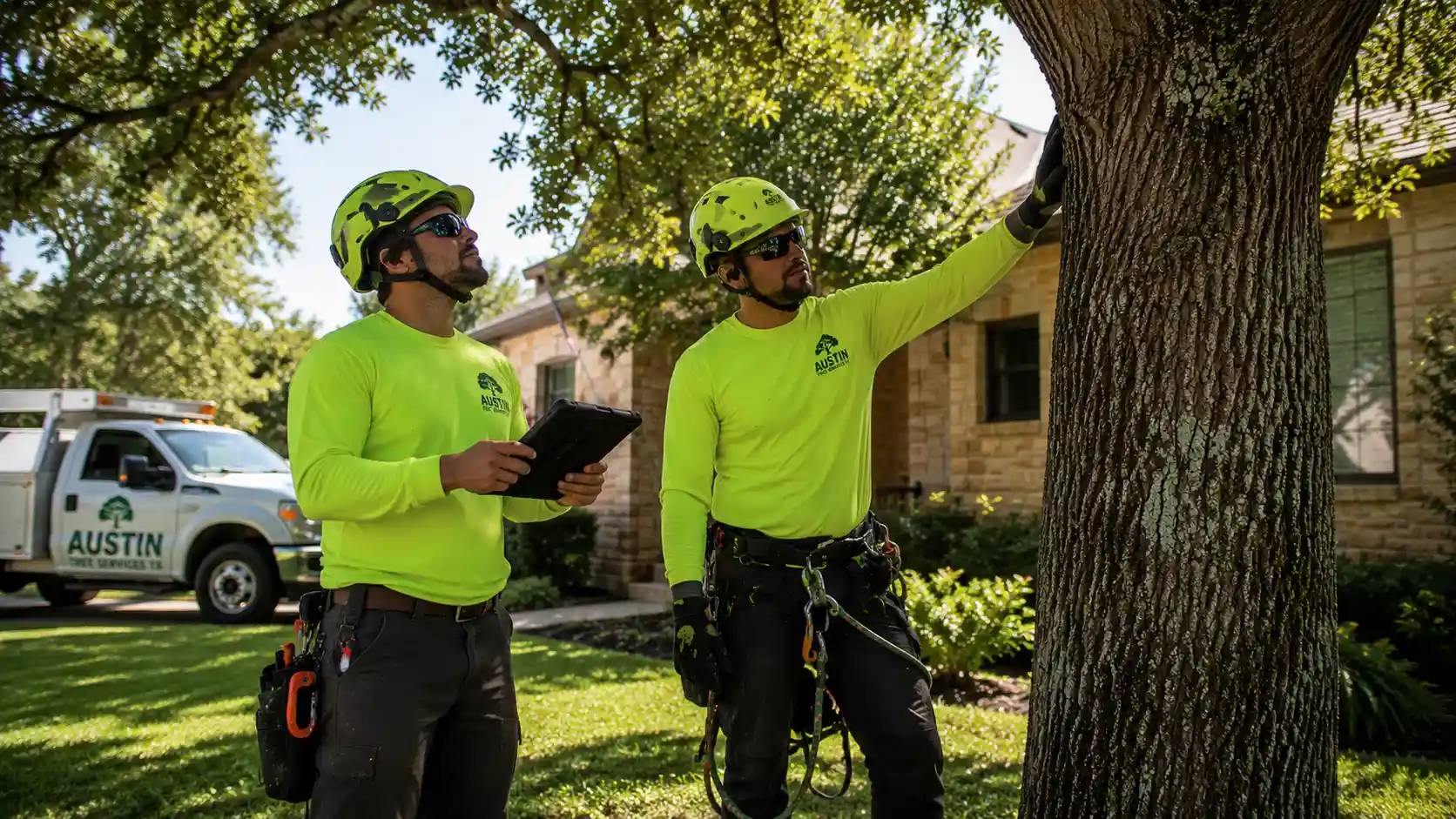
Austin Tree Services TX delivers arborist services to ISA standards across Austin and 15 surrounding Central Texas communities. Free on-site assessments are provided for all residential and commercial properties. City of Austin TORA documentation, oak wilt diagnosis, structural risk assessment, and full-service tree care execution are available from a single provider — eliminating the coordination cost of separate assessment and execution companies.
-
01
ISA-standard practice on every assessment.
All arborist work at Austin Tree Services TX follows International Society of Arboriculture Best Management Practices and ANSI A300 standards. Disease diagnoses reference the same diagnostic criteria used by the Texas A&M Forest Service and the City of Austin’s Urban Forest Health program. Structural risk assessments follow ISA Tree Risk Assessment Qualification (TRAQ) methodology — producing documentation that meets the standard required by insurance carriers, City of Austin permit applications, and legal proceedings.
-
02
Free on-site assessments, no obligation.
We do not assess trees by telephone or photograph. Every arborist consultation is conducted in person at your property. We examine the tree’s crown condition, bark, root collar, and surrounding soil; measure DBH when heritage or protected status is relevant; and provide a written recommendation covering the condition we found, the options available, and the recommendation we would implement. The assessment is free regardless of whether you proceed with any service.
-
03
City of Austin TORA documentation handled in-house.
Austin Tree Services TX manages the full TORA process for protected and heritage tree removal — assessment, arborist report preparation, application submission through the AB+C Portal, and communication with the City Arborist Program during review. Property owners do not need to navigate the permit process independently. Our arborist’s written report includes all documentation the City requires: species identification, measured DBH, condition assessment, and written justification for removal.
-
04
Oak wilt expertise specific to Central Texas.
Our arborists diagnose oak wilt using the pattern-of-spread methodology — the same approach recommended by the City of Austin’s oak wilt program and Texas A&M Forest Service. We submit tissue samples to the Texas A&M Plant Pathology Lab when visual diagnosis is inconclusive. When oak wilt is confirmed, we advise on the full management response: propiconazole injection timing, root trench suppression placement, infected tree removal to reduce spore pressure, and species selection for replacement planting in active oak wilt zones.
-
05
Fully licensed and insured across all 15 service areas.
Austin Tree Services TX carries full general liability insurance and worker’s compensation coverage on all arborist work. View our full company profile on the About Us page.
Austin arborist services — coverage area
Austin Tree Services TX provides certified arborist assessments, disease diagnosis, TORA documentation, and full-service tree care across Austin and 15 surrounding Central Texas communities:
— Round Rock, Cedar Park, Leander, Pflugerville, Georgetown, and Liberty Hill have large established live oak populations in residential neighborhoods built around mature canopy. Heritage tree assessments and oak wilt diagnosis are the most frequent arborist service requests in this corridor.
— Lakeway, Lago Vista, Bee Cave, and Rollingwood feature Texas Red Oak and Ashe Juniper on shallow limestone soils where root assessment accompanying structural evaluations is more complex. Pre-purchase arborist inspections are common in this corridor given the high property values associated with mature Hill Country tree canopy.
— Buda, Kyle, and San Marcos communities have growing residential development around established tree cover where construction-related root zone damage assessments and TORA documentation for development-adjacent trees are frequent service requests.