
Bee Cave Tree Service
Tree removal, trimming, stump grinding, stump removal, cabling, and ISA-certified arborist services built around Bee Cave's shallow caliche lots and active oak wilt pressure.
Austin Tree Services Tx provides tree removal, tree trimming, stump grinding, stump removal, tree cabling, and certified arborist services in Bee Cave, Texas. Every service is performed by insured professionals using ISA-standard techniques adapted to Bee Cave's limestone-based soils, Hill Country climate, and native species including live oak (Quercus fusiformis), cedar elm (Ulmus crassifolia), and Texas ash (Fraxinus texensis).
Every Job Starts With The Same Standard
What Makes Bee Cave Different
Tree Care Services Available in Bee Cave, TX
Austin Tree Services Tx provides 6 core tree care services in Bee Cave: tree removal, tree trimming, stump grinding, stump removal, tree cabling, and certified arborist services for tree health assessment and disease diagnosis.
Each service addresses a distinct phase of tree lifecycle management on Bee Cave properties. Tree removal eliminates trees that present structural failure risk, active disease, storm damage, or construction conflicts. Tree trimming maintains crown structure, reduces wind resistance, and removes deadwood to ANSI A300 pruning standards. Stump grinding processes remaining stumps to 6–12 inches below grade using a rotary cutting drum, eliminating regrowth and surface hazards. Stump removal extracts the full root ball where hardscape installation or construction requires complete clearance within 5 feet of the former tree location. Tree cabling installs high-strength steel or synthetic support systems in trees with co-dominant stems, weak branch unions, or documented structural defects. Arborist services provide ISA-certified disease diagnosis, structural risk assessment, and written health reports for insurance, permit, or property transaction purposes.
All 6 services are available across Bee Cave's residential neighborhoods, commercial corridors along TX-71, and estate properties in the Hill Country Galleria district.
Bee Cave Soil and Climate Conditions That Affect Tree Health
Bee Cave sits within the eastern edge of the Edwards Plateau, where 3 soil types directly affect tree health and service requirements: shallow Lithic soils over limestone bedrock, deeper Vertisol clay soils with high shrink-swell activity, and loamy transitional soils in lower-elevation areas near Barton Creek and Cow Creek drainages.
Lithic soils over caliche layers — common in elevated neighborhoods including Falconhead West and Spanish Oaks — restrict root depth to 12–24 inches in many locations. Shallow root systems reduce lateral anchorage in mature live oaks, increasing structural instability during high-wind events. Trees in these soil conditions require more frequent structural assessments and are stronger candidates for proactive crown reduction or cabling before a failure event occurs.
Vertisol clay soils expand during wet periods and contract sharply during drought, creating root zone stress cycles that compound summer heat damage. Bee Cave records average high temperatures of 98°F–102°F between June and September. How Summer Heat Affects Tree Health covers this process in detail, but the direct consequence in Bee Cave is that live oaks under sustained heat stress show premature leaf drop, crown dieback, and increased susceptibility to the two-lined chestnut borer (Agrilus bilineatus), a secondary pest that accelerates decline in already-weakened trees.
Oak wilt, caused by the fungal pathogen Bretziella fagacearum, remains active in Bee Cave. Live oaks in established clusters transmit the disease through root grafts, commonly extending tens of feet between neighboring trees. The critical pruning restriction window runs from February 1 through June 30, when sap-feeding nitidulid beetles carrying oak wilt spores are most active on fresh pruning wounds. Austin Tree Services Tx follows this restriction calendar on all live oak work in Bee Cave without exception.
Tree Removal in Bee Cave — When a Tree Requires Full Removal
In Bee Cave, full tree removal is necessary when a tree presents one or more of 5 conditions: structural failure risk from root damage or basal decay, disease progression beyond recovery threshold, storm damage that compromises more than 50% of the crown, root systems undermining foundations or hardscape, or complete tree death from drought, lightning strike, or pest infestation. Austin Tree Removal Services covers assessment criteria, equipment approach, and site-specific considerations in full detail.
Bee Cave properties present specific removal conditions that increase job complexity. Sloped limestone terrain in neighborhoods including The Homestead and Falconhead limits ground equipment access, requiring aerial climbing with rigging or crane-assisted sectional dismantling rather than straight felling. Mature live oaks in Spanish Oaks and Bee Cave West commonly reach 40–60 feet in height with canopy spreads of 50–80 feet, requiring multi-point rigging systems when removal occurs within 20 feet of a structure.
A tree that leans more than 15 degrees from vertical with visible root plate lifting on the tension side requires immediate professional assessment. This condition — compounded by Bee Cave's Vertisol clay shrink-swell cycles — indicates root zone destabilization that increases failure probability during the next wind event. Full guidance on evaluating lean severity is covered in Is a Leaning Tree Dangerous and Signs a Tree Is Dying and Cannot Be Saved.
Debris hauling and site cleanup are included as standard components of every Bee Cave removal job.
What Happens During a Tree Service Assessment in Bee Cave
A tree service assessment by Austin Tree Services Tx in Bee Cave follows 6 sequential steps that produce a written recommendation and estimate before any work begins.
-
Site Inspection
The arborist walks the full property perimeter to identify all trees requiring attention, including those not visible from the primary access point. Bee Cave properties on limestone terrain frequently have trees on slope edges that are not visible until a full site walk is completed.
-
Species Identification
Each tree is identified to species level. Species determines pruning timing, permissible crown removal percentage, disease risk, and equipment requirements. Live oak, cedar elm, Texas ash, pecan, and post oak each carry different care protocols in Bee Cave's climate.
-
Structural Evaluation
The arborist assesses branch attachment quality, stem taper, co-dominant unions, lean angle, and visible decay indicators at the root flare and basal zone. Structural defects determine whether cabling, pruning, or removal is the appropriate response.
-
Root Zone and Soil Assessment
Soil type, compaction, drainage, and root flare condition are evaluated relative to the tree's structural stability. On Bee Cave's elevated caliche lots, shallow root depth is documented as a factor in any structural recommendation.
-
Disease and Pest Screening
Visual indicators of oak wilt (Bretziella fagacearum), hypoxylon canker (Hypoxylon atropunctatum), bark beetle activity, and borer damage are checked on all trees assessed. Suspected oak wilt triggers a laboratory confirmation recommendation before treatment begins.
-
Written Recommendation and Estimate Delivery
The assessment produces a written recommendation covering the proposed scope of work, species-specific rationale, and a transparent cost estimate. No work is scheduled without the homeowner's review and approval.
Tree Trimming in Bee Cave — Pruning Standards for Hill Country Species
All tree trimming work in Bee Cave follows ANSI A300 Part 1 pruning standards, which define acceptable cutting ratios, branch collar preservation requirements, and wound response protocols for each tree species present in Bee Cave's landscape. Austin Tree Trimming covers species-specific scheduling, crown management techniques, and pricing details.
Live oak trimming in Bee Cave requires adherence to 2 timing constraints that differ from general pruning practice. First, all pruning cuts on live oaks avoid the February 1 through June 30 oak wilt transmission season, with wound paint applied immediately on any cuts made adjacent to this window. Second, crown reduction on mature live oaks removes no more than 25% of live crown volume per growing season. Removing more than 25% of a live oak's live crown in a single session reduces photosynthetic capacity below the threshold needed to sustain root system health, triggering epicormic sprouting and creating entry points for secondary decay organisms.
Cedar elm trimming follows a different seasonal calendar. Cedar elms produce a secondary leaf flush in late summer, making late August through October the optimal window for structural pruning. Directional pruning on cedar elms near structures redirects crown growth away from rooflines and utility clearances without topping. Topping a cedar elm creates a decay column that progresses downward through the main stem, converting a manageable clearance issue into a full removal situation within 5–8 years.
Stump Grinding and Stump Removal in Bee Cave
After tree removal on a Bee Cave property, 2 stump treatment options are available depending on how the cleared area will be used. Stump grinding processes the remaining stump to 6–12 inches below grade using a rotary cutting drum, converting the stump mass into wood chip mulch and eliminating regrowth, pest colonization, and surface tripping hazards. Stump removal extracts the full stump and primary root ball from the soil, creating a clean void suitable for hardscape installation, slab construction, or replanting.
The correct choice between these 2 methods depends on the intended use of the cleared area. Grinding is the right method for lawn restoration, mulch beds, and general landscape cleanup where deep root remnants do not conflict with future use. Removal is necessary when installing concrete, pavers, retaining walls, or any structure within 5 feet of the former tree location. Remaining root mass from an unremoved stump creates subsidence voids beneath hardscape as the wood decomposes over 3–7 years, causing surface cracking and structural instability in patios and driveways. A full comparison is covered in Stump Grinding vs Stump Removal — Which Is Better.
Bee Cave's shallow limestone substrate limits grinding depth on elevated properties where bedrock sits within 8–10 inches of the surface. Austin Tree Services Tx assesses substrate depth before grinding on elevated Bee Cave lots to determine achievable depth and identify any bedrock interference before the job begins.
Subterranean termite colonization of unground stumps begins within 12–18 months of tree removal on Bee Cave properties. Stump grinding eliminates the above-ground and near-surface wood mass that subterranean termite species use as primary structural entry points.
Tree Cabling and Bracing in Bee Cave
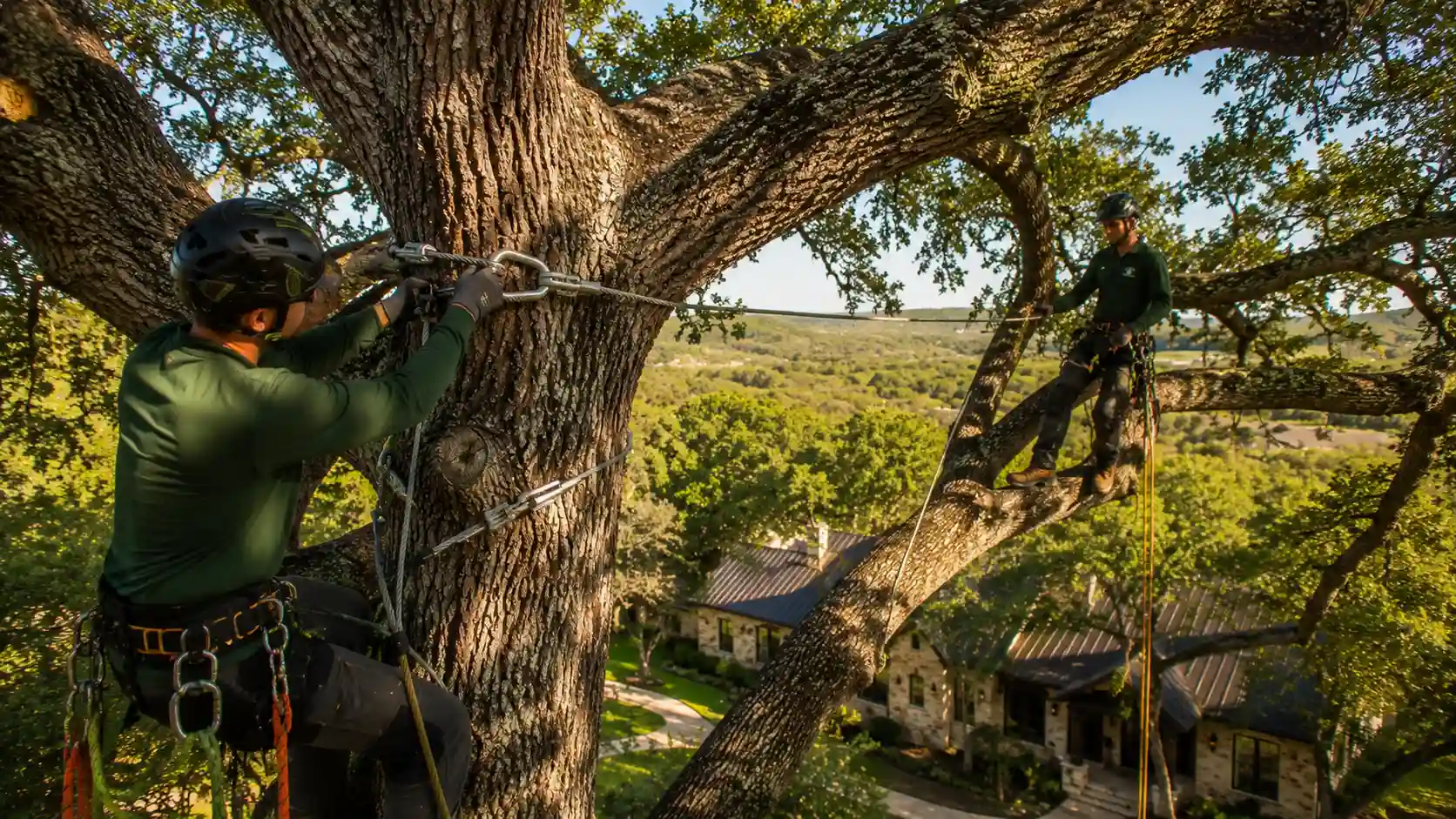
Trees with structural defects that increase the probability of branch or stem failure are candidates for cabling and bracing — a service that preserves trees holding historical, aesthetic, or functional value on the property rather than removing them. Austin Tree Cabling Services installs high-strength steel or synthetic support systems that mechanically address these defects before failure occurs.
The 3 structural conditions that most commonly require cabling in Bee Cave are: co-dominant stems with included bark at the union, horizontal limbs with a length-to-diameter ratio exceeding 8:1, and previously cracked scaffold branches that have healed with compromised tissue integrity. Included bark at a co-dominant stem union traps bark tissue between two stems rather than forming a wood-to-wood weld, creating a splitting plane that fails under wind or ice loading without mechanical support. Full background on this condition and its treatment is covered in Tree Cabling and Bracing.
Cabling hardware installation follows ANSI A300 Part 3 support system standards. Eye bolts are installed through the stem at two-thirds of the distance from the structural defect to the branch tip, with steel cable tensioned to provide load support without restricting natural stem movement. Synthetic rope systems are installed in trees where drilling is contraindicated by decay column proximity or insufficient stem diameter for hardware installation.
Bee Cave's elevated lots in Falconhead and The Homestead face southwest prevailing winds that accelerate structural failure in uncabled co-dominant trees. Annual hardware inspection is standard practice on all installed cabling systems, as cable stretch and eye bolt wear reduce load capacity over time.
Arborist Services in Bee Cave — Certified Tree Health Assessment
Certified tree health assessment in Bee Cave covers ISA-standard risk evaluation, disease diagnosis, and written management plans for residential and commercial properties. Austin Arborist Services delivers each of these services with documentation that meets professional and legal standards.
A certified arborist assessment in Bee Cave evaluates 5 primary categories: structural integrity of the root flare and basal zone, crown architecture and branch attachment quality, evidence of fungal pathogens including oak wilt (Bretziella fagacearum) and hypoxylon canker (Hypoxylon atropunctatum), pest activity including bark beetle galleries and borer entry holes, and soil conditions including compaction, drainage gradient, and pH levels affecting root function.
Arborist reports from ISA-certified professionals carry evidentiary weight in insurance claims, permit applications, and property dispute proceedings in Travis County. Written risk assessments document tree condition at a specific date, providing baseline liability documentation when a tree is retained rather than removed following a professional evaluation.
Oak wilt diagnosis in Bee Cave requires laboratory confirmation through fungal culturing when visual symptoms remain ambiguous. Austin Tree Services Tx coordinates sample collection and submission to the Texas Plant Disease Diagnostic Laboratory at Texas A&M University when Bretziella fagacearum infection is suspected but not visually confirmed. Early confirmed diagnosis enables targeted fungicide injection with propiconazole, which reduces disease progression in the affected tree and protects adjacent healthy trees through root graft disruption trenching.
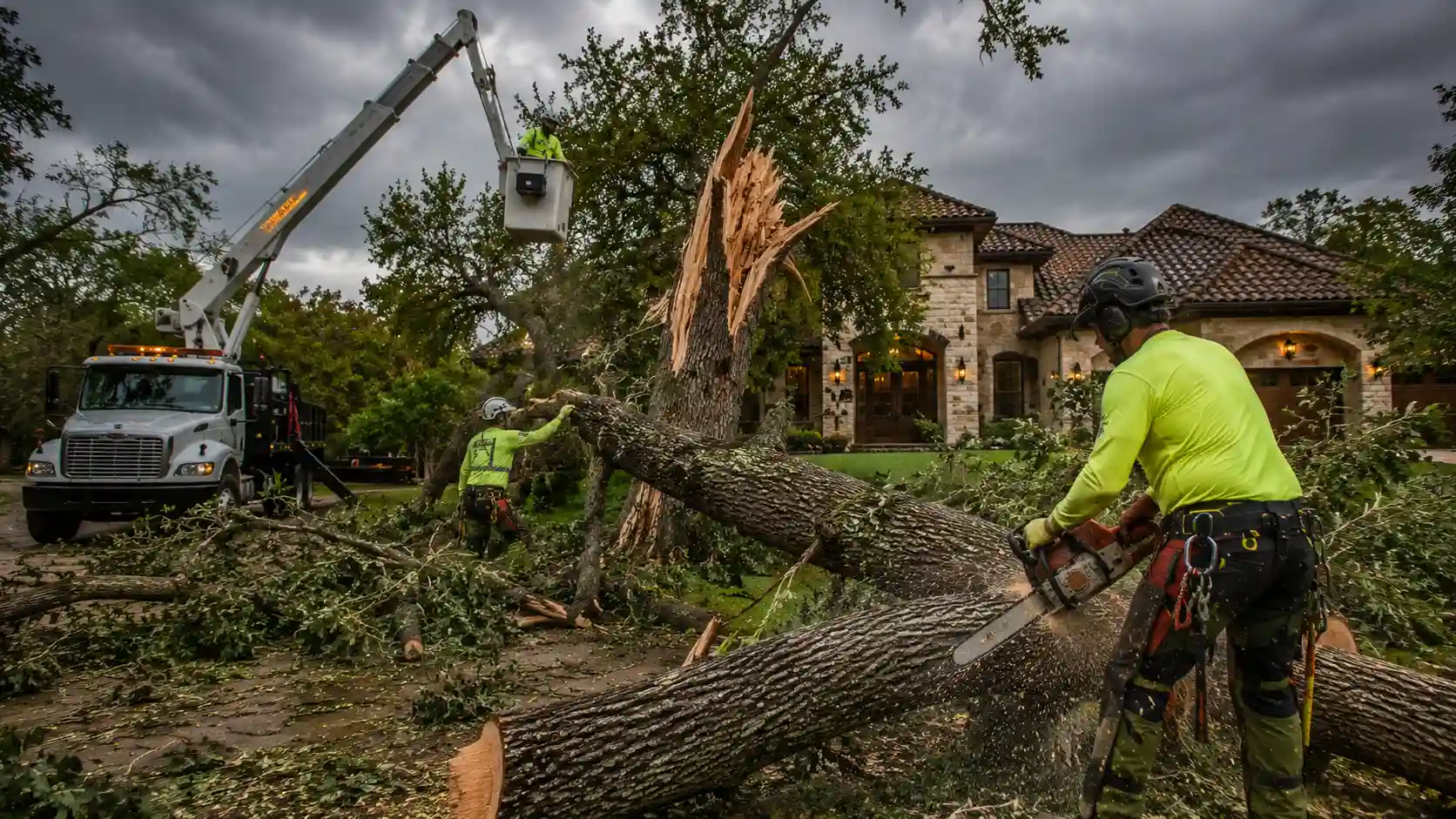
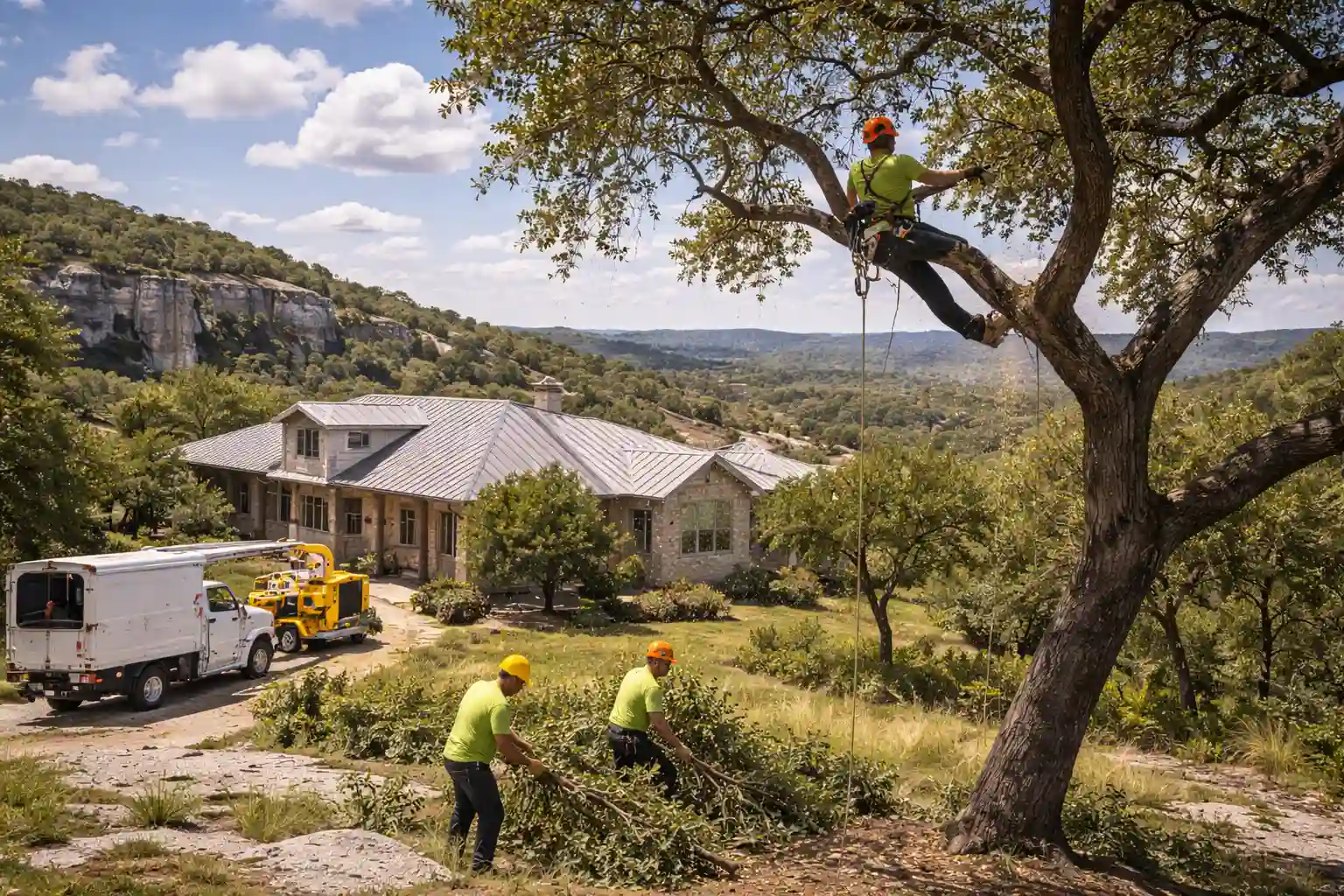
Tree Service Jobs Completed in Bee Cave, TX



Bee Cave Neighborhoods Served by Austin Tree Services Tx
Austin Tree Services Tx performs tree services across all residential and commercial areas within Bee Cave, TX 78738, including 9 primary neighborhoods and developments: Falconhead, Falconhead West, Spanish Oaks, The Homestead, Bee Cave West, Ladera, Uplands, Spillman Ranch, and properties along Hamilton Pool Road, Bee Cave Parkway, and the TX-71 commercial corridor.
Spanish Oaks and The Homestead properties contain the highest concentration of mature live oaks on shallow limestone terrain in Bee Cave, generating consistent demand for structural pruning, cabling assessments, and oak wilt monitoring. Falconhead and Falconhead West properties on elevated lots face direct southwest wind exposure that increases structural failure risk in mature trees with co-dominant stems or extended horizontal limbs. Bee Cave West and Ladera properties in lower-elevation areas near Barton Creek retain deeper Vertisol soil profiles that support larger cedar elm populations requiring scheduled crown management and directional pruning.
Austin Tree Services Tx also serves properties in communities directly adjacent to Bee Cave. Tree Services Lakeway covers the Lakeway and Rough Hollow communities immediately west of Bee Cave along Lake Travis. Tree Services Rollingwood covers the Rollingwood and West Lake Hills communities on the eastern boundary of the Bee Cave service area.
Tree Services We Provide in Bee Cave
Bee Cave Tree Service Questions
Cost depends on tree size, species, location, and site access. Mature live oaks over 40 ft, trees within 20 feet of a structure, and removals on sloped Falconhead or The Homestead terrain requiring crane-assisted rigging cost more than a standard removal. Austin Tree Services Tx provides a written estimate after a free on-site assessment, with no work scheduled until the homeowner approves the scope and price.
Yes. Every Bee Cave assessment screens for oak wilt (Bretziella fagacearum), which spreads through live oak root grafts extending tens of feet between neighboring trees. Pruning cuts on live oaks are restricted between February 1 and June 30, when sap-feeding nitidulid beetles are most active. When symptoms are ambiguous, Austin Tree Services Tx coordinates sample submission to the Texas Plant Disease Diagnostic Laboratory at Texas A&M University; confirmed cases are treated with propiconazole fungicide injection and root graft disruption trenching to protect neighboring trees.
Austin Tree Services Tx provides structural pruning, crown reduction, deadwooding, and directional pruning to ANSI A300 Part 1 standards. Live oak crown reduction is capped at 25% of live crown volume per season and scheduled outside the February–June oak wilt window. Cedar elm structural pruning is scheduled for late August through October, matching the species' secondary leaf flush.
Bee Cave's Lithic soils over limestone bedrock limit root depth to 12–24 inches on elevated lots in Falconhead West and Spanish Oaks, while Vertisol clay near Barton Creek and Cow Creek expands and contracts with rainfall. New plantings need species tolerant of shallow, alkaline soil — live oak, cedar elm, and Texas ash are the natives that establish reliably under these conditions. With summer highs of 98°F–102°F between June and September, new trees also need consistent irrigation through their first growing season to establish before heat stress sets in.
Yes. Austin Tree Services Tx offers same-day emergency response for storm-damaged, split, or leaning trees, including trees in contact with structures or utility lines. Crews are equipped for crane-assisted and rigged removal on Bee Cave's sloped limestone terrain, where ground equipment access is often limited.
Stump grinding processes a remaining stump to 6–12 inches below grade with a rotary cutting drum, eliminating regrowth, tripping hazards, and pest colonization. It matters in Bee Cave because unground stumps begin attracting subterranean termites within 12–18 months, and Bee Cave's shallow limestone substrate — often 8–10 inches from the surface on elevated lots — requires a substrate depth check before grinding begins.
Yes. Austin Tree Services Tx carries general liability and workers' compensation insurance, and all assessments are performed by ISA-certified arborists. Written risk assessments and health reports meet the documentation standard used in insurance claims, permit applications, and property disputes in Travis County.
Standard tree services are typically scheduled within a few business days of the free on-site estimate. Emergency situations — storm damage, failed limbs, or trees in contact with structures or power lines — receive same-day assessment.
Schedule Tree Services in Bee Cave, TX
Free on-site estimates for all tree care services in Bee Cave, TX 78738. Same-day assessments available for storm damage, failed limbs, or trees in contact with structures or utility lines.
Call (512) 729-9018