
Cedar Park Tree Service
Certified tree removal, trimming, stump grinding, and 24/7 emergency care for Cedar Park's live oaks, cedar elms, and Ashe junipers — from a crew that works the Edwards Plateau soil line every week.
Austin Tree Services Tx provides certified tree removal, trimming, stump grinding, tree cabling, and 24/7 emergency tree care throughout Cedar Park and Williamson County. Crews assess oak wilt risk, root conflicts in shallow limestone soil, and storm exposure before recommending any service — removal is the last option, not the first. Call (512) 729-9018.
What Makes Tree Care In Cedar Park Different From The Rest Of Austin?
Cedar Park sits where the thin, rocky Edwards Plateau soils of the Hill Country meet the deeper clay soils of Central Texas — a transition that shapes how local trees root, fail, and recover.
Live oaks growing in shallow limestone-based soil develop wide, aggressive lateral root systems rather than deep taproots. Those roots compete with foundations, driveways, and utility lines more often than in the flatter, deeper-soil areas of Austin proper.
Cedar Park also sits in a high oak wilt pressure zone. The fungal disease moves through interconnected root systems and kills live oaks rapidly. Trimming or wounding live oaks between February and June — peak beetle activity season — creates entry points for the pathogen; a crew working the wrong season can cost a homeowner an entire connected grove, not just one tree.
The city's canopy also carries dense Ashe juniper — locally called cedar — which contributes to Cedar Fever in winter and, left unmanaged, builds up dry combustible mass near structures. Summer heat compounds all of it: temperatures regularly exceed 100°F from June through September, and the resulting drought stress produces canopy dieback and bark cracking that can look like disease but require a different response.
What Tree Problems Are Common In Cedar Park, TX?
Six problems account for most Cedar Park service calls: oak wilt, juniper fire loading, construction root damage, storm microbursts, drought stress, and shallow-rooted oaks conflicting with foundations.
Oak wilt in mature live oaks is the most consequential tree disease in Cedar Park. It spreads through root grafts between neighboring trees and through beetle transmission from infected red oaks. A tree showing veinal necrosis in spring — yellowing along the leaf veins while tissue between veins stays green — should be assessed immediately; every day of delay increases the risk of root-to-root transmission to adjacent trees.
Juniper overgrowth and fire loading is a growing concern in the western neighborhoods near the Hill Country transition zone. Dense Ashe juniper accumulates dry combustible mass quickly, creating meaningful fire risk during summer afternoons when relative humidity drops below 20 percent.
Root damage from construction activity affects thousands of trees in Cedar Park's newer subdivisions. Soil compacted by equipment, graded away from root zones, or cut through during utility installation costs the tree its vascular infrastructure — subdivisions built in the last ten to fifteen years, like Ranch at Brushy Creek and Anderson Mill West, frequently show delayed decline that traces back to the build phase.
Storm limb failure during summer microbursts is a seasonal hazard. Cedar Park's position at the edge of the Hill Country makes it a frequent target for fast-moving convective storms generating straight-line winds above 60 mph. Live oaks with wide lateral canopies and co-dominant stems are the most vulnerable.
Drought stress and canopy thinning shows up across Cedar Park after consecutive dry summers, as trees pull resources from outer branches to protect core vascular systems — a gradual retreat homeowners sometimes mistake for normal seasonal change. Left unaddressed, it leaves the tree structurally compromised and more open to pest and disease pressure.
Foundation conflicts from shallow-rooted oaks affect older neighborhoods near Little Elm Creek and the 183A corridor, where live oaks planted close to structures decades ago are now reaching canopy sizes that put root spread in direct conflict with foundations and driveways.
What Tree Services Does Austin Tree Services Tx Provide In Cedar Park?
Ten core services cover Cedar Park's residential and commercial tree needs: removal, trimming, certified arborist assessment, tree surgery, stump grinding, stump removal, emergency response, cabling and bracing, planting, and fertilization.
Tree Removal in Cedar Park
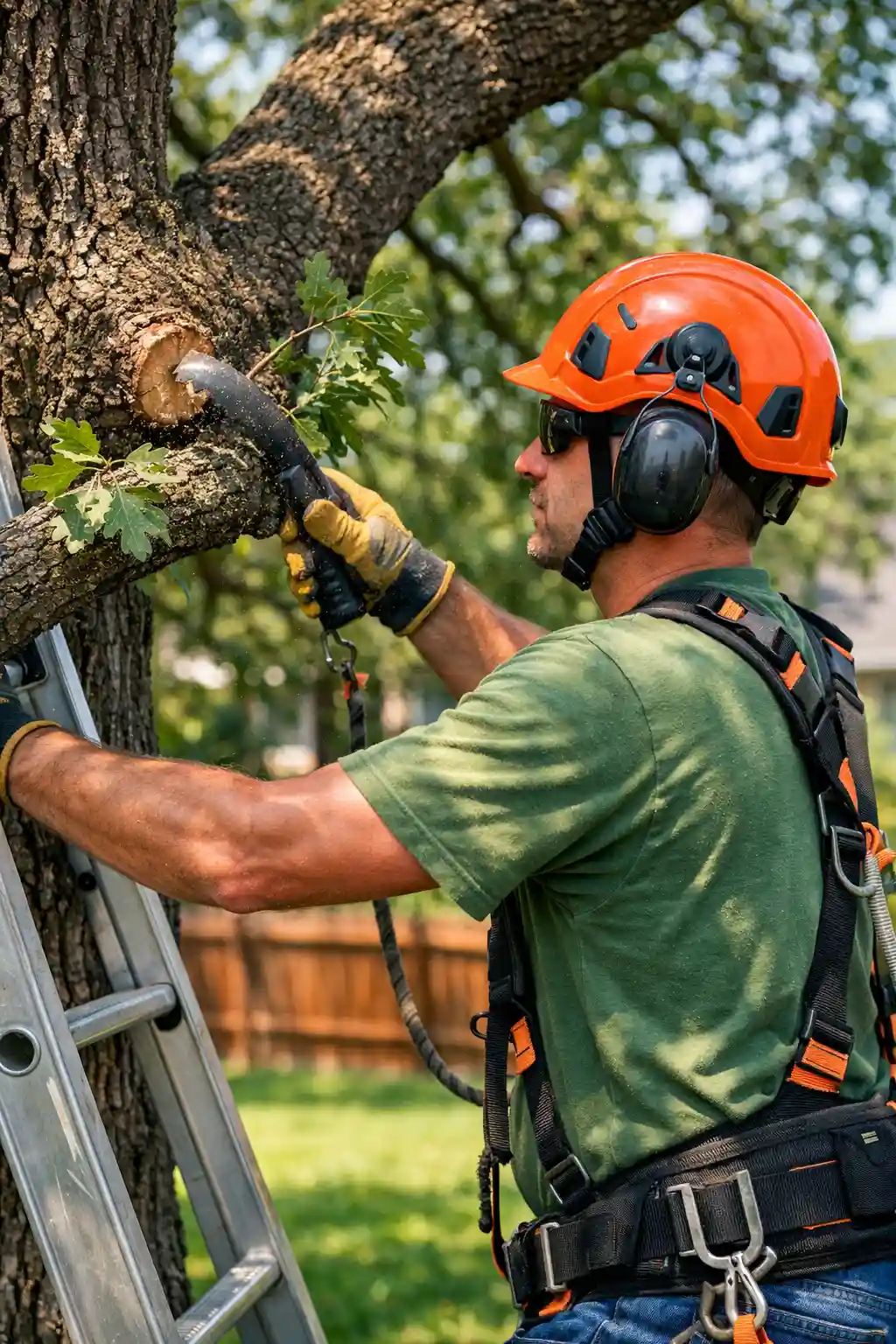
Safe, systematic removal of dead, oak-wilt-killed, storm-damaged, or structurally compromised trees, including large live oaks and post oaks growing near structures. Tight residential lots typically require sectional removal — cutting the canopy down in pieces from the top — to avoid uncontrolled drops onto fences, rooflines, or neighboring property.
Tree Trimming in Cedar Park
Crown cleaning, deadwood removal, clearance trimming, and structural pruning, timed around each species' risk window and never performed on live oaks between February 1 and June 30.
Certified Arborist Services in Cedar Park
On-site health assessments, oak wilt diagnosis, and risk evaluations grounded in ISA-aligned arborist knowledge, performed before any removal, trim, or cabling decision on a mature tree.
Stump Grinding in Cedar Park
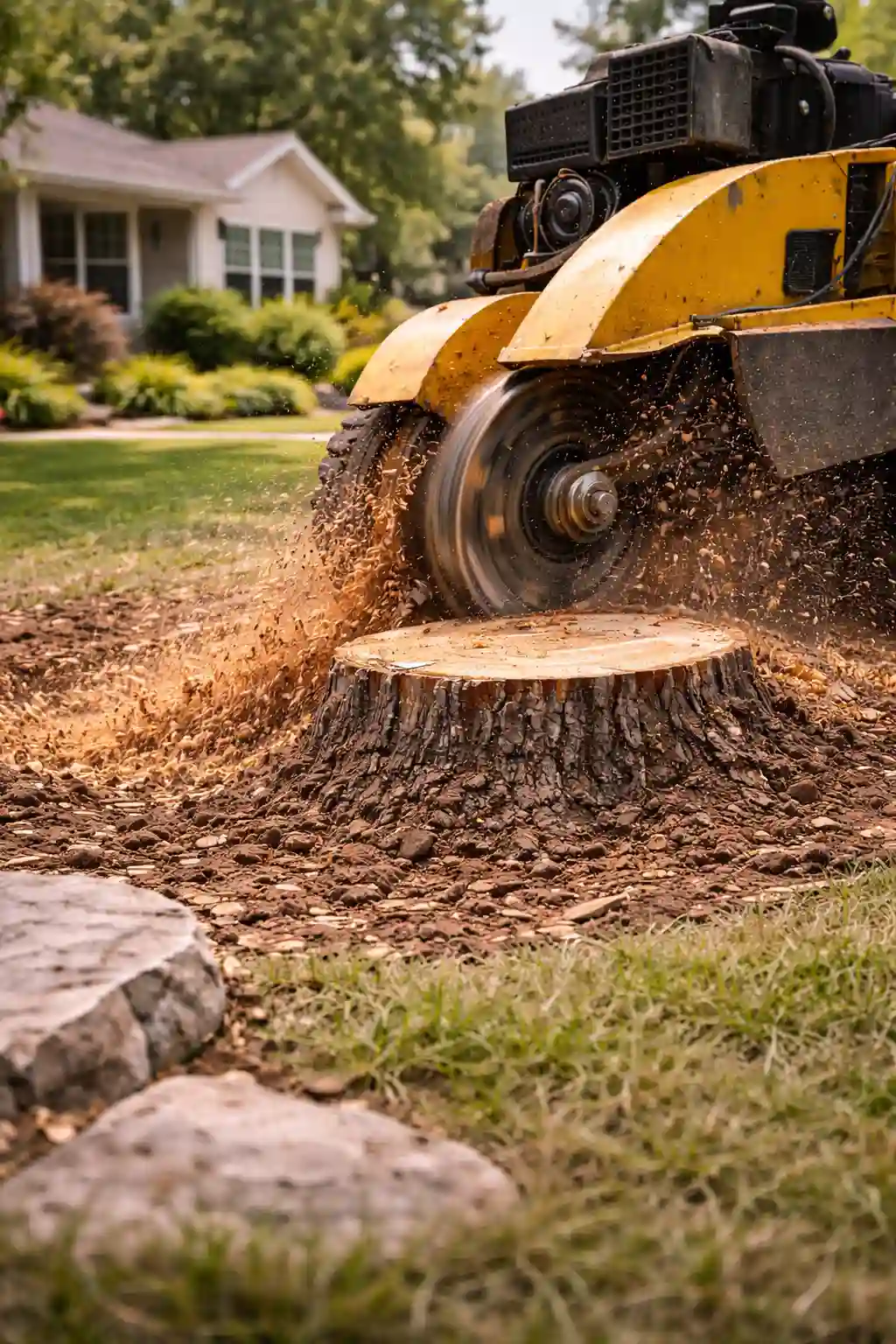
Commercial grinding equipment reduces a stump to wood chips 8–12 inches below grade, clearing the surface obstruction and preventing regrowth for most residential lots. Lateral roots are left to decay naturally.
Stump Removal in Cedar Park
Full extraction of the stump and primary root mass, for sites being replanted or built on. Rocky substrate west of 183A can complicate extraction where roots have grown into limestone.
Emergency Tree Service in Cedar Park
24/7 response for storm-damaged trees, fallen limbs, uprooted trees blocking access, and any tree posing immediate risk to people or property — with a check of secondary hazards in the same tree and neighboring root systems.
Tree Cabling and Bracing in Cedar Park
Steel cable or brace-rod support for multi-stemmed trees, co-dominant trunks, and large limbs showing early signs of failure, extending the life of a valuable tree without removing it.
Tree Surgeon Services in Cedar Park
Advanced structural work — crown restoration, cavity and decay treatment, and complex canopy repair — for high-value or heritage trees where standard trimming isn't enough. Often paired with cabling and bracing on Cedar Park's older live oaks in neighborhoods like Buttercup Creek.
Tree Planting in Cedar Park
Species selection and installation matched to Cedar Park's soil transition — live oak and cedar elm handle the shallow limestone soils on the west side, while properties east of 183A on deeper clay support a wider range of natives. New plantings need consistent watering through their first two summers to survive 100°F+ heat.
Tree Fertilization in Cedar Park
Soil and foliar fertilization corrects nutrient deficiencies common in Cedar Park's alkaline, limestone-influenced soil, which can lock out iron and cause chlorosis in live oaks. Fertilization schedules are built around each tree's health assessment, not applied on a fixed calendar.
When Does A Tree Need To Be Removed In Cedar Park?
Removal is right when a tree is dead or dying, structural failure is imminent, disease has progressed beyond treatment, or its location creates unavoidable conflict with a structure or utility. In Cedar Park, oak-wilt kills, power-line conflicts, and construction-damaged roots are the most common triggers.
The most common removal scenarios here involve live oaks killed by oak wilt, cedars grown into power-line clearance zones, and trees undermined by construction activity during the city's rapid residential development. Trees planted too close to foundations in earlier development phases are now reaching sizes where root pressure and canopy overhang create measurable risk — particularly in older sections of Buttercup Creek and neighborhoods north of FM 1431.
-
Site Assessment
The crew evaluates lean direction, root condition, proximity to structures and utilities, and the available drop zone.
-
Sectional Removal
Large trees on tight residential lots — common throughout Cedar Park's established neighborhoods — are taken down from the top in sections using aerial equipment rather than a single directional fell.
-
Stump & Debris Handling
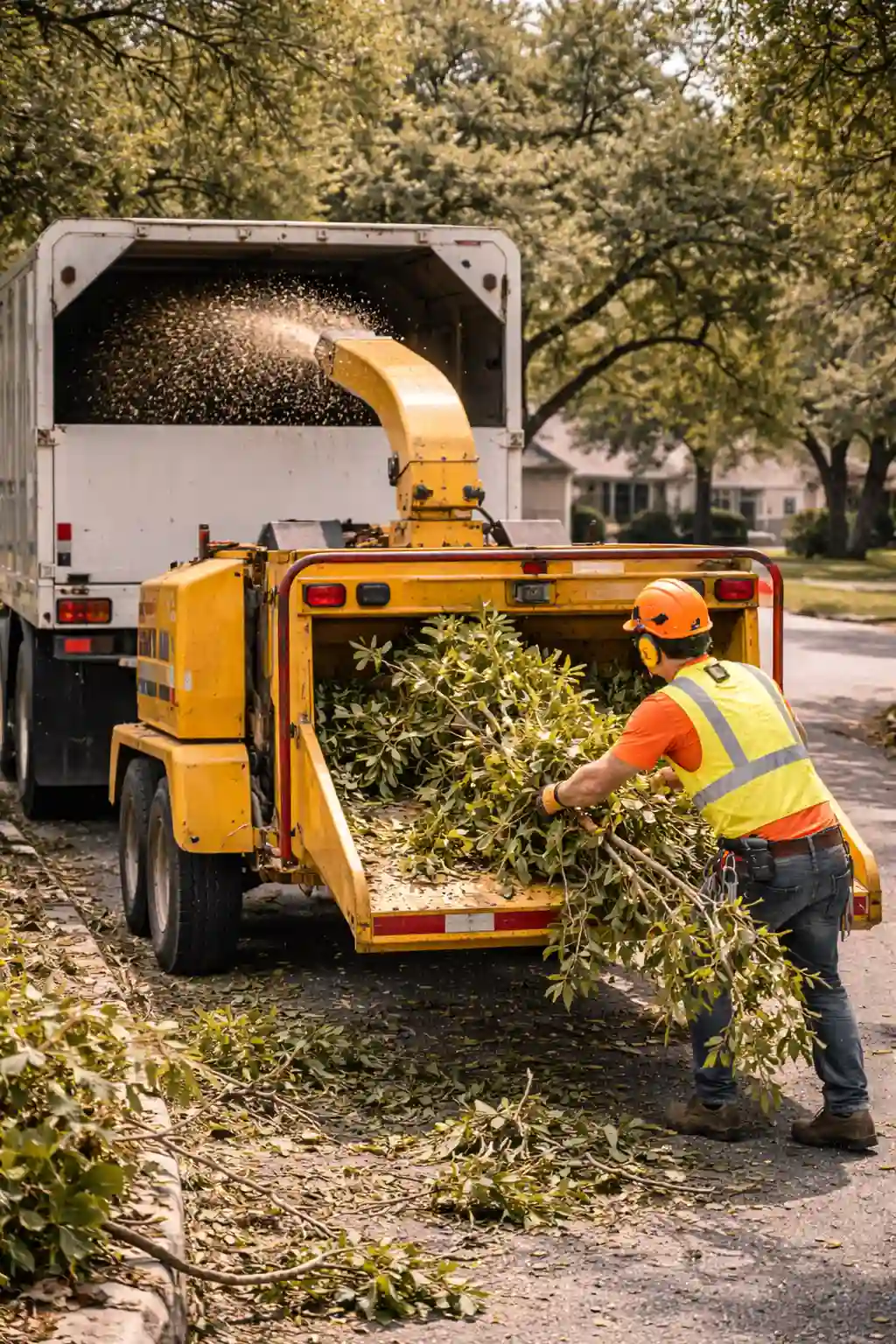
The stump remains unless grinding or extraction is added to the scope. Wood debris is chipped on-site for mulch or hauled away, based on the property owner's preference.
-
Site Cleanup
The full site is cleared and cleaned before the crew leaves.
Not sure whether a tree qualifies for removal or can be saved? Our certified arborist assessment makes that call before any cutting starts.
How Should Trees Be Trimmed And Pruned In Cedar Park?
Live oaks in Cedar Park must not be pruned between February 1 and June 30 due to oak wilt risk; cedar elms and Ashe junipers follow separate, less restrictive windows. Trimming manages clearance and size, while pruning removes deadwood and weak attachments to protect long-term structure.
Structural pruning for young trees, performed in the first five to ten years after planting, determines the tree's architecture for decades. Correcting co-dominant stems and establishing a clear central leader while the tree is small costs far less than managing structural failure in a mature tree. For properties near Cedar Park's TxDOT right-of-ways along Highway 183 and FM 1431, clearance trimming must also meet specific height requirements.
| Species | Safe Trim Window | Key Risk |
|---|---|---|
| Live Oak | Jul 1 – Jan 31 | Oak wilt — never Feb 1–Jun 30; seal fresh cuts immediately if unavoidable |
| Cedar Elm | Late winter, before spring growth | Included bark on co-dominant stems |
| Ashe Juniper (Cedar) | Year-round; best late fall–early winter | Dead interior wood, fire-load buildup |
Stump Grinding Or Stump Removal — Which Is Right For Your Cedar Park Property?
Stump grinding reduces a stump to wood chips 8–12 inches below grade and suits most residential lots; stump removal extracts the full root mass and suits sites being replanted or built on. Cedar Park's rocky substrate west of 183A can complicate either method.
Stumps left in place don't decompose quickly — in Cedar Park's dry conditions, a hardwood stump can remain structurally present for five to fifteen years, hosting wood-decaying fungi and carpenter ants while blocking mowing.
| Factor | Grinding | Full Removal |
|---|---|---|
| Depth | 8–12 in. below grade | Full root ball extracted |
| Roots left behind | Lateral roots decay naturally | None |
| Best for | Lawn clearing, mowing, regrowth prevention | Replanting or building on the site |
| Rocky substrate (west of 183A) | Straightforward | May require added equipment near limestone |
What Happens During Emergency Tree Service In Cedar Park?
Emergency tree service in Cedar Park responds 24/7 to storm-damaged, fallen, or hanging trees that threaten people, structures, or access, with crews also checking for secondary hazards in the same tree and neighboring root systems.
Cedar Park draws severe weather from two directions: winter ice storms moving down the I-35 corridor, and summer thunderstorms that build fast in the Hill Country and push east. Ice loading splits multi-stemmed live oaks and cedars carrying dense canopy weight; summer microbursts generate straight-line winds that uproot shallow-rooted trees and shear limbs across neighborhoods like Twin Creeks, Cypress Creek, and Ranch at Brushy Creek.
Call emergency tree removal any hour — a tree on a roofline creates immediate water intrusion risk, and a hanging limb suspended above a walkway or vehicle can drop without warning.
How Much Does Tree Service Cost In Cedar Park, TX?
Tree service in Cedar Park typically runs $150–$3,000+ depending on tree size, condition, and access — small removals and trims at the low end, large oak removals near structures at the high end. Stump grinding runs $100–$300 per stump, and emergency response adds a 25–50% premium over standard rates.
| Service | Typical Range | What Changes The Price |
|---|---|---|
| Small tree removal / basic trim | $150 – $400 | Tree size, site access |
| Large oak removal near a structure | $1,500 – $3,000+ | Height, rigging, proximity to structures |
| Stump grinding | $100 – $300 / stump | Stump diameter |
| Emergency response | +25–50% over standard | After-hours dispatch, storm conditions |
Ranges are estimates; every job gets a free on-site assessment and written quote before work begins.
Which Cedar Park Neighborhoods Does Austin Tree Services Tx Serve?
Six Cedar Park growth corridors account for most service calls — Buttercup Creek, Twin Creeks, Ranch at Brushy Creek, Anderson Mill West, Cypress Creek, and the Little Elm Creek / 183A corridor — each with a different root, storm, or construction-era risk profile.
Mature live oaks now reaching foundation-conflict size; frequent root assessment calls.
Wide-canopy live oaks with co-dominant stems, vulnerable to microburst winds.
Trees planted during the build phase; delayed decline from root compaction is common.
Same construction-era root damage pattern seen at Ranch at Brushy Creek.
Regular emergency-response area after summer microbursts.
Shallow-rooted oaks planted close to structures in earlier development phases.
Austin Tree Services Tx also serves neighboring Round Rock and Leander.
Why Do Cedar Park Homeowners Choose Austin Tree Services Tx?
Cedar Park homeowners choose Austin Tree Services Tx for three reasons: local knowledge of the city's oak wilt windows and soil conditions, ISA-aligned arborist credentialing backed by full insurance, and accountability after the job is done.
- Local knowledge — strict oak wilt precautions Feb 1–Jun 30, familiarity with the rocky soils west of 183A, and Cedar Park's HOA tree-preservation rules.
- Proper credentialing — full liability and workers' compensation coverage on every Cedar Park job, with ISA-aligned diagnosis before removal is ever recommended.
- Accountability — the site is cleaned completely, the quote matches the invoice, and follow-up questions get answered.
Frequently Asked Questions About Tree Service In Cedar Park
It depends on the tree's size and location. Cedar Park's tree preservation ordinance protects trees above a minimum trunk diameter — removing them without a permit can result in fines. We advise on permit requirements before any work begins.
November through January is the safest window for most species. Live oaks must not be trimmed between February 1 and June 30 due to oak wilt risk. See our tree trimming service for species-specific scheduling.
Look for yellowing along the leaf veins while the tissue between veins stays green, followed by rapid browning and leaf drop starting at the outer canopy. Oak wilt moves fast — contact us for an arborist assessment before taking any action that could spread it further.
A tree that retains its main scaffold structure and root integrity can often recover with proper pruning. A tree that has split at the trunk, lost more than half its canopy, or shows root disruption is unlikely to regain structural stability and should be removed.
No. Red oaks die within weeks of infection and cannot be saved once symptomatic. Live oaks decline more slowly and can sometimes be stabilized through root trenching to prevent spread. Species identification determines the entire treatment approach.
You are. Cedar Park only trims trees within the public right-of-way for safety clearance — they are not responsible for the aesthetic result or the remainder of the canopy. A professional trim of the rest of the tree can rebalance the structure. Call us at (512) 729-9018.
Not automatically. In Texas, if the tree was healthy before the storm, it is treated as an act of nature and your own homeowners insurance is the first line of coverage. If the tree was visibly dead or diseased beforehand, liability can shift to the neighbor.
Usually only if the tree damaged a covered structure. Most Texas policies cap removal reimbursement at $500 to $1,000 per tree. If the tree fell in the yard without hitting anything, removal costs typically fall to the homeowner.
Not necessarily. Root barriers, selective root pruning, or hardscape repair can resolve many conflicts without full removal. An arborist assessment determines the right approach based on root depth, proximity to the foundation, and the tree's overall health.
Need Tree Service In Cedar Park?
Free on-site estimates. 24/7 emergency response. Call now or request a quote online.
(512) 729-9018 Request A QuoteAlso serving Round Rock and Leander.