
Tree Service in Round Rock, TX
Crews based in Austin, working Round Rock's Live Oaks, Cedar Elms, and Pecans — removal, trimming, stump grinding, and storm response, planned around the city's own 8-inch tree protection ordinance.
Tree service in Round Rock covers removal, trimming, stump grinding, and storm response for trees growing in heavy Blackland Prairie clay. Any tree the city has designated a "monarch tree," and any tree 8 inches or more in diameter on undeveloped land, is a protected tree under Round Rock's Code of Ordinances, Chapter 8, Article III — so removal can require a permit or Forestry Manager review before work starts.
Every Service We Run In Round Rock
What Makes Round Rock's Trees Different?
Round Rock sits on the break between the Grand Prairie and the Blackland Prairie, where soils turn to thick, dark, calcareous clay. That clay shrinks and swells with moisture, which stresses root systems differently than the limestone and caliche soils found in Hill Country suburbs to the west, like Lakeway or Bee Cave.
Shrink-swell clay loosens root anchoring during wet-to-dry cycles, which is part of why leaning and partially uprooted trees show up more often here after a hard rain. It's also why tree roots growing near foundations get flagged during inspections — the same clay that moves the soil moves the slab.
| Species | Mature height | Root behavior | Local risk factor |
|---|---|---|---|
| Live Oak | 40–60 ft | Wide, shallow lateral roots | Oak wilt — cuts must be sealed immediately |
| Cedar Elm | 50–70 ft | Deep taproot, moderate spread | Fast vertical growth needs early structural pruning |
| Texas Red Oak | 40–50 ft | Moderate, spreading | Dies rapidly if infected with oak wilt |
| Ashe Juniper | 15–30 ft | Shallow, drought-adapted | Low canopy value, often cleared in development |
| Pecan | 70–100 ft | Deep taproot, wide zone | Needs wide root zone clear of foundations |
| Hackberry | 40–60 ft | Shallow, aggressive spread | Weak wood, prone to storm limb failure |
What Does Full Tree Service Include In Round Rock?
A full-service program covers five areas — removal, trimming, stump work, emergency response, and health management — each adjusted for Round Rock's clay soil and its ordinance-based diameter thresholds.
-
Inspection & ordinance check
Measure trunk diameter at 4.5 ft, check zoning and lot status, and confirm whether the tree is a protected or monarch tree before any cutting is scheduled.
-
Tree removal
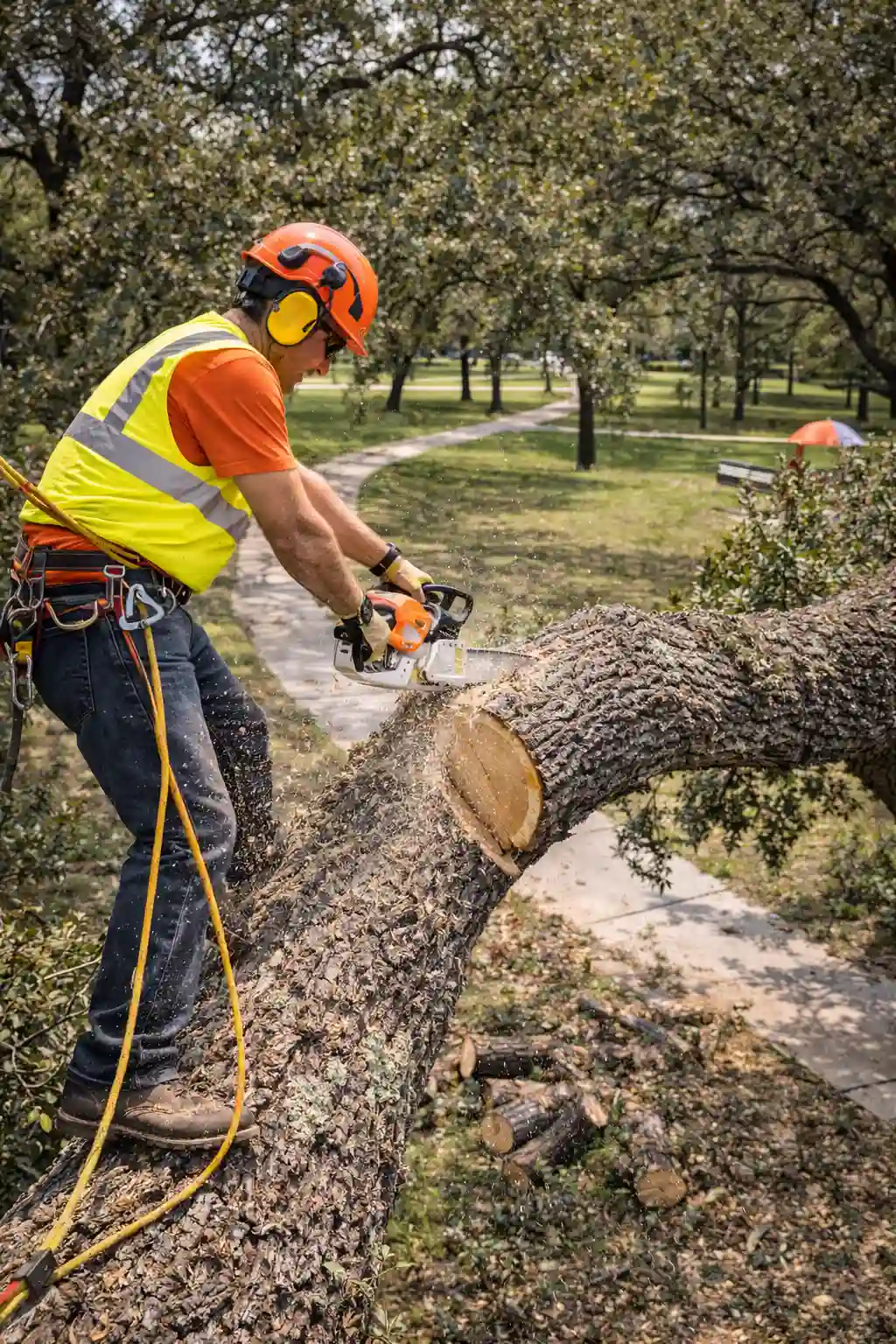
Sectional dismantling for tight residential lots common in Teravista, Forest Creek, and Old Town Round Rock, where structures and fences limit a straight fell.
-
Trimming & pruning
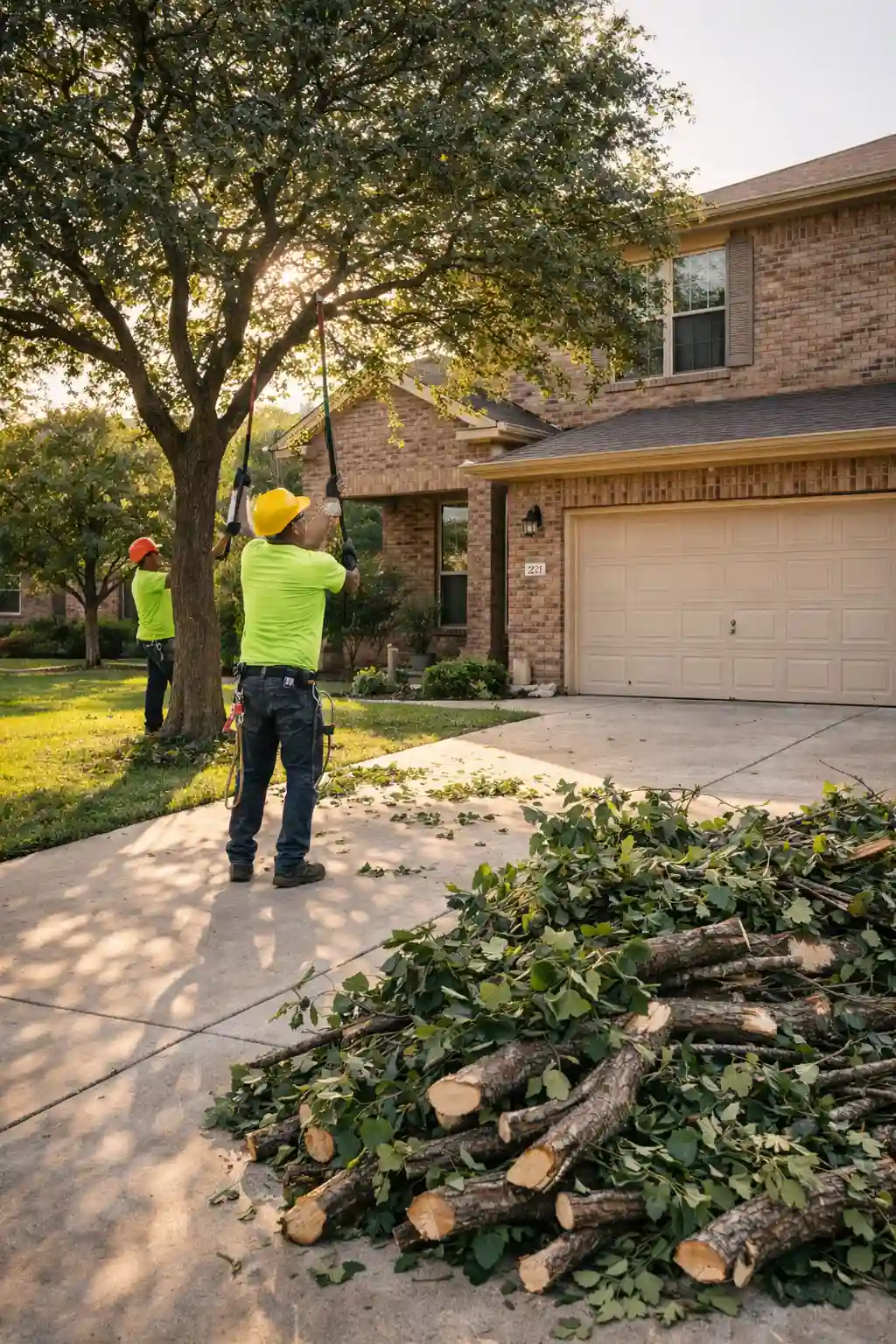
ISA-referenced cuts on Live Oaks, Cedar Elms, and Pecans, with live oak wounds sealed immediately to limit oak wilt spread.
-
Stump grinding & removal
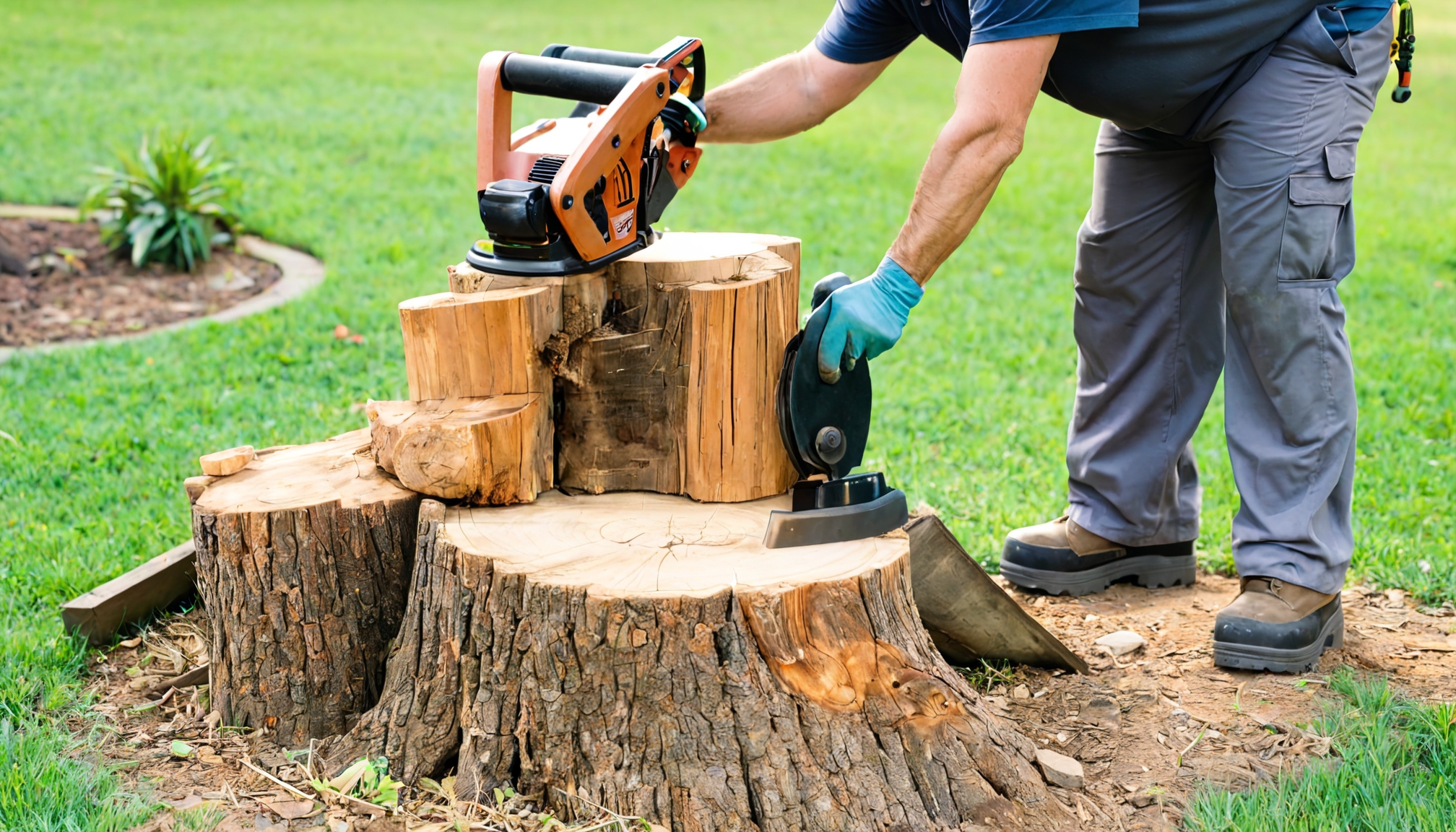
Grinding reduces the stump to mulch on site; full removal pulls the root ball — often necessary for oak and pecan roots that have moved with the clay.
-
Emergency & health management
Storm response for split or fallen trees, plus ongoing treatment for oak wilt, borers, and root stress tied to Round Rock's soil.
Do I Need A Permit To Remove A Tree In Round Rock?
Yes, if the tree qualifies as protected. Round Rock's Code of Ordinances, Chapter 8, Article III designates any tree 8 inches or more in diameter (measured 4.5 ft above grade) as a protected tree by default, and a "monarch tree" — one whose diameter reaches 80% of the largest known tree of its species in the city — is protected regardless of size.
The rule that actually applies depends on your lot: on most developed single-family lots, only a monarch-designated tree is protected — an ordinary 8-inch tree on a typical house lot generally is not. On undeveloped lots in those same zoning districts, the threshold rises to 20 inches or more. Removing a monarch tree also requires the city to formally revoke its monarch designation through City Council action before work can happen. Because zoning and lot status change which rule applies, we confirm protected-tree status with the city's Forestry Manager before scheduling tree removal on any large Round Rock tree.
When a protected or monarch tree is structurally compromised but can't legally be removed, tree cabling and bracing supports the trunk and major limbs instead — often the only option available while the designation stands.
How Should Trees Be Pruned In Round Rock?
Round Rock's own tree technical manual requires pruning cuts to follow International Society of Arboriculture (ISA) standards, and any live oak wound — intentional or accidental — must be painted or sealed immediately to block oak wilt transmission by sap-feeding beetles.
Texas A&M Forest Service recommends avoiding live oak pruning from February through June, when those beetles are most active. Cedar Elms, by contrast, grow fast and vertical, and benefit from structural pruning while young rather than waiting until limbs overextend. See tree trimming and pruning for the full process.
What Happens To Stumps After Tree Removal In Round Rock?
Grinding reduces the stump and surface roots to mulch in place; full removal pulls the entire root ball out of the ground. Round Rock residents can also collect up to 2 cubic yards of finished mulch free at the city's Recycling Center.
Bring proof of residency — a current Round Rock water bill plus a driver's license — to self-load mulch for free, or have a Recycling Center team member load it for $10, plus $5 for each additional cubic yard. Large oak and pecan root systems tangled in Blackland clay usually need grinding equipment sized for the job — see stump grinding and stump removal.
With the stump cleared, many homeowners replant right away rather than leave bare soil to erode in the clay — tree planting services can match the replacement species to Round Rock's soil instead of guessing.
What Should I Do About A Storm-Damaged Tree In Round Rock?
Keep people, pets, and vehicles away from the tree, stay clear of any limb touching a power line, and call a licensed crew before attempting cleanup. The City of Round Rock's own forestry division notes that fallen limbs and trees cause most property damage during severe weather.
Clay soil already saturated from rain loosens root anchoring further, so a leaning tree that survived the initial storm can still fail hours or days later. Request emergency tree removal rather than waiting out a "wait and see" period.
- Trunk cracks that widen after wind or rain
- A tree leaning further than it was before the storm
- Hanging or partially broken limbs still caught in the canopy
- Soil heaving or cracking around the base — a sign roots have shifted in the clay
- Bark loss or sudden leaf browning on a Live Oak (possible oak wilt, not just storm stress)
What Tree Diseases Are Common In Round Rock?
Oak wilt is the most damaging disease among Round Rock's Live Oaks and Texas Red Oaks — spread by sap beetles carrying spores to fresh wounds, and between neighboring Live Oaks through connected root systems. Red oaks typically die within weeks of infection; Live Oaks decline more slowly but spread the fungus further through root grafts.
Cedar Elms and Pecans deal more often with bacterial leaf scorch and boring insects than with fungal wilts. Diagnosis falls under arborist services; advanced cases — cavity treatment, crown restoration after storm damage — go to a tree surgeon, while ongoing prevention is covered by tree fertilization.
Tree Service In Round Rock, TX
How Much Does Tree Service Cost In Round Rock, TX?
Central Texas tree removal typically runs $250–$750 for small trees, $800–$2,200 for medium trees, and $1,500–$4,000+ for large oaks and pecans. Stump grinding adds $100–$450. Exact pricing depends on size, access, condition, and whether the tree carries protected or monarch status.
| Service | Typical range | Primary cost driver |
|---|---|---|
| Small tree removal (under 30 ft) | $250–$750 | Height, species |
| Medium tree removal (30–60 ft) | $800–$2,200 | Access, rigging near structures |
| Large tree removal (60 ft+, mature oak or pecan) | $1,500–$4,000+ | Trunk diameter, canopy weight, power lines |
| Stump grinding | $100–$450 | Stump diameter, root spread |
| Emergency / storm response | +25–40% | After-hours dispatch, hazard exposure |
What Other Cities Near Round Rock Do You Serve?
We also serve Pflugerville and Georgetown, both sharing Round Rock's Blackland Prairie clay and I-35 corridor — a different soil profile than the Edwards Plateau limestone found in Hill Country suburbs further west.
Round Rock Tree Service Questions
Only if it's a protected tree. On most developed single-family lots, that means a city-designated "monarch tree." On undeveloped lots, any tree 20 inches or more in diameter is protected. We confirm status with the city's Forestry Manager before scheduling removal.
A tree the city's Forestry Manager has designated because its diameter reaches at least 80% of the largest known tree of that species in Round Rock. Monarch trees can't be removed unless the city revokes the designation through City Council action.
Typically $250–$750 for a small tree, $800–$2,200 for a medium tree, and $1,500–$4,000 or more for a large mature oak or pecan. Stump grinding adds $100–$450. An on-site estimate confirms exact pricing.
Yes. Residents can self-load up to 2 cubic yards of finished mulch free at the city's Recycling Center with proof of residency, or have staff load it for $10 plus $5 per additional cubic yard.
About 19 miles via I-35, roughly a 23-minute drive under normal traffic.
Get A Tree Service Quote In Round Rock
Tell us about the tree — species, size, and whether it's near a structure or power line — and we'll confirm protected-tree status before we quote the work.
Request a Quote See All Tree Services