
Emergency Tree Removal in Austin, TX
A tree that has split, uprooted, or fallen on a structure needs to come down the same day, not at the next open slot. Austin Tree Service TX dispatches crews across the Austin metro to remove hazard trees safely, day or night.
Emergency tree removal clears a fallen, split, or structurally failed tree the same day it happens. A crew assesses the hazard on arrival, secures the area, removes the tree whole or in sections with rope or crane rigging, and hauls the debris off-site. Emergency jobs typically cost more than scheduled removal because of after-hours labor and the added rigging complexity near structures or power lines.
What Counts as an Emergency Tree Removal?
A tree removal qualifies as an emergency when it already poses an active, immediate risk to people, structures, vehicles, or utility lines — not when it is simply unhealthy or overgrown. Non-urgent problems are handled through scheduled removal instead.
- The tree has fallen and is resting on a house, garage, fence, or vehicle
- The trunk has split or cracked through more than one-third of its diameter
- The tree is uprooted and leaning, with soil visibly lifted at the base
- The tree or a large limb is resting on an active power line
- The tree is blocking a driveway, road, or emergency access point
- A storm has snapped major limbs that remain lodged in the canopy ("widowmakers")
If none of these apply, the tree can usually wait for scheduled tree removal instead of emergency dispatch. See when a tree needs to be removed and emergency vs. scheduled removal for the full comparison.
What Happens During an Emergency Tree Removal?
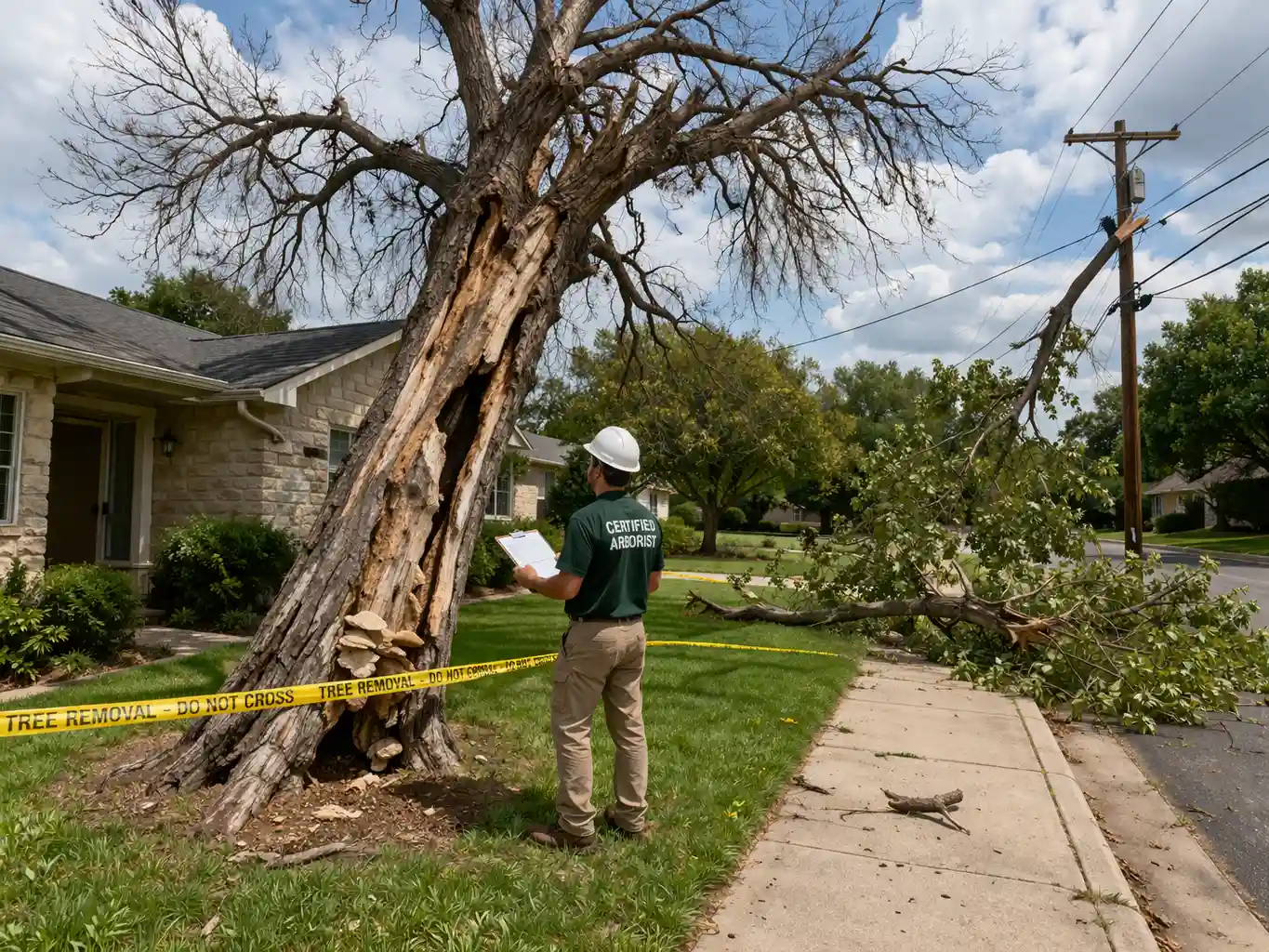
A hazard assessment happens before any cutting starts. Crews confirm what the tree is resting on and whether power lines are involved, then remove it in the order that keeps the property and the crew safest.
-
Hazard Intake
A call or photos identify the tree's condition, what it's resting on, and whether power lines are involved before a crew is dispatched.
-
Site Safety Assessment
The crew arrives, checks for downed lines and remaining tree stability, and sets a safety perimeter around the work area.
-
Utility Coordination
If the tree is in contact with a power line, the crew coordinates with the utility to de-energize the line before any cutting begins.
-
Rigging & Sectioning
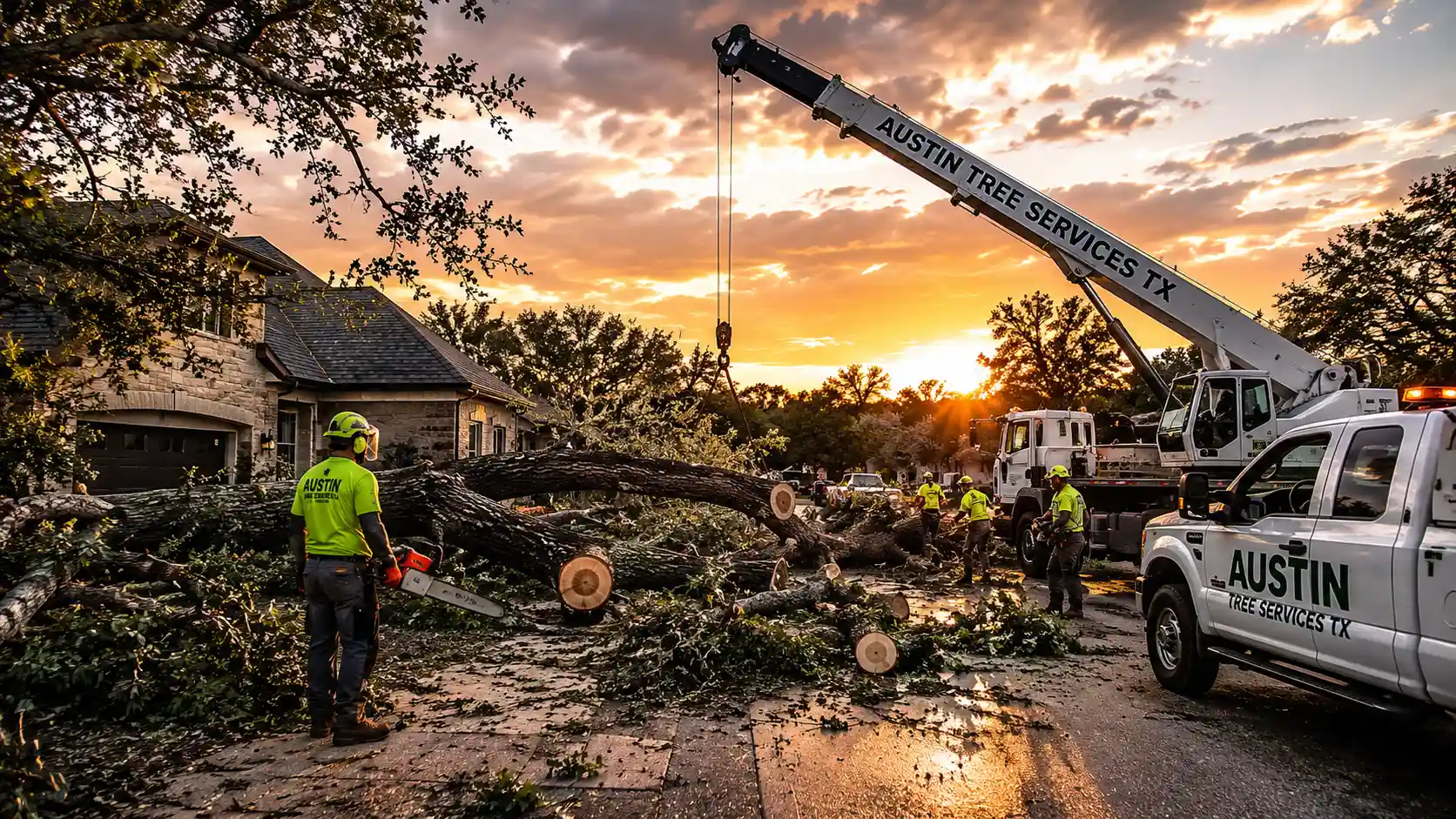
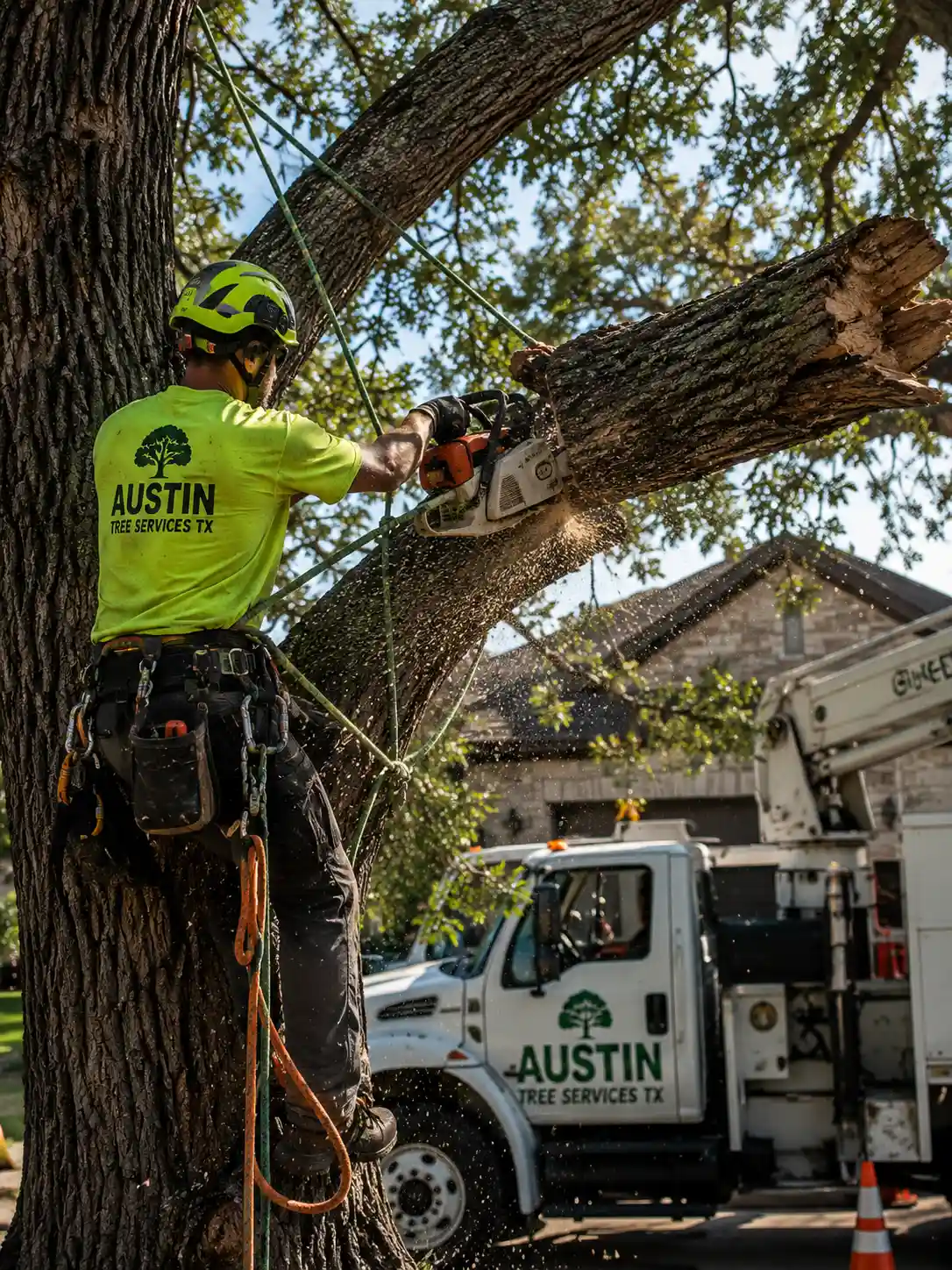
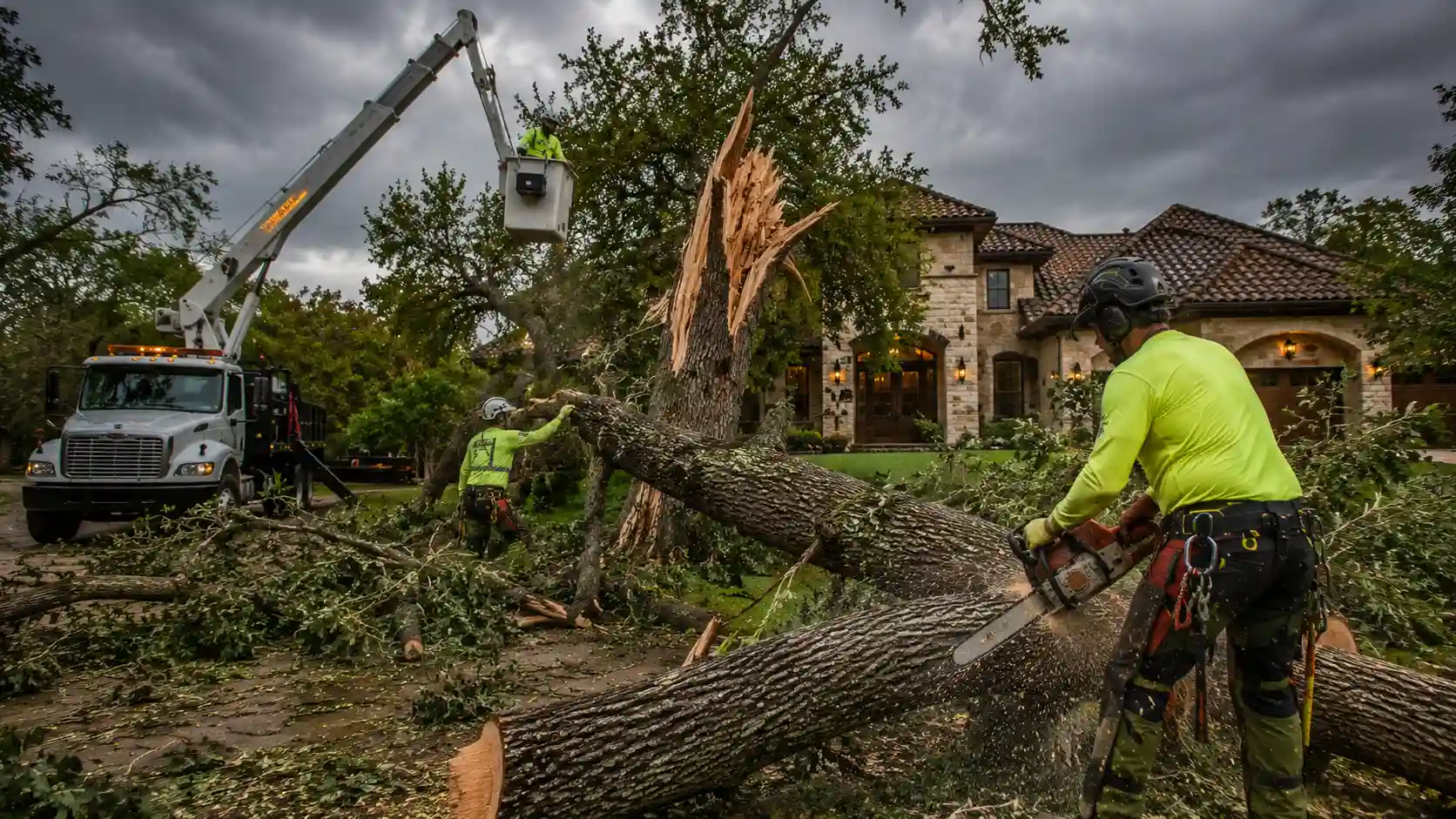
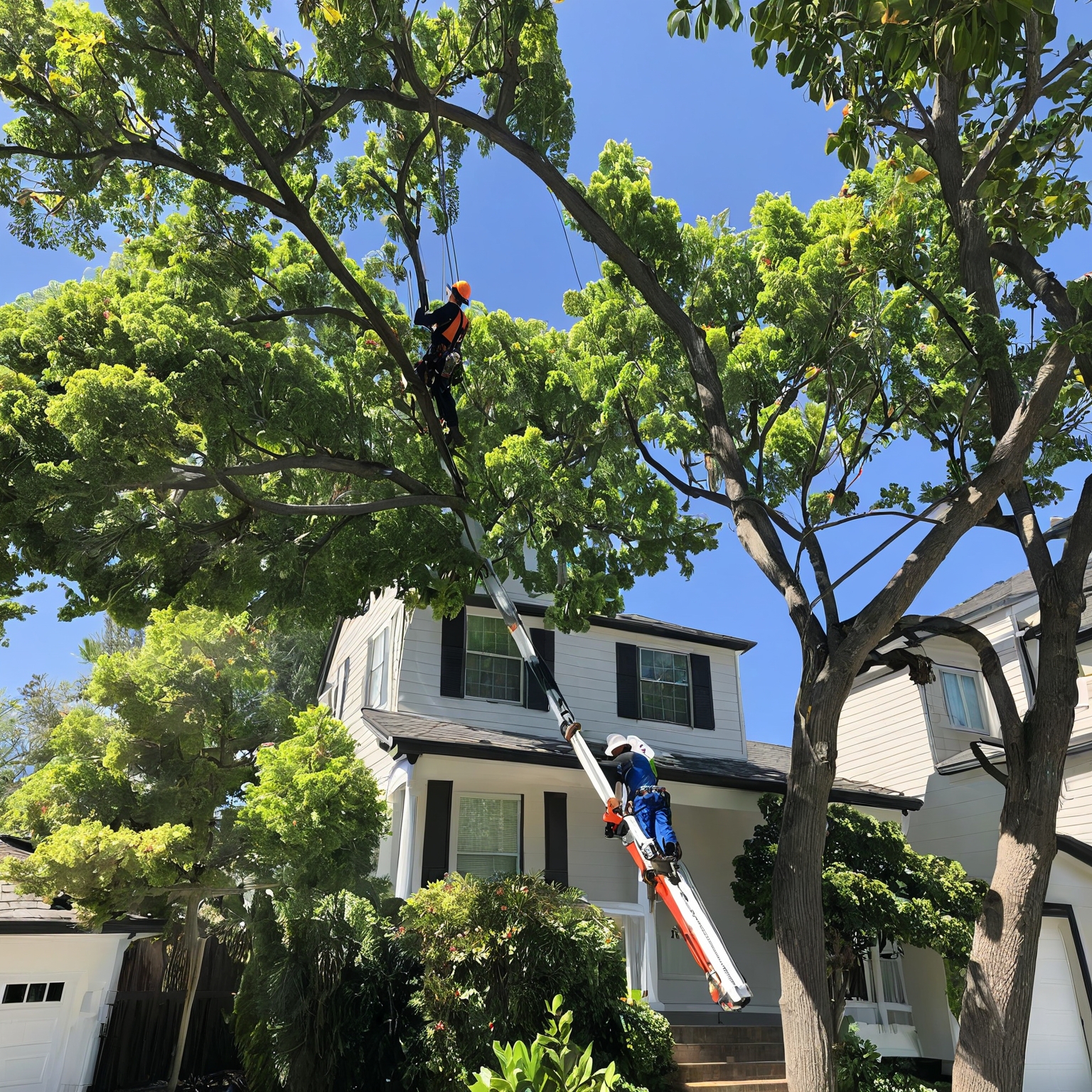
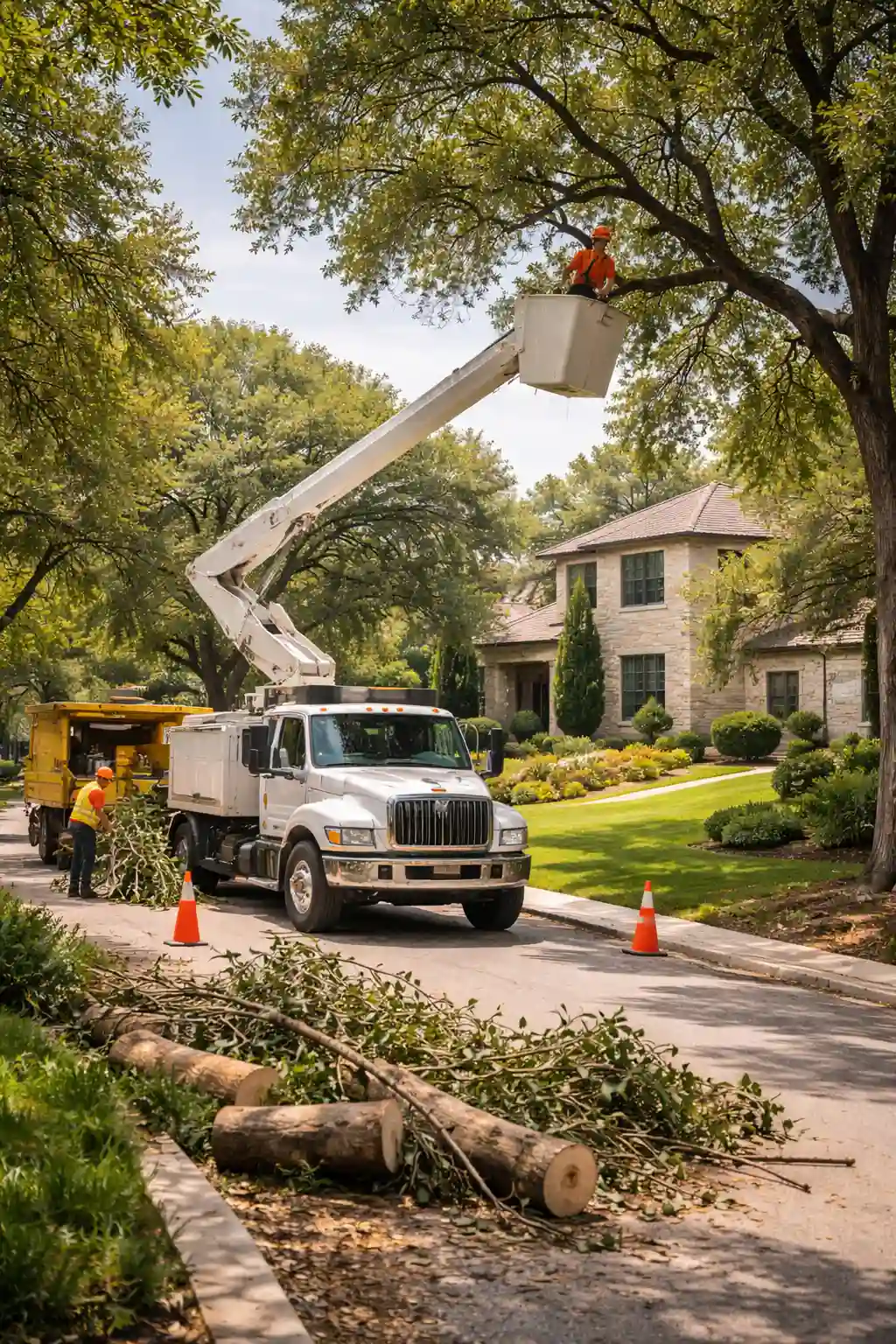
Large or structurally compromised trees are removed in sections with rope rigging, a crane, or a bucket truck instead of felled whole, protecting the structure or vehicle underneath.
-
Debris Removal
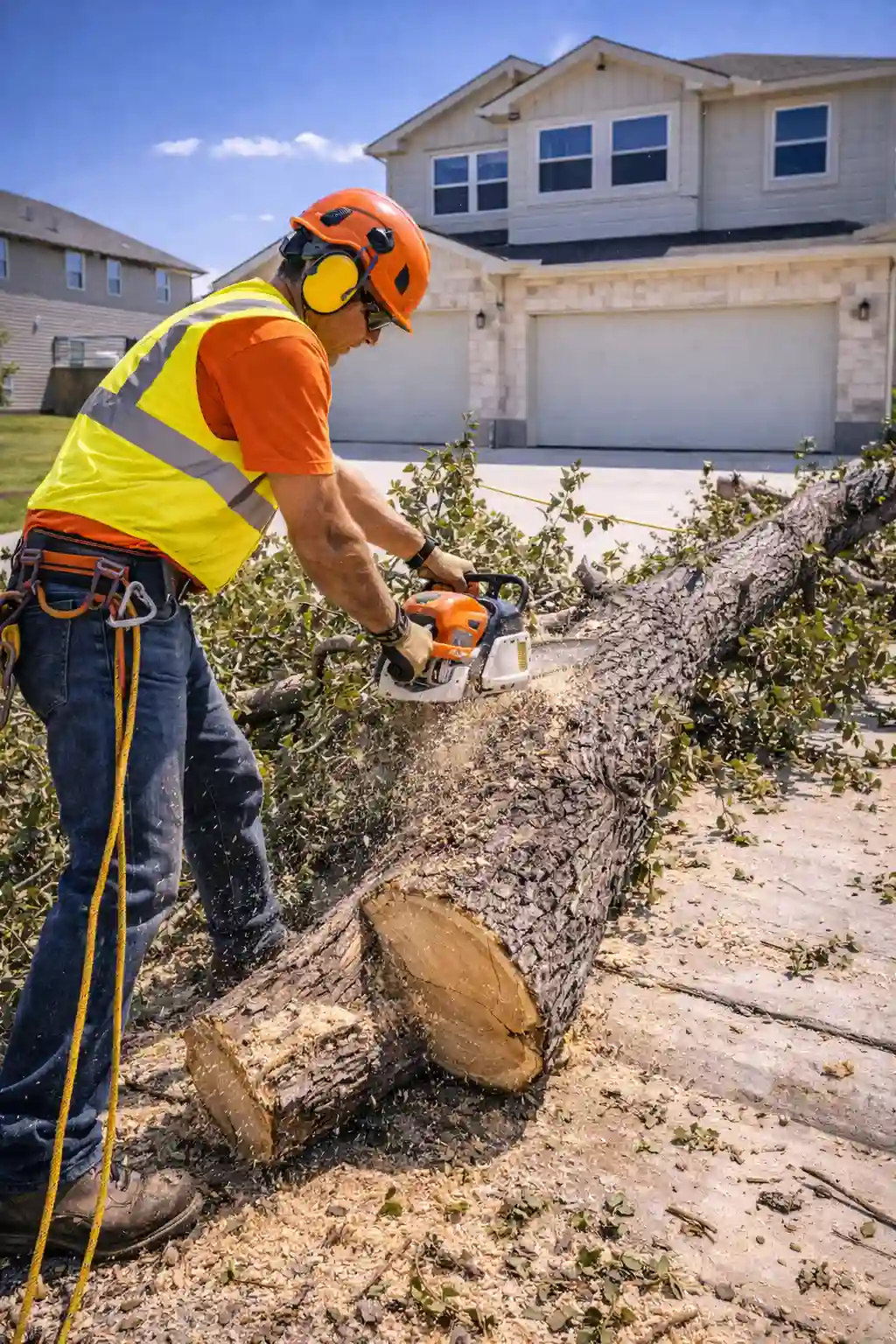
Wood and brush are hauled off-site the same day. Larger sections can be left on-site as firewood on request.
-
Stump Grinding (Optional)
The stump can be ground flush with the soil in the same visit or scheduled separately — see stump grinding services.
What Does Emergency Tree Removal Cost?
Emergency removal costs more than scheduled removal. Costs vary by tree size, hazard location, and demand at the time of the storm. The ranges below reflect typical Central Texas emergency jobs, not a fixed quote for your property.
| Factor | Typical Impact |
|---|---|
| Small tree, under 30 ft | $300 – $800 |
| Medium tree, 30–60 ft | $800 – $2,000 |
| Large tree, 60 ft+ or on a structure/power line | $2,000 – $5,000+ |
| After-hours, weekend, or holiday dispatch | +25% – 50% over daytime rates |
| Stump grinding add-on | +$150 – $500 |
| Storm-surge demand (area-wide event) | Triaged by hazard severity, not first-come order |
For a full breakdown of why storm calls cost more than scheduled work, see why emergency tree removal costs more. For non-urgent pricing, see standard tree removal cost.
Why Central Texas Sees More Emergency Tree Calls
Regional soil, storm patterns, and one specific tree disease shape how emergency crews work in the Austin metro.
- Oak wilt season, February 1 – June 30: Texas A&M Forest Service advises against pruning or wounding any oak during this window, when sap beetles that spread oak wilt are most active. Emergency cuts made on a live oak in this period must be painted immediately to block beetle access — oak wilt has killed millions of trees across 76 Texas counties and spreads roughly 75 feet a year through connected root systems.
- Caliche and clay soils: Shallow, compacted soils common across the Austin metro limit root depth, making mature trees more likely to uproot fully rather than just lose limbs during saturated, high-wind storms.
- Severe thunderstorm season, March – June: Central Texas sees its highest frequency of damaging straight-line winds and hail in this window, driving most storm-related call volume.
- Winter ice events, January – February: Ice accumulation adds weight to limbs and snaps them even without wind — a recurring cause of emergency calls after Central Texas ice storms.
One Company, the Whole Austin Metro
How Crews Are Equipped for Hazard Work
Emergency Removals Across the Metro
Emergency Dispatch Across 17 Central Texas Cities
Crews respond to hazard trees throughout Austin and the surrounding suburbs. Visit your city's page for local response details.
Understand the Hazard Before Crews Arrive
Emergency Tree Removal Questions
Austin Tree Service TX dispatches emergency crews 24 hours a day across the Austin metro. Isolated hazards typically get same-day service. During area-wide storm events, calls are triaged by severity, with trees on structures, vehicles, or power lines handled first.
Most homeowners policies cover emergency tree removal when the tree damaged a covered structure or fell due to wind, lightning, or another covered peril. Coverage is less likely if the tree fell in an open yard and caused no property damage. Check your policy's declarations page before work begins if cost is a concern.
Austin's tree ordinance classifies trees 19 inches or more in diameter as protected, and live oak, red oak, pecan, Texas ash, and bald cypress as heritage species once they reach 24 inches. Dead or imminently hazardous trees can generally be removed without waiting on a permit first, but the City Arborist Program typically expects photo documentation of the hazard afterward. Confirm your specific tree's status with the City Arborist Program if it's near the threshold.
A widowmaker is a broken or dead limb caught in the upper canopy instead of on the ground, often left behind after wind or ice. It can fall without warning long after the storm that caused it and is a leading cause of injury during storm cleanup. Crews check for widowmakers before working underneath a damaged tree.
Texas A&M Forest Service recommends avoiding all oak pruning and wounding from February through June, when the sap beetles that spread oak wilt are most active. Emergency cuts are unavoidable when a live oak has already failed, but every cut is painted immediately afterward to block beetle access — a step applied automatically on any oak removal made in that window.
Emergency removal typically costs more than scheduled removal because of after-hours labor, same-day equipment mobilization, and the added rigging complexity of a tree resting on a structure, vehicle, or power line. See why emergency tree removal costs more for a full breakdown.
Get Emergency Tree Removal Today
Send photos of the hazard and your address. Austin Tree Service TX will confirm dispatch and an estimated arrival window the same day.
Request a Quote