Arborist & Tree Health

Arborist & Tree Health

How Summer Heat Affects Tree Health

Most tree damage in Austin doesn’t happen during storms. It happens quietly, over weeks of 100°F afternoons, while homeowners water their lawns and assume the trees are fine. By the time leaves are scorching, branches are dying back, or bark is cracking open, the biological cascade that causes those symptoms started 3–6 weeks earlier — underground, inside the vascular tissue, at a cellular level no one can see. This is the part most tree care guides skip. They tell you to water deeply and mulch your trees. That advice is correct. But it doesn’t explain why summer heat damages trees through specific biological pathways, which damage events are reversible versus permanent, or when a heat-stressed Austin tree crosses from “recoverable with care” to “structurally compromised and hazardous.” Those distinctions matter — especially in a city where a large Live Oak falling on a home during a summer storm is not a hypothetical. This guide covers the full sequence: from what happens inside a tree during its first heat-stressed week, through the cumulative damage of a Central Texas summer, to the point where you need a certified arborist rather than a garden hose. What Actually Happens Inside a Tree When Austin Temperatures Exceed 95°F Trees cool themselves the same way humans sweat: by evaporating water through their surfaces. In trees, this process is called transpiration. Water moves from soil through the roots, up the trunk through specialized vascular tissue called xylem, and out through microscopic pores on leaf surfaces called stomata. When this system is working, leaf tissue stays cooler than air temperature — sometimes by as much as 5–10°F. When air temperatures exceed 95°F and soil moisture is limited — both standard conditions in an Austin July — the transpirational cooling system starts to fail in a predictable sequence. Stage 1: Stomatal Closure (Days 1–5 of Heat Stress) The first response a tree makes to extreme heat is closing its stomata to prevent water loss. This is a survival reflex. The immediate cost is that photosynthesis slows dramatically — stomata are also where CO₂ enters leaves. A tree with closed stomata is a tree that has paused its primary energy production. Most homeowners see nothing at this stage. The tree looks fine. But if high temperatures persist beyond 5–7 days and soil moisture isn’t replenished, the tree cannot reopen its stomata without triggering accelerating water loss. It is essentially locked in a low-energy state. Stage 2: Cell Membrane Damage (Days 7–14 of Sustained Heat) Sustained leaf tissue temperatures above 104°F — which are easily reached on a 105°F Austin afternoon in direct sun — begin to denature proteins inside leaf cells. Cell membranes lose integrity. Chlorophyll degrades. This is the point where leaf scorch becomes visible: brown, dry margins appearing first on leaves with the most direct sun exposure, typically on the south- and west-facing sides of the canopy. Critically, this damage is not reversible in affected cells. Watering correctly after leaf scorch appears will prevent further damage but will not restore scorched tissue. Those leaves are functionally dead even if the rest of the canopy survives. Stage 3: Vascular Failure and Branch Dieback (Weeks 3–6+) If heat stress continues — and in Austin, it does — the tree begins sacrificing parts of itself to protect the core. Interior and older leaves are dropped to reduce total transpirational demand. When this isn’t enough, the tree allows branch tips to die. Water movement stops in those sections. The vascular tissue collapses. Branch dieback that results from this stage won’t regenerate. Dead branches stay dead. And significantly — once a branch has died from vascular failure, it becomes a structural liability during the thunderstorm season that follows Austin’s peak heat months. Dead limbs in the canopy are one of the most common causes of storm-related property damage, because they have no living tissue to flex under wind load — they simply break. Stage 4: Opportunistic Pest and Pathogen Entry A heat-stressed tree signals its condition chemically. The volatile compounds it releases under stress are detected by bark beetles, wood-boring insects, and certain fungal spores, which specifically target compromised trees. This is not coincidence — it is an evolved targeting mechanism. The pests arrive when the tree is least capable of defending itself. Understanding this sequence matters because it changes the intervention logic entirely. Watering a tree that has already reached Stage 3 will not undo vascular branch failure. Treating pest infestation on a tree that is still in Stage 1 is unnecessary and ineffective. The correct response depends on where in this progression your tree actually is — which is not always obvious without assessment. How Austin’s Specific Conditions Create Compounding Heat Stress Austin’s summer heat stress is not just an intensity problem — it is a compound problem created by the intersection of temperature, soil type, soil depth, and water availability. Each factor amplifies the others. The Expansive Clay Problem Much of Austin sits on expansive clay soils — soils that swell when wet and shrink dramatically when dry. During summer drought conditions, clay soils crack open along fault lines that run through the root zone. These cracks physically sever feeder roots — the fine, hair-like roots that perform most of the tree’s water absorption. A tree can lose a significant portion of its absorptive root mass to clay cracking without showing any symptoms above ground for several weeks. The cruel irony: when rain finally breaks a drought in Austin, expansive clay soils initially repel water. The dry, cracked surface causes runoff rather than infiltration, meaning the first inch of rain after a drought often contributes almost nothing to root-zone moisture. The roots that survived cracking don’t receive relief for days after the rain event. Limestone Bedrock and Rooting Depth Austin’s Edwards Plateau limestone creates a hard ceiling for tree root development. Trees that in deep loam soils would develop root systems reaching 4–6 feet deep may be constrained to 12–24 inches in areas where limestone bedrock or dense caliche
Arborist & Tree Health

Root Health Problems That Affect Tree Stability

A tree can have a full green canopy, no visible bark damage, no dead branches — and still be weeks away from falling over. That is not a rare scenario. It is what root system failure looks like in its final stages, and it is why root health problems are classified as the highest-consequence defect category in ISA tree risk assessment methodology. The reason root failure catches homeowners off guard is structural: roots are underground, they fail silently over months or years, and the aboveground symptoms that do appear — sparse canopy, early leaf drop, slight lean — are routinely misread as drought stress, pest activity, or normal seasonal variation. By the time a root problem becomes visible to an untrained eye, the window for intervention has often already closed. This guide covers every major category of root health problem that affects structural tree stability — what causes it, how it progresses, what the early and late indicators look like, and what conditions in Austin specifically accelerate the process. If you manage mature trees on your property, especially trees within fall distance of your home, a vehicle, or a high-use area, this is the information you need before something goes wrong. What Does a Tree Root System Actually Do? Before diagnosing root problems, you need a clear model of what roots are doing — because they perform two entirely different jobs, and different problems compromise each one in different ways. Structural roots are the large-diameter, woody roots that extend radially outward from the root flare. Their job is mechanical: they anchor the tree against wind load, resist lean caused by gravitational stress, and maintain the tree’s upright position during saturated soil conditions when the ground itself offers less resistance. Structural roots are the cables and footings of the tree’s foundation system. Feeder roots — also called fine roots or absorbing roots — are the opposite: thin, fibrous, and concentrated in the top 12 to 18 inches of soil. They do not hold the tree up. They absorb water and dissolved nutrients and pass them upward into the vascular system. Without functional feeder roots, photosynthesis slows, wood density declines, and the tree’s capacity to produce and deploy carbohydrates for root regeneration and wound response drops — which ultimately compromises structural root health too. This interdependence matters because root problems are rarely isolated to one system. A pathogen that destroys feeder roots eventually starves the structural root system. Soil compaction that kills fine roots in a zone prevents structural root regeneration there. Girdling that cuts off carbohydrate supply to roots degrades both systems simultaneously. Understanding which root system is being compromised first tells you how quickly instability will progress. Girdling Roots: The Slow Strangulation That Produces Sudden Failure Girdling roots grow in a circular or spiral pattern around the trunk base rather than extending radially outward. As both the girdling root and the trunk expand in diameter over years, the girdling root presses against — and eventually compresses — the outer vascular tissue of the trunk at the point of contact. This is not a surface cosmetic issue. The tissue being compressed is the phloem, which carries photosynthate downward from the canopy to the root system, and the cambium, which produces the new vascular tissue necessary for the tree to grow and heal. The consequence is a slow severance of the canopy-to-root supply line. The structural root system below the compression point gradually becomes carbohydrate-starved. Starved structural roots cannot grow, cannot produce defense compounds against pathogens, and cannot respond to physical damage — they simply decline in mass and wood density while the tree above appears healthy. This is the mechanism that produces the “bright canopy on a failing foundation” scenario: a tree that looks vigorous until a wind event reveals that its root plate has been losing structural integrity for years. Girdling roots also create a structural weak point in the trunk itself. Trees with advanced girdling root compression frequently fail at or just below the root flare rather than breaking mid-trunk — the compression zone is where the trunk cross-section is weakest. In high-wind events, this produces complete whole-tree uprooting or trunk failure at ground level rather than branch breakage. What Causes Girdling Roots in Austin Trees? The most common cause is containerized nursery stock. When a tree is grown in a container for an extended period, its roots circle the container walls. If those circling root patterns are not corrected at planting — by manually straightening or cutting circular roots — they persist and worsen after the tree is planted in the ground. This is why Live Oaks and Cedar Elms planted from container stock in Austin neighborhoods so frequently develop girdling root problems by age 15 to 25. The second cause is buried root flares. When a tree is planted too deep, or when soil and mulch are piled against the trunk over time (“mulch volcanoes”), secondary roots near the base grow upward toward the oxygen-rich soil surface and then begin wrapping around the trunk. Buried root flares are extremely common in Austin landscapes and often go unnoticed for a decade before the girdling compression becomes severe enough to affect canopy health. How to Identify Girdling Root Damage At the surface level, look for a trunk that enters the soil without a visible root flare — a trunk that looks like a telephone pole going straight into the ground. Healthy trees should show a visible widening at the base where the structural roots begin. If that flare is absent or compressed on one side, buried roots or girdling roots are likely present. Progressive canopy thinning, especially on one side of the tree, and a slight lean that has worsened over years are also indicators. Definitive diagnosis requires root flare excavation — carefully removing soil from the base to expose the root collar and proximal structural roots and inspect them visually. This should be done by a certified arborist rather than with landscape equipment that risks additional root

Arborist & Tree Health

Pest-Infested Trees: Can an Arborist Save Them?

Most homeowners do not know their tree has a pest problem until the damage is already structural. By then, the question is not whether infestation exists — it is whether the tree can still survive it. An arborist can save a pest-infested tree. But the honest answer to whether your tree can be saved depends on three things: which pest is involved, how far the infestation has progressed, and whether the tree’s vascular system is still functional enough to respond to treatment. This article walks through all three — with specific focus on the pest species active in Central Texas, the diagnostic process a certified arborist uses, and the clear thresholds that separate a treatable tree from one that needs to come down. Why Pest Infestations Are So Often Caught Too Late Pest damage does not announce itself the way a broken branch or a lightning strike does. It mimics other problems. Yellowing leaves in July look like drought stress. Thinning canopy looks like heat damage. Bark that starts separating at the base looks like natural aging. By the time the visible symptoms become unmistakable, the damage to the vascular system has often been progressing for months — sometimes years. This is the core challenge with pest infestations: the early stages are largely invisible from the outside. The insects doing the most structural damage — bark beetles, wood borers, cambium miners — work inside the tree. The symptoms you see on the outside are the tree’s response to internal disruption, which means they lag behind the actual injury timeline. Understanding what those symptoms actually indicate — and what pest is causing them — is the first step toward an accurate diagnosis. What Pest Damage Actually Looks Like on a Tree The signs of pest infestation vary by the type of pest involved. Learning to distinguish them from look-alike problems like fungal disease or drought stress is critical, because the treatment for each is entirely different. Exit holes and frass in the bark Bark beetles and wood-boring insects create small, perfectly round or D-shaped holes in the outer bark as adults emerge. Around these holes, you will typically find frass — a fine, powdery or granular material that is a mix of wood fiber and insect excrement. This is one of the most reliable physical indicators of a boring insect infestation. No fungal disease or environmental stressor produces the same pattern. Serpentine galleries under loose bark If you peel back bark that is already loose or dying, look for winding, S-shaped tunnels carved into the cambium — the living layer just beneath the outer bark. These are the feeding trails of boring larvae. The emerald ash borer creates exactly this pattern on ash trees. When these galleries encircle the trunk completely, they sever the tree’s ability to move water and nutrients from roots to canopy — a condition called girdling. Girdling is not survivable. Crown dieback starting at the top When the upper canopy begins dying while lower branches stay green, boring insects are a leading cause. They attack the vascular tissue, and the top of the tree — farthest from the root system — is the first part to lose its water and nutrient supply. Progressive top-down dieback is a pattern worth taking seriously rather than waiting out. Sticky residue and blackened leaves Soft-bodied insects — aphids, scale, whiteflies — excrete honeydew, a sugar-rich liquid waste. Honeydew coats leaf surfaces and quickly attracts sooty mold, a black fungal coating that reduces the leaf’s ability to photosynthesize. If your live oak or pecan leaves feel tacky and look darkened or streaked, you are likely dealing with a sucking insect infestation, not a disease. The distinction matters for treatment. Pitch tubes and resin masses on bark Pines respond to bark beetle attacks by pushing resin toward the entry point. This produces pitch tubes — small, popcorn-shaped masses of congealed resin on the bark surface. Multiple pitch tubes in a vertical pattern on a pine trunk are a strong indicator of southern pine beetle activity. The presence of blue-stained wood beneath the bark confirms it. Conks, crusts, and fungal growth at the base Bracket fungi, shelf conks, and the distinctive silver-gray crust of hypoxylon canker at the trunk base or on major scaffolding branches indicate advanced fungal colonization of dead or dying wood. These fungi often move in after boring insects have already compromised the structural tissue. By the time these are visible externally, the underlying wood is dead. This does not always mean the tree needs immediate removal, but it does mean it requires a structural integrity assessment. The Tree Pests That Matter Most in Austin, TX Central Texas has a specific pest profile shaped by its climate, its native tree species, and the particular stress profile of urban Austin — alkaline clay soils, heat cycles, periodic drought, and dense residential canopy. Knowing which pests are active here matters because their treatment protocols differ fundamentally. Emerald ash borer (Agrilus planipennis) The emerald ash borer is one of the most destructive invasive insects in North American forestry. It targets every species of ash — Texas ash, green ash, white ash — and kills through the same mechanism: larval galleries that girdle the cambium layer, cutting off water and nutrient transport. A healthy ash tree shows no external symptoms in the early infestation period. By the time crown dieback is visible, the infestation may already be well-established. Treatment is possible and proven: systemic trunk injection of emamectin benzoate is the most effective approach for trees with less than 50 percent canopy loss. Trees that have lost more than half their canopy are typically not viable candidates for treatment, and the arborist’s focus shifts to hazard assessment and removal planning. Oak wilt (Ceratocystis fagacearum) Oak wilt is technically a fungal disease, but it belongs in this discussion because it spreads primarily through sap-feeding beetles in the Nitidulidae family that carry fungal spores from infected trees to fresh wounds on healthy ones. It is the

Arborist & Tree Health

Signs Your Tree Has a Disease

Tree disease does not begin the day you notice something wrong. By the time a homeowner spots discolored leaves, peeling bark, or a dying branch, the pathogen has often been at work for weeks — sometimes months. In Central Texas, where live oaks dominate neighborhoods, clay soils limit drainage, and summer temperatures routinely exceed 100°F, the conditions that invite disease are built into the environment itself. This guide covers how tree disease actually works, what each category of symptom means, which diseases are most active in the Austin area, and how to build a diagnostic framework that helps you tell the difference between a tree that needs treatment and one that needs removal. Understanding these signs is not just a matter of tree care — it is a safety and property question. A structurally compromised tree, weakened by internal decay or vascular disease, does not always look dangerous from the outside until it fails. How Tree Disease Works: The Basics Every Homeowner Should Know Trees are not passive hosts. They have defense mechanisms — chemical barriers, callus tissue formation, and compartmentalization responses — that actively wall off invading pathogens. The process is called CODIT (Compartmentalization of Decay in Trees), and it is why a fungal canker on one side of a trunk does not always spread to the whole tree. But those defenses have limits. When a tree is under chronic stress — from drought, compacted soil, root damage, construction disturbance, or repeated defoliation — its ability to fight infection weakens. This is why most serious tree diseases in Austin are opportunistic: they do not attack healthy, well-established trees at random. They enter through wounds, exploit stress, and accelerate decline that was already underway. Tree diseases fall into four biological categories: Each category produces different symptoms, spreads differently, and responds differently to management. Knowing which category you are dealing with changes every decision that follows. What Are the Early Warning Signs of Tree Disease? The first visible symptoms of tree disease almost always appear in the leaves or bark — the outermost layers of the tree where the effects of internal disruption first become visible. The key word is “internal”: by the time the outside shows symptoms, something has been wrong inside for a while. Leaf-Based Symptoms Premature discoloration or yellowing (chlorosis): Leaves turning yellow when they should be green indicate a disruption in chlorophyll production. This can result from nutrient deficiency, but when it appears alongside other symptoms, it often signals vascular disease or root dysfunction preventing nutrient uptake. Leaf spots with defined margins: Circular, angular, or irregular spots — often brown, black, or water-soaked — with yellow halos around them are characteristic of fungal leaf spot diseases. The defined margin is the tree’s immune response attempting to isolate the infection. Veinal necrosis: The tissue between leaf veins turns brown while the veins themselves remain green. This is the most diagnostically specific leaf symptom in Central Texas — it is the hallmark of Oak Wilt in live oaks, and it means vascular compromise is already occurring. Powdery coating on leaf surfaces: A white, gray, or chalky residue on leaves and young shoots is powdery mildew. It is the visible fruiting structure of the fungus, not just a cosmetic issue — it is consuming leaf tissue and reducing photosynthetic capacity. Leaf curl or distortion without pest damage: When leaves curl, twist, or deform without visible insect feeding, the cause is often viral, phytoplasma, or chemical stress. In Austin, herbicide drift from neighboring properties is a common non-disease cause of this symptom. Leaves falling in the wrong season: Texas live oaks undergo their natural leaf exchange in late February through April. Leaf drop in June, July, or August — especially when it is rapid — is never normal and should be investigated immediately. Bark and Trunk Symptoms Cankers: Sunken, discolored, or cracked sections of dead bark tissue on the trunk or branches. Cankers develop when a fungal or bacterial pathogen kills the cambium layer — the living tissue just beneath the bark. If swollen ridges (callus tissue) are forming at the canker margins, the tree is actively attempting to compartmentalize. If the canker continues expanding past those margins, the tree is losing that battle. Bark peeling to reveal powdery spore masses: When bark separates from the wood and reveals a layer of silver-gray, tan, or dark brown powdery material beneath, this is Hypoxylon Canker — a serious secondary fungal pathogen. The powder is a mass of spores. Oozing or bleeding sap: Some oozing from wounds is a normal tree response. Chronic, foul-smelling, or bacterial slime flux (wetwood) produces a different discharge — often fermented-smelling, sometimes discoloring the bark dark brown or black. Bark that cracks alongside this oozing indicates an active internal problem, not surface healing. Mushrooms or conks at the base or on the trunk: Shelf fungi (conks) or mushrooms emerging from a trunk or root flare are the above-ground fruiting bodies of wood decay fungi. The decay has been progressing internally, often for years, before these structures appear. Their presence at the trunk base is a major structural hazard indicator — not a minor cosmetic issue. Canopy and Crown Symptoms Crown dieback: The progressive death of branches from the tips inward. One-sided dieback usually points to a vascular or root problem on that corresponding side of the tree. Uniform dieback across the entire canopy suggests systemic infection or whole-root system failure. Witches’ broom: Clusters of abnormally dense, stunted, broom-like growth on branches. This is typically associated with phytoplasma infection or certain fungal pathogens. In pecans, it is a diagnostic indicator of Pecan Bunch Disease. Thin canopy with undersized leaves: When a tree consistently produces a sparse canopy with leaves that are smaller than normal, this indicates a chronic condition — nutrient deficiency, root damage, or a slow-progressing disease that has been reducing the tree’s functional capacity for seasons. Oak Wilt: The Most Serious Disease in Central Texas Oak Wilt (Bretziella fagacearum, formerly Ceratocystis fagacearum) is a vascular fungal

Arborist & Tree Health

How Arborists Assess Tree Health

A tree health assessment is not a single act — it is a layered diagnostic process that moves from the soil outward, from the visible to the measurable, and from observation to risk classification. When a certified arborist evaluates a tree, they are not simply looking for obvious problems. They are reading a living system under pressure from multiple directions at once: structural load, vascular function, disease, pest activity, soil chemistry, and the accumulated effects of past injuries. For homeowners in Austin, understanding what this process involves matters — not just intellectually, but practically. Trees in Central Texas face a specific set of stressors: prolonged summer heat, expansive clay soils that shrink and swell with moisture change, the persistent threat of Oak Wilt, and increasingly severe storm seasons. The arborist standing in front of your Live Oak is not running a generic checklist. They are applying expertise to a specific organism in a specific environment, with specific failure risks. This guide explains how that evaluation actually works — what arborists examine, which tools they use, how they interpret what they find, and what the findings mean for you as a property owner. What Is a Tree Health Assessment? A tree health assessment is a structured evaluation of a tree’s biological condition, structural integrity, and risk profile. The output of a complete assessment is not a simple pass or fail — it is a risk classification paired with a set of care recommendations that range from observation to immediate intervention. Certified arborists follow evaluation protocols established by the International Society of Arboriculture (ISA) and the ANSI A300 standards — the published industry standards for tree care operations in North America. A formal written assessment, the kind used in legal or insurance contexts, follows the ISA’s Basic Tree Risk Assessment framework. Informal assessments conducted during routine service visits follow the same principles but may not produce a written report. The distinction between a quick visual inspection and a formal diagnostic assessment matters. A drive-by glance at your tree’s canopy might identify obvious defoliation. A complete health assessment will also catch the girdling root slowly strangling the trunk below grade, the early-stage fungal decay inside a structurally critical crotch, and the soil compaction that has been suppressing root development for a decade. The difference is systematic method. How Arborists Begin: The Outside-In Approach The assessment does not begin at the trunk. It begins at the outer edge of the drip line — the ground zone beneath the outermost extent of the canopy — and works inward. This outside-in approach is one of the most important structural features of a professional evaluation, and skipping it is one of the most common errors in informal inspections. Starting at the drip line allows the arborist to evaluate the root zone environment before examining the tree itself. Soil heaving, grade changes from landscape modifications, paving over root zones, evidence of soil compaction from foot traffic or equipment, and fungal fruiting bodies near the root perimeter all tell a story about what is happening below ground. By the time the arborist reaches the trunk, they already have a hypothesis about what stressors have been acting on the root system. In Austin’s residential neighborhoods — particularly in older areas with established canopy trees — grade changes from additions, driveways, and landscaping renovations are among the leading causes of slow-onset root system decline. Many homeowners associate these symptoms with disease or drought. The real cause often sits six inches underground and was installed during a home improvement project ten years prior. Canopy Assessment: What Arborists Look For Above Canopy evaluation examines crown density, leaf size, leaf color, branch architecture, and the presence and pattern of dieback. Each of these indicators provides a different type of information, and they are read together — not individually. Crown Density and Leaf Development A healthy canopy in Austin should show foliage that is full, appropriately sized for the species, and consistent in color across the crown. Arborists use species-specific baselines: a healthy Live Oak (Quercus fusiformis) in late spring looks different from a healthy Cedar Elm (Ulmus crassifolia), and both look different from a stressed version of themselves. Undersized leaves — sometimes called “mouse-ear” foliage — signal chronic vascular stress. The tree cannot move enough water and nutrients to support full leaf development. This symptom often appears years before obvious structural decline becomes visible, making early recognition critically important. Dieback Patterns Crown dieback — the progressive death of branch tips from the outside of the canopy inward — is one of the most diagnostically informative symptoms an arborist encounters. The pattern of dieback reveals its likely cause: A dieback percentage above 25–30% of the canopy typically indicates a tree requiring urgent evaluation. Above 50%, prognosis becomes significantly more guarded. Knowing the signs that a tree cannot be saved often begins with understanding what these dieback thresholds mean in practice. Epicormic Growth as a Stress Signal Epicormic sprouts — clusters of small shoots erupting from the trunk or major scaffold branches — are not a sign of vigor. They are a stress response. A tree producing epicormic growth is attempting to regenerate vascular capacity that it has lost elsewhere, whether from canopy removal, root damage, or systemic disease. Recognizing tree stress symptoms early allows for intervention before the decline becomes irreversible. Trunk Assessment: Visual, Tactile, and Acoustic Methods Trunk assessment combines what arborists can see, feel, and hear. The trunk is the structural core of the tree — the column that supports the entire canopy weight and the conduit through which water, nutrients, and photosynthates move. Defects in the trunk have disproportionate consequences for the tree’s survival and structural safety. Visual Examination Arborists examine the full trunk circumference for: Sounding: The Mallet Test Sounding is the practice of tapping the trunk with a rubber mallet and listening to the resonance. Solid wood produces a sharp, dense sound. Wood with internal decay or voids produces a hollow, dull resonance. By systematically working around and up

Blog, Arborist & Tree Health

Signs of potential tree diseases or pest infestations, and how can I address them?

Most tree care guides are written for temperate climates with moderate humidity, cold winters, and predictable rainfall. Central Texas is none of those things. Austin and the Hill Country sit at a climatic crossroads — brutally hot summers that regularly exceed 100°F, extended drought interrupted by violent flooding, alkaline limestone soils, and mild winters that prevent the hard freezes that would otherwise suppress pest populations. That combination creates a year-round open season for pathogens and insects. Fungal diseases that need warmth and moisture can persist because Austin rarely gets cold enough to interrupt their life cycles. Beetles like the emerald ash borer and bark beetles thrive in heat-stressed trees. And because Central Texas has experienced severe drought cycles over the past two decades, a large percentage of the urban tree canopy is in a state of chronic low-grade stress — which is precisely when diseases and pests move in. Oak wilt, in particular, is more prevalent in the Austin area than almost anywhere else in North America. The Texas A&M Forest Service has documented that Travis County and surrounding counties represent one of the highest-concentration oak wilt zones in existence. Knowing what you are looking for — and acting quickly — is not just good tree stewardship in Austin. It can mean the difference between saving a 60-year-old live oak and losing an entire row of them. Reading the Visual Symptoms: What Your Tree Is Telling You Before you can identify a specific disease or pest, you need to understand what category of problem you are looking at. Trees communicate stress through a predictable set of visual signals. These are the primary categories and what each one typically indicates. Leaf Discoloration Color change in foliage is the most common first signal, but the specific pattern matters enormously. Yellowing across the entire canopy at once (chlorosis) typically points to a nutrient deficiency or soil pH problem — very common in Austin’s alkaline soils. Yellowing that starts at the leaf margins and moves inward is often a sign of potassium deficiency or root damage. When leaves turn brown and stay attached to the branch rather than falling — a condition called “flagging” — oak wilt is a primary suspect in Texas. Brown, scorched-looking leaves on apple or pear-family trees often indicate fire blight. Premature Leaf Drop A tree dropping leaves outside of its normal seasonal window is always a red flag. In spring or summer, this typically indicates a root problem, vascular disease, or severe pest activity. A tree that leafs out in spring and then drops leaves by July has almost certainly been compromised at the root level or through a vascular pathogen. Wilting Without Drought Stress When a tree wilts even after receiving adequate water — especially if one branch wilts while adjacent branches appear healthy — this strongly suggests a vascular blockage. Vascular wilt diseases, including oak wilt and Dutch elm disease, work by colonizing the xylem tissue that carries water up through the tree. The tree wilts not because there is no water in the soil, but because the water cannot move through the plant’s internal plumbing. Unusual Growth Patterns Galls, burls, and abnormal growths on branches or trunks are worth noting but are not always dangerous. Some galls are cosmetic and caused by non-threatening insects. Others — particularly crown gall disease caused by the bacterium Agrobacterium tumefaciens — can indicate serious long-term health problems. Witch’s broom, an abnormal proliferation of shoots from a single point, can indicate fungal infection or eriophyid mite activity. Canopy Dieback When the tips of branches begin dying while the lower canopy remains intact, this is called tip dieback or top dieback. It typically signals either drought stress, root health problems, or early-stage vascular disease. A certified arborist in Austin will look at the pattern — does the dieback progress symmetrically through the canopy, or is it clustered on one side? Asymmetric dieback often points to a localized root or soil problem. Progressive dieback moving from top to bottom typically indicates systemic disease. Common Tree Diseases in Central Texas Fungal Disease Oak Wilt (Bretziella fagacearum) Oak wilt is the most destructive tree disease in Texas, and Austin sits in its epicenter. It is caused by a fungal pathogen that invades and disables the xylem vessels, effectively cutting off water transport. Live oaks and red oaks are the primary victims, though in different ways. How to identify it in live oaks: Look for yellowing leaves with green veins (interveinal chlorosis), followed by leaf browning that starts at the tips and margins. Crucially, affected leaves drop while still partially green or yellow — not fully dead. The disease progresses rapidly, often stripping a live oak of most of its foliage within two to six weeks of first symptoms. How to identify it in red oaks: Red oaks typically die much faster — often within four to six weeks of infection. The leaves wilt and turn brown rapidly. You may also see fungal mats (pressure pads) beneath the bark on recently killed trees, which produce a distinctive fruity odor and are the primary means of surface spread to new trees through sap-feeding beetles. How it spreads: Through two pathways. First, root grafts — live oaks within 50 feet of each other often share root systems, and the fungus travels freely through connected roots. This is how entire neighborhoods lose their trees in succession. Second, sap-feeding beetles carry spores on fresh pruning wounds or storm wounds, which is why it is critical to never prune oak trees between February and June in Central Texas — peak beetle activity season. What you can do: There is no cure for an actively infected tree. However, preventive fungicide injections (propiconazole) administered by a tree surgeon can protect high-value trees adjacent to an infected one. Trenching to sever root connections between infected and healthy trees can also halt underground spread. Fungal Disease Hypoxylon Canker (Biscogniauxia atropunctata) Hypoxylon canker is ubiquitous in the Texas landscape — it exists as a dormant

Blog, Arborist & Tree Health

Pruning techniques to follow for trees planted in Texas

Pruning a tree in Texas is not the same as pruning a tree in Ohio or Oregon. The climate, the dominant species, and one highly destructive pathogen — Ceratocystis fagacearum, the fungus responsible for oak wilt — fundamentally change how, when, and why you cut. Get the timing or the technique wrong on a Live Oak in Central Texas, and you are not just slowing the tree’s growth. You may be introducing a fatal disease that can spread root-to-root to every oak on your street. This guide covers every major pruning technique applicable to trees planted in Texas: the correct cut types, the biological reasoning behind each, the seasonal windows that apply to Texas specifically, and how to approach structurally different tree species. Whether you are working with a newly planted Shumard Red Oak that needs formative pruning or a mature Bald Cypress with crowded interior branches, the approach differs — and the stakes of getting it wrong are real. What Pruning Actually Does to a Tree: The Biology You Need to Understand First Before technique, biology. A tree does not heal a wound the way human skin does. It does not regenerate tissue. Instead, it practices compartmentalization — a process discovered and described by forest pathologist Alex Shigo in the 1970s as CODIT (Compartmentalization of Decay in Trees). When you make a cut, the tree chemically seals off that wound zone and grows new wood around it. The quality of your cut determines how effectively it can do this. A flush cut — where you remove a branch by cutting flat against the trunk — eliminates the branch collar, the slightly raised ring of tissue at the branch’s base. That collar is the tree’s primary defense. It contains specialized cells that produce woundwood (sometimes called callus). Without it, the wound compartmentalizes poorly, and decay can advance into the main stem. This is not a small mistake. It is one of the most common errors in amateur and even some professional pruning, and it permanently compromises the tree’s structural integrity at that junction. A stub cut — leaving several inches of dead branch beyond the collar — creates an entry point for pathogens and insects before the tree can seal the area. Dead stubs cannot compartmentalize. They become decay columns that grow inward. The correct cut removes the branch at the branch collar, angled just slightly away from the trunk, cutting just outside the collar’s ridge. This preserves the defensive tissue while eliminating the dead branch material. Every technique described below is built on this principle. The Three-Cut Method for Removing Large Branches Any branch wider than roughly 1.5 inches requires the three-cut method to prevent bark tearing. When a heavy branch is cut in a single pass, the weight of the falling limb strips bark downward along the trunk before the cut is complete, creating a wound far larger and more ragged than necessary. The three-cut method eliminates this risk entirely. Cut 1 — The undercut: Position your saw 12–18 inches from the trunk on the underside of the branch. Cut upward roughly one-third of the way through. This creates a break point that stops any downward bark tear. Cut 2 — The top cut: Move a few inches further out from the trunk (further than the undercut) and cut downward from the top. The branch will drop cleanly, supported from below by your undercut until the top cut meets it. There is no stripping. Cut 3 — The collar cut: You now have a manageable stub. Locate the branch collar — the wrinkled ring of raised tissue where the branch meets the trunk — and make your final cut just outside it. Angle the saw slightly so the top of the cut is slightly further from the trunk than the bottom, roughly parallel to the collar’s angle. Do not cut into the collar. Do not leave more than a quarter-inch of stub. For branches of 4 inches or more in diameter on mature trees, this work is safer and more precise when carried out by a certified arborist with the equipment to properly control how and where the branch falls. Pruning Cut Types and When to Use Each There are two fundamental cut types in pruning, and they produce entirely different tree responses. Thinning Cuts A thinning cut removes an entire branch back to its point of origin — either the trunk, a main scaffold limb, or another branch. The tree’s growth response is minimal. The remaining branches receive more light and airflow, and the tree’s natural structure is preserved. Thinning cuts are the dominant technique in proper, ISA-standard pruning. They reduce crown density without stimulating the excessive regrowth that causes long-term structural problems. Heading Cuts A heading cut removes only part of a branch, cutting it back to a lateral bud or a smaller side branch. When used correctly and sparingly — removing no more than 25–30% of a branch’s length back to a lateral with a diameter at least one-third the size of the removed portion — heading cuts can redirect growth and encourage lateral branching in young trees. When used incorrectly, heading cuts trigger aggressive, weakly attached water sprout growth directly below the wound, create large wounds that compartmentalize slowly, and permanently disfigure the tree’s architecture. Tree topping is heading taken to an extreme — cutting the main leader and scaffold branches back to stubs with no regard for lateral branches or collars. It is universally condemned by arboricultural standards bodies and causes predictable, serious long-term harm: rapid regrowth of weakly attached epicormic shoots, large open wounds that rot into the core, and a dramatically shortened tree lifespan. If you have seen a tree with a flat, stubbed crown surrounded by a ring of thin vertical sprouts, that is a topped tree. The damage from topping versus proper trimming is significant and often irreversible. Structural Pruning for Young Trees: The First Five Years Matter Most The most cost-effective pruning you will ever do on

Blog, Arborist & Tree Health

Mulching around newly planted trees in Texas?

A newly planted tree in Texas is already fighting on multiple fronts. The root system has been severed, compacted, or balled during transplanting. The soil it now occupies may be alkaline caliche, dense clay, or sandy loam — none of which naturally provide the moisture-retaining, temperature-stable environment roots need to establish. And then there is the Texas climate itself: summers that sustain 100°F for weeks at a stretch, drought cycles that can go months without meaningful rain, and soils that shift between cracked hardpan and flash-flood saturation within the same season. Mulch is the single most impactful intervention available to a homeowner after the tree goes in the ground. Done correctly, it creates an artificial forest floor around the tree — mimicking the decomposed leaf litter that naturally accumulates under trees in healthy woodland ecosystems. Done incorrectly, it introduces moisture-related trunk disease, oxygen deprivation at the root collar, and the very pest infestations it is meant to prevent. This guide covers every dimension of mulching newly planted trees in Texas: what mulch actually does at the soil biology level, which materials work best for Central Texas conditions, how depth and placement interact with tree species and soil type, and what the most common mistakes look like — and why they happen. What Does Mulch Actually Do for a Newly Planted Tree? Mulch is not simply a cosmetic ground covering. It performs several distinct biological and physical functions simultaneously, and understanding those functions explains why the details of application — depth, placement, material — matter more than most homeowners realize. The most critical function in Texas is moisture retention. Bare soil exposed to direct sun loses significant moisture to evaporation within hours of irrigation. A 3-inch layer of organic mulch reduces evaporative water loss dramatically, keeping the root zone consistently moist between watering cycles. For a newly planted tree still developing its root network, that consistency is the difference between successful establishment and transplant failure. Mulch also moderates soil temperature. In Austin and the surrounding Hill Country, soil surface temperatures on exposed ground can exceed 140°F on a hot July afternoon. Feeder roots — the fine hair-like roots responsible for actual water and nutrient uptake — begin dying at sustained temperatures above 104°F. A mulch layer acts as insulation, keeping root zone temperatures 10 to 25 degrees cooler than bare soil under the same conditions. In winter, the same insulation effect protects roots from sudden freezes, which Central Texas experiences more unpredictably than most regions. Weed suppression matters because weeds do not simply look untidy — they directly compete with newly planted trees for water and nitrogen. A tree that is already under transplant stress and allocating energy to root regeneration cannot afford to lose moisture and nutrients to grass or broadleaf weeds within its root zone. A proper mulch layer physically blocks weed germination by denying light to the soil surface. Organic mulches also feed the soil biology that trees depend on. Mycorrhizal fungi — the beneficial fungal networks that extend a tree’s root reach far beyond what roots alone can access — thrive in the cool, moist, biologically active environment that decomposing organic mulch creates. Texas’s highly alkaline soils already suppress some of this microbial activity. Organic mulch creates a buffer zone where soil biology can recover and support the tree’s nutrient uptake systems. Finally, mulch prevents soil compaction. Raindrops striking bare soil cause a process called surface sealing, where fine soil particles are disrupted and re-settled in a way that reduces water infiltration. In clay-heavy Central Texas soils, this compaction can make water run off rather than percolate to roots — precisely the opposite of what a newly planted tree needs after rain or irrigation. How Does Texas Soil Change the Mulching Equation? Texas is not a single soil environment, and the Austin metro area alone spans meaningfully different soil types from north to south and east to west. Understanding the soil you are working with changes how you mulch. The Hill Country and much of western Austin sits on shallow, rocky soil over limestone caliche. This soil is highly alkaline (pH 7.5 to 8.5 in many locations), drains poorly in some areas but rapidly in others depending on fracture patterns in the underlying rock, and has very little organic matter. Trees planted here benefit enormously from organic mulch because it introduces the organic layer that this soil type inherently lacks. It also helps acidify the immediate root zone slightly over time, which improves nutrient availability for many tree species. The thin soil layer also means mulch depth matters — you do not want to add so much depth that you are effectively raising the soil grade and burying the root collar. East Austin and the Blackland Prairie region has deep, expansive clay soils — specifically the Houston Black and Austin series clay soils that swell dramatically when wet and crack deeply when dry. These soils hold water well when saturated but become almost impermeable barriers when dry. Newly planted trees in Blackland clay face a paradoxical challenge: after transplanting, if a dry period follows, the soil can crack and pull away from the root ball, exposing roots to desiccating air. Mulch moderates this by slowing the drying cycle and keeping the soil surface from cracking as aggressively. In clay soils, however, heavy mulch depth can tip toward waterlogging during wet periods, so the upper end of the 2-4 inch recommendation requires more judgment. Sandy soils appear in parts of Bastrop County and some river-adjacent properties, and these require the most aggressive mulching approach — thicker layers, more frequent replenishment — because moisture evaporates through sandy soil rapidly and there is almost no natural water-holding capacity at the soil level. Which Mulch Materials Work Best for Newly Planted Trees in Texas? Not all mulch is equal, and in Texas, material choice has meaningful consequences for tree health. Aged wood chips from arborist operations are widely considered the gold standard for newly planted trees. This material — the

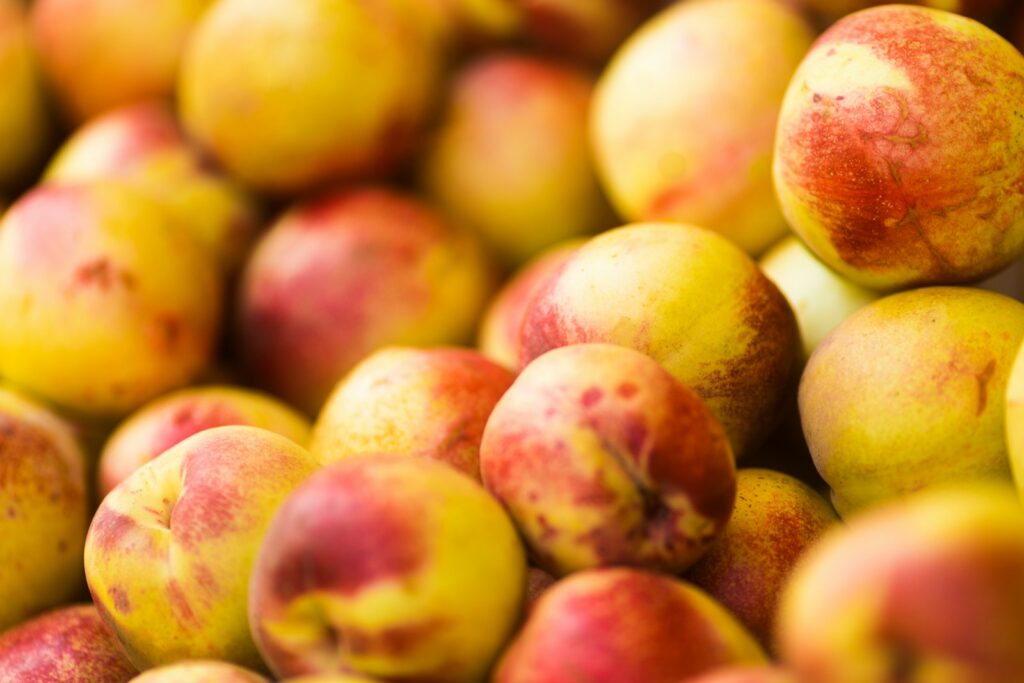
bunch of peach fruits
Blog, Arborist & Tree Health

How do you fertilize fruit trees in Texas?

In short: Fertilize most fruit trees in Texas between late February and mid-March, before bud break. Use a nitrogen-dominant fertilizer in early spring and switch to a phosphorus-potassium formula in mid-summer. Soil pH above 7.0 — the norm across Central Texas — suppresses iron, zinc, and manganese uptake, so micronutrient supplementation is often more important than NPK rates alone. Why Texas Soil and Climate Change Everything About Fruit Tree Fertilization Fertilizing a fruit tree in Austin is not the same as fertilizing one in California, Georgia, or the Pacific Northwest. The advice you find in most gardening books was written for loamy, moderately acidic soils with mild summers. Texas, particularly Central Texas and the Hill Country, operates on different rules. The dominant soil types in the Austin metro and surrounding areas — alkaline black clay (Houston Black series), shallow limestone-based soils, and caliche-heavy profiles — present three problems that cascade into everything else: These three conditions mean that Texas fruit tree fertilization is not just about adding nutrients. It’s about making nutrients accessible in a hostile soil chemistry environment, at the right time in the tree’s growth cycle. If you’ve ever wondered why your peach tree looks yellow and weak despite fertilizing it faithfully, the answer is almost never “not enough fertilizer.” It’s usually pH-driven micronutrient lockout — a problem that more 10-10-10 cannot fix. What Do N, P, and K Actually Do for Fruit Trees? Every bag of fertilizer carries three numbers representing nitrogen (N), phosphorus (P), and potassium (K) by percentage weight. Understanding what each does — and when fruit trees need more of one versus another — is the foundation of a good fertilization program. Nitrogen (N): The Engine of Vegetative Growth Nitrogen drives the production of chlorophyll, amino acids, and new tissue. In practical terms, it’s what makes a fruit tree push long shoots, produce dark green foliage, and fill out its canopy. For fruit trees, you want nitrogen working hardest in late winter through early spring, when the tree transitions from dormancy into active growth. The risk with nitrogen in Texas is timing. Applying high-nitrogen fertilizer after August encourages a flush of tender new growth that gets hit hard by the first cold snap. In Zone 8b and 9a (where most of Central Texas sits), that can mean real frost damage to young wood — especially on citrus. Phosphorus (P): Root Development and Fruit Set Phosphorus supports root system expansion, flower bud differentiation, and the energy transfer process (ATP) that powers cell division during fruit development. Young transplanted fruit trees and trees moving into their first fruiting years benefit most from phosphorus-forward fertilization. The irony in alkaline Texas soil is that phosphorus is often physically present in decent quantities but chemically unavailable because calcium binds it at high pH. This is why a soil test may show adequate phosphorus levels while a tree displays classic phosphorus deficiency symptoms — purplish leaves, weak root growth, delayed flowering. Potassium (K): Fruit Quality, Drought Resistance, and Disease Defense Potassium governs water regulation within plant cells, the transport of sugars from leaves to fruit, and the tree’s ability to resist fungal pathogens and environmental stress. Higher potassium during the late growing season — July through early September — supports fruit sizing, sugar development, and helps the tree harden off before winter. Texas’s heavy clay soils often have reasonable base potassium levels, but sandy soils in the eastern Blackland Prairies or around San Marcos can be potassium-deficient. A soil test is the only reliable way to know. Why Micronutrients Matter More in Texas Than Almost Anywhere Else This is the section that most fertilization guides skip. In Texas, it may be the most important one. Iron Chlorosis: The Most Visible Problem in Central Texas Fruit Trees Iron chlorosis is so common in Austin-area fruit trees that many homeowners assume yellowing leaves between green veins are just how their tree looks. They’re not. Interveinal chlorosis — where leaf tissue turns yellow while veins stay green — is the signature of iron deficiency, and it’s almost always caused by high-pH soil, not by absence of iron in the ground. At pH 7.5 and above, iron converts to ferric oxide compounds that roots cannot absorb. The fix is not to add more iron — it’s to add chelated iron (EDTA or EDDHA chelates) that remains plant-available in alkaline conditions, and ideally to address soil pH long-term through sulfur applications. This process is closely tied to overall tree fertilization management and benefits from professional assessment. Zinc Deficiency: Small Leaves, Poor Fruit Set Zinc deficiency in Texas fruit trees manifests as small, misshapen leaves, shortened internodes (the tree looks bunched and compact), and poor pollination and fruit set. Peaches, pecans, and citrus are especially susceptible. Like iron, zinc becomes insoluble above pH 7.0. Foliar zinc sulfate applications provide faster correction than soil applications in heavily alkaline conditions. Manganese: Reduced in Wet Springs, Critical for Photosynthesis Manganese is involved in chlorophyll synthesis and enzyme activation. Its deficiency looks similar to iron chlorosis but typically appears first on younger leaves rather than older ones — a useful diagnostic distinction. Texas’s alkaline soils suppress manganese availability as reliably as they do iron. Magnesium: Often Leached, Rarely Replaced Magnesium is the central atom in the chlorophyll molecule. When it’s deficient — common in sandy Texas soils or after heavy rainfall seasons — older leaves yellow starting at the edges while the center stays green. Epsom salt (magnesium sulfate) dissolved in water and applied as a drench or foliar spray is an inexpensive, fast-acting correction. When Should You Fertilize Fruit Trees in Texas? (Month-by-Month) The Texas growing calendar does not match the national gardening calendar. Here is how fertilization timing actually breaks down across the Central Texas and Austin region: Month What to Do Why January–early February Hold. Trees are dormant. No fertilizer. Fertilizing dormant trees wastes inputs and risks stimulating early growth vulnerable to late freezes. Late February–March First application: nitrogen-forward fertilizer (e.g. 8-2-4 or 10-6-4). Apply before

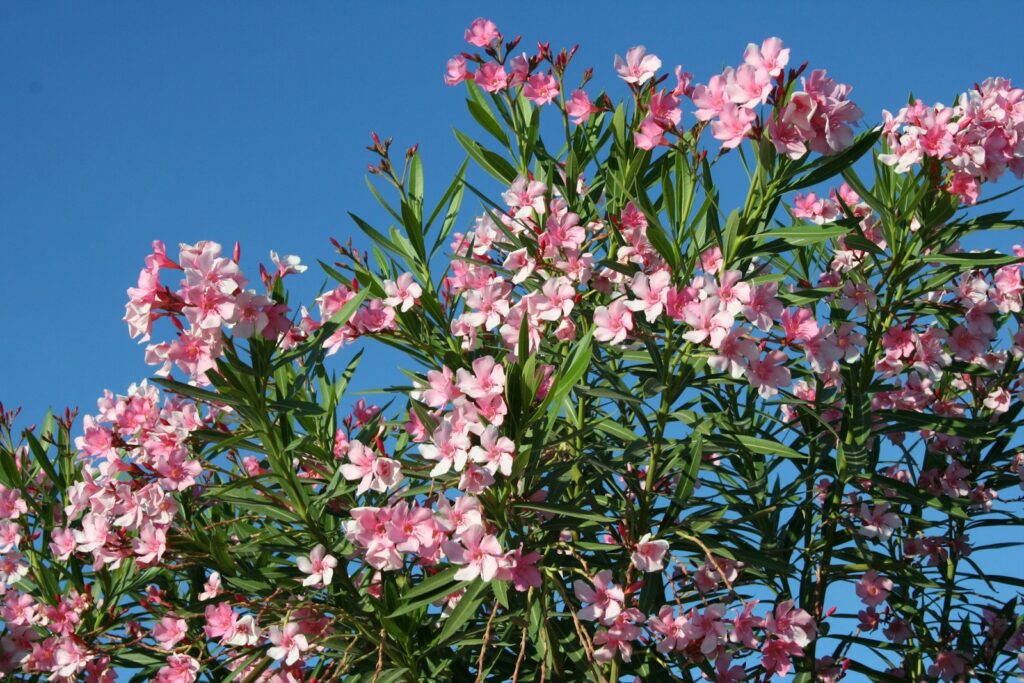
pink and white flowers under blue sky during daytime
Blog, Arborist & Tree Health

What is the best fertilizer for shrubs in Texas?

The best fertilizer for shrubs in Texas is not a single product — it depends on the shrub species, your soil’s pH, and which part of Texas you’re in. Most Austin-area soils are alkaline with pH levels between 7.5 and 8.5, which means standard balanced fertilizers like 10-10-10 often fail to deliver the results the label promises. Before you spend money on fertilizer, you need to understand why Texas soil works against you — and how to work with it. This guide covers every dimension of shrub fertilization in Texas: soil chemistry, NPK ratios, the specific shrubs most commonly planted in Central Texas landscapes, organic versus synthetic options, timing, application rates, and the signs that tell you something has gone wrong. If you want to skip to a specific section, use the headings below. Why Texas Soil Changes Everything About Shrub Fertilization Texas has more soil diversity than most states. In Central Texas and the Austin metro area, the dominant soil profile is alkaline clay over limestone — known locally as “caliche.” This high-pH environment causes a chemical reaction called nutrient lockout: even when fertilizer is present in the soil, the alkaline chemistry binds iron, manganese, and zinc into forms the shrub’s roots cannot absorb. This is why so many Texas homeowners fertilize their shrubs every season and still see yellowing leaves. The problem is rarely a lack of fertilizer — it’s nutrient availability at the wrong pH. Lowering soil pH through acidifying amendments is often more impactful than adding more NPK. In East Texas, soils shift to acidic sandy loam. In West Texas, you’re dealing with dry, nutrient-poor desert soils. In the Hill Country, shallow rocky soil drains so fast that water-soluble fertilizers leach away before roots can absorb them. None of these conditions respond the same way to the same product. If you haven’t done a soil test in the last two to three years, that is the single most important step before you buy any fertilizer. Texas A&M AgriLife Extension offers soil testing for under $20, and the results will tell you your pH, nutrient levels, and organic matter content — the three numbers that actually determine what your shrubs need. NPK Ratios: What the Numbers on the Bag Actually Mean for Shrubs Fertilizer bags display three numbers — nitrogen (N), phosphorus (P), and potassium (K) — as a ratio of their percentage by weight. A bag labeled 10-10-10 contains 10% nitrogen, 10% phosphorus, and 10% potassium. Understanding what each nutrient does helps you choose the right ratio for your shrubs’ current growth stage and condition. Nitrogen and Shrub Foliage Nitrogen drives leaf and stem growth. It is the nutrient most responsible for the deep green color in healthy foliage. Shrubs that look pale green or yellow, are producing fewer leaves than usual, or have slowed their growth significantly are usually nitrogen-deficient. However, too much nitrogen in alkaline Texas soils leaches quickly and can push excessive leafy growth at the expense of root development and flowering. Phosphorus and Root Development Phosphorus supports root development and flowering. It is most critical in the first year after planting when shrubs need to establish a strong root system. In most Texas soils — particularly in the Austin area — phosphorus is naturally sufficient or even elevated, meaning you often do not need to add it. A soil test will confirm this. Applying unnecessary phosphorus in clay-heavy soils contributes to runoff and does not benefit your shrubs. Potassium and Stress Resistance Potassium helps shrubs manage heat stress, drought, and disease resistance. In a state with 100°F summers and periodic drought, potassium is arguably the most important nutrient for long-term shrub survival in Texas. Shrubs with adequate potassium hold up better through the brutal July-August heat window and recover faster from dry spells. What NPK Ratio Is Best for Texas Shrubs? For established shrubs in alkaline Central Texas soils, a fertilizer with a higher nitrogen-to-phosphorus ratio and elevated potassium tends to perform best. A formulation like 16-4-8 or 15-5-10 is more appropriate than a balanced 10-10-10 for most Austin-area shrubs because it reflects what the soil actually lacks. If your soil test shows adequate phosphorus — which is common in Texas — avoid high-phosphorus fertilizers entirely. For acid-loving shrubs like azaleas and gardenias, use a fertilizer specifically formulated for acid-loving plants. These products contain ammonium-based nitrogen sources that acidify the soil slightly as they break down, gradually lowering pH around the root zone. The Most Common Shrubs in Texas and Their Specific Fertilizer Needs Not all shrubs have the same nutritional requirements. Treating every shrub in your landscape identically is one of the most common fertilization mistakes Texas homeowners make. Here are the most frequently planted shrubs in Central Texas and what each one actually needs. Texas Sage (Leucophyllum frutescens) Texas sage — also called cenizo or purple sage — is a native shrub that evolved in the alkaline, nutrient-poor soils of the Chihuahuan Desert. It actively dislikes rich fertilizer. Over-fertilizing Texas sage produces leggy, floppy growth and significantly reduces flowering. If you must fertilize it, apply a light application of a low-nitrogen, balanced fertilizer once in early spring — and only if the shrub appears stressed. Most healthy Texas sage in native soil needs no supplemental fertilizer at all. Indian Hawthorn (Rhaphiolepis indica) Indian hawthorn is one of the most commonly planted landscape shrubs in Austin and the surrounding suburbs. It tolerates alkaline soil reasonably well but benefits from an annual application of a slow-release fertilizer in early spring. A 15-5-10 or similar formulation applied at the base — not against the stem — promotes healthy foliage and flowering. Indian hawthorn is susceptible to Entomosporium leaf spot disease, and over-fertilizing with nitrogen can worsen disease pressure by pushing tender growth that the fungus colonizes easily. Loropetalum (Loropetalum chinense) Loropetalum, with its burgundy-purple foliage and hot-pink fringe flowers, has become one of the most popular shrubs in Texas landscapes. It prefers slightly acidic soil but is planted in Austin’s alkaline clay

fertilizing trees in texas
Blog, Arborist & Tree Health

How Do You Fertilize Trees In Texas?

Fertilizing a tree in Texas is not the same as fertilizing a tree anywhere else in the country. The soil chemistry is different. The heat behavior is different. The drought cycles are different. And the trees that grow here — live oaks, cedar elms, pecans, Texas ash — have adapted to lean conditions that most fertilization advice from national sources completely ignores. Most Texas homeowners either fertilize too much, at the wrong time, with the wrong formula — or they skip fertilization entirely because the tree “looks fine.” Both approaches cost trees their health over time, and in some cases, they accelerate decline in ways that only become visible years later. This guide covers how fertilization actually works in the Texas environment: what your soil is doing, what your tree is signaling, which nutrients matter and which ones cause harm, and how to apply fertilizer in a way that supports long-term structural health rather than triggering a short-term flush of growth that weakens the tree. Why Texas Trees Have Different Fertilization Needs Than Trees in Other States Texas soils are predominantly alkaline. Across the Hill Country, Austin, and the Central Texas corridor, limestone-derived soils push pH levels above 7.5 — often reaching 8.0 or higher. At that pH range, critical micronutrients like iron, manganese, and zinc become chemically locked in the soil. They are physically present, but in forms the tree cannot absorb through its roots. This is the reason you see chlorosis — yellowing between leaf veins — on otherwise healthy-looking live oaks and red oaks throughout Austin neighborhoods. The tree is not iron-deficient because the soil lacks iron. It is iron-deficient because the soil’s alkalinity has converted available iron into insoluble compounds that root hairs cannot take up. In East Texas, the dynamic reverses. Sandy, acidic soils drain quickly, leach nitrogen rapidly, and create genuine deficiencies in phosphorus and potassium. A fertilizer formula appropriate for a live oak growing on caliche in Cedar Park would be entirely wrong for a loblolly pine growing in sandy loam near San Marcos. The other factor that separates Texas tree fertilization from standard advice is the climate stress cycle. Texas trees regularly experience summer temperatures above 100°F combined with extended drought. Under those conditions, trees shift into a defensive metabolic mode — they slow growth, reduce water uptake, and prioritize root function over canopy expansion. Applying nitrogen-heavy fertilizer during this stress window pushes the tree to produce new leaf tissue at exactly the moment it has the least capacity to support it. That new growth is weak, vulnerable to insects, and increases the tree’s overall water demand during the season when water is most scarce. Understanding these Texas-specific dynamics is the foundation of effective fertilization. Everything else — timing, formula, application method — follows from this baseline understanding of soil chemistry and seasonal stress patterns. If you want to understand how summer heat affects tree health beyond just fertilization, that broader physiological picture matters here too. What Nutrients Do Trees in Texas Actually Need? Trees require 17 essential nutrients for healthy growth. Three are provided by air and water — carbon, hydrogen, and oxygen. The remaining 14 must come from the soil, and their availability in Texas soils varies significantly by location. Macronutrients: Nitrogen, Phosphorus, and Potassium (N-P-K) Nitrogen drives vegetative growth — leaf size, canopy density, and shoot elongation. It is the nutrient most rapidly depleted from Texas soils because it leaches downward with rainfall and irrigation. However, nitrogen is also the nutrient most commonly over-applied by homeowners and lawn care companies, and excess nitrogen in mature trees creates more problems than it solves. Rapid, forced growth from high-nitrogen applications produces structurally weak wood with wider growth rings and lower density — wood that is more susceptible to wind failure and branch breakage. Phosphorus supports root development and flowering. Texas soils, particularly those with high calcium carbonate content from limestone, tend to fix phosphorus in forms that are unavailable to trees. The soil may test high in total phosphorus while being functionally phosphorus-deficient. Mycorrhizal fungi — naturally present in healthy, undisturbed soils — are the most effective mechanism for improving phosphorus uptake in alkaline Texas soils, which is why soil disturbance from construction and landscaping so dramatically affects tree health. Potassium regulates water movement within the tree’s vascular system. It strengthens cell walls and improves drought tolerance — a critical function for trees growing in the Texas climate. Potassium deficiency appears as leaf edge scorch, particularly on the older leaves toward the interior of the canopy. In sandy soils, potassium leaches rapidly and must be replenished more frequently. Secondary Macronutrients: Calcium, Magnesium, and Sulfur Calcium is abundant in Texas soils — often excessively so. The high calcium content from limestone dissolution is precisely what drives the alkaline pH that locks out other nutrients. Calcium itself is rarely deficient, but its excess indirectly causes widespread micronutrient deficiencies. Magnesium is a component of chlorophyll — the molecule responsible for photosynthesis. Magnesium deficiency causes interveinal chlorosis, particularly on older leaves, and is sometimes confused with iron deficiency. In Texas, elevated calcium levels can competitively displace magnesium uptake even when soil magnesium levels appear adequate. Sulfur, often overlooked, plays a role in protein synthesis and helps acidify the root zone in alkaline soils. Sulfur-containing fertilizers — elemental sulfur, ammonium sulfate — can temporarily lower soil pH around the root zone and improve micronutrient availability. This is why some arborists recommend sulfur applications as part of iron chlorosis management programs in Central Texas. Micronutrients: The Ones Texas Soils Actually Need More Of Iron, manganese, and zinc are the three micronutrients most consistently deficient in Central Texas trees — not because the soils lack them in total quantity, but because alkaline pH converts them to chemically unavailable forms. Iron deficiency produces the classic interveinal chlorosis of live oaks and red oaks — a yellowing of leaf tissue between the veins, while the veins themselves remain green. Severe iron deficiency causes stunted new growth, twig dieback, and

Scroll to Top