Blog

Tree Planting, Blog

Challenges of Planting Trees in Texas — And How to Actually Overcome Them

Planting a tree in Texas sounds simple. You dig a hole, drop in a sapling, water it, and walk away. Except that approach fails constantly here — and it fails for reasons that most generic planting guides never warn you about. The soil beneath an Austin subdivision is not like the soil in Missouri or North Carolina. The heat in July is not like heat anywhere else in the continental United States. The droughts don’t just reduce rainfall — they crack the ground, shift clay layers, and suffocate root systems that haven’t had time to establish. This guide covers every significant challenge you will face when planting trees in Texas, what causes each one at a biological and geological level, and what you can actually do about it. Why Tree Planting in Texas Is Genuinely Different From Anywhere Else Texas sits at the crossroads of five distinct ecological zones. The Hill Country around Austin transitions between the Balcones Escarpment and the Edwards Plateau. The Blackland Prairie — which runs through Georgetown, Round Rock, and Pflugerville — holds some of the heaviest, most expansive clay soils in North America. East Texas is humid and sandy. West Texas is arid and caliche-hardened. South Texas is subtropical. No single tree-planting strategy works across all of them, and yet the advice most homeowners encounter treats “Texas” as a monolith. Understanding the specific challenges in your part of the state is the first requirement for any successful planting. A Shumard Oak planted correctly in Cedar Park clay soil behaves completely differently from one planted in the sandy loam of the Lost Pines region near Bastrop. The factors that determine whether a tree thrives or fails are almost entirely location-specific, and that specificity is what this article focuses on. Challenge 1: Soil Type — The Problem Most People Don’t Diagnose Until It’s Too Late Soil is where tree failure in Texas most often begins, and it almost never begins for the reason homeowners assume. It is rarely about nutrients alone. The real issue is soil structure, drainage behavior, and what happens to that structure under stress. Blackland Prairie Clay and the Shrink-Swell Cycle Homeowners in Round Rock, Georgetown, Pflugerville, and much of the greater Austin metro are planting into Blackland Prairie clay — a dark, heavy montmorillonite clay that expands dramatically when wet and contracts with equal force when dry. This shrink-swell behavior is extreme enough that it regularly cracks foundations and buckles sidewalks. For trees, what it means is this: when summer heat dries the top 18 inches of soil, the clay around a newly planted tree’s root ball physically pulls away from it. The root-to-soil contact that a young tree depends on for water and nutrient uptake gets mechanically broken before the root system has had a chance to colonize the surrounding soil. A tree planted in April in Blackland clay may look fine through June. By late July, it begins dropping leaves. By August, it looks dead. Homeowners assume it dried out — and they are partially right. But the mechanism is not just dryness. It is root disruption caused by soil contraction pulling away from a root ball that was never given enough time to establish lateral spread. Watering more at that point sometimes helps and sometimes accelerates rot at the crown if the watering pattern floods the base rather than encouraging deep percolation. Caliche Layers in the Hill Country and Western Suburbs West of Austin — in Bee Cave, Lakeway, Lago Vista, and out toward Leander and Liberty Hill — the dominant subsurface obstacle is caliche. Caliche is a naturally cemented layer of calcium carbonate that forms between 8 and 30 inches below the surface in areas with low rainfall and high evaporation rates. It ranges from a soft, powdery accumulation to a rock-hard hardpan that a standard shovel will not penetrate. The problem caliche creates for trees is not just physical resistance to root growth — it is a drainage trap. Water percolates down through the topsoil, hits the caliche layer, and pools. That pooling creates an anaerobic zone around the lower root system that promotes root rot, even in what appears to be a dry climate. Trees planted in caliche soils without breaking through the layer or creating drainage channels will often develop root rot in their first or second year despite showing heat stress symptoms above ground — a confusing combination that leads to incorrect diagnosis and wrong treatments. Breaking through a caliche layer requires a rented jackhammer or a landscaping auger with a hardened bit. Some arborists refer to this as “chimney drilling” — drilling multiple vertical channels through the caliche around the planting hole so water has an escape route. Without this step, even the most drought-tolerant species can fail. What Soil Preparation Actually Looks Like Proper soil preparation in Texas is not just adding compost to the backfill. It begins with a soil test — a real one from a Texas A&M AgriLife Extension lab, not a big-box store kit — which tells you the pH, the organic matter percentage, the clay percentage, and the CEC (cation exchange capacity). In Blackland clay, pH is often 7.8 to 8.2, which means phosphorus and iron are chemically unavailable to most trees even when physically present in the soil. Amending for pH takes time and consistency, not one application of sulfur. For clay soils, the most effective structural amendment is expanded shale, which is permanently angular and does not compact or decompose like organic matter does. Mixing 25–30% expanded shale by volume into backfill clay dramatically improves aeration and drainage without creating a drainage pocket (which happens when you mix in too much sand — a common and damaging mistake). Challenge 2: Water — Scarcity, Restrictions, and the Establishment Period Water is the most discussed challenge in Texas tree planting, but it is also the most misunderstood. The conversation usually centers on drought — and drought is real — but the water challenge is actually more nuanced.
Tree Planting, Blog

Benefits of community tree planting initiatives in Texas?

Texas plants trees differently than anywhere else in the country — and it has to. With summer temperatures regularly exceeding 105°F in Central Texas, rocky alkaline soils that challenge even drought-tolerant species, and urban development that keeps replacing shade with pavement, community tree planting here is less of a beautification effort and more of a functional infrastructure decision. The benefits are real, measurable, and in many cases irreplaceable by any other intervention. But they only materialize when the right species go into the ground at the right time, with the community commitment to keep them alive past the critical first two years. This guide covers what community tree planting programs in Texas actually achieve — environmentally, economically, and socially — and what separates the initiatives that build lasting urban forests from the ones that plant a hundred saplings and watch most of them die by August. Environmental Benefits of Community Tree Planting in Texas The environmental return on community tree planting in Texas is disproportionately high compared to most other states. That’s because Texas cities are starting from a significant deficit: Austin, Dallas, San Antonio, and Houston all have tree canopy coverage well below what urban forestry researchers consider the functional minimum for meaningful ecological services. Every healthy tree added through a community initiative fills a gap that genuinely matters. Air Quality Improvement in Texas Urban Areas Trees improve air quality through two distinct mechanisms that are both especially relevant in Texas cities. First, they absorb gaseous pollutants — carbon dioxide, sulfur dioxide, nitrogen dioxide, and ground-level ozone — through their stomata during photosynthesis. Second, they intercept airborne particulate matter on leaf surfaces, including PM2.5 particles that penetrate deep into lung tissue. In a city like Austin, where traffic-related nitrogen oxide emissions and summer ozone concentrations regularly approach unhealthy thresholds, a denser urban canopy provides measurable public health value. The species selection matters enormously for air quality outcomes. Live Oak (Quercus fusiformis), Texas Ash (Fraxinus texensis), and Cedar Elm (Ulmus crassifolia) are among the most effective canopy trees for Texas urban environments — large leaf surface area, long-lived, and well-adapted to local soils. Community initiatives that plant smaller ornamental species exclusively deliver a fraction of the air filtration benefit compared to programs that prioritize canopy-scale native trees. Urban Heat Island Reduction The urban heat island effect is not an abstract concern in Central Texas — it is a measurable, deadly phenomenon. Austin’s urban core regularly registers 8–12°F hotter than surrounding rural areas during summer heat events. Paved surfaces and buildings absorb solar radiation during the day and re-radiate it at night, preventing the cooling that natural landscapes experience after sunset. Community tree planting addresses this through two pathways: shading and evapotranspiration. A single mature Live Oak can shade several hundred square feet of ground surface, preventing that surface from becoming a heat radiator. Simultaneously, a healthy tree transpires dozens of gallons of water per day, a process that cools the surrounding air through the same mechanism as evaporative cooling. Neighborhoods in Austin with high canopy coverage — areas like Travis Heights and Tarrytown — consistently record lower ambient temperatures than nearby neighborhoods with sparse tree cover. Community planting programs in underserved areas of Austin, Round Rock, and Georgetown are beginning to close that canopy gap and the temperature gap that comes with it. Stormwater Management and Watershed Protection Texas soils, particularly the expansive clay soils of the Blackland Prairie and the thin rocky soils over the Edwards Plateau limestone, have limited capacity to absorb rainfall quickly. During intense rain events — which are becoming more frequent and severe — unmitigated stormwater runoff causes flooding, erosion, and carries pollutants directly into waterways like Barton Creek, the Colorado River, and the aquifer recharge zones that supply Austin’s drinking water. Trees intercept rainfall at the canopy level, slowing its descent and allowing more water to infiltrate into the soil rather than running off across impervious surfaces. A mature tree can intercept thousands of gallons of rainfall annually. At the neighborhood scale, a community planting program that increases canopy cover by even a few percentage points meaningfully reduces peak stormwater runoff volume. This is why organizations like TreeFolks — Austin’s primary nonprofit community tree planting organization — specifically prioritize riparian corridor plantings along Austin’s creeks, where the stormwater management benefit compounds with habitat and water quality outcomes. Biodiversity and Native Habitat Support Texas has one of the highest levels of biodiversity of any U.S. state, and community tree planting initiatives that use native species directly support that biodiversity within urban and suburban areas. Native trees provide food and nesting resources for species that have co-evolved with them over thousands of years — resources that non-native ornamental species simply cannot replicate. Texas Redbud (Cercis canadensis var. texensis) provides critical early-spring nectar for native bees emerging from winter dormancy. Pecan (Carya illinoinensis), Texas’s state tree, supports an enormous range of wildlife from songbirds to squirrels to the declining populations of native pollinators. Bald Cypress (Taxodium distichum), planted along Austin’s riparian corridors through community initiatives, provides nesting habitat and contributes to the aquatic ecosystem health of creeks and rivers. When community programs choose native species intentionally, tree planting becomes biodiversity restoration at a neighborhood scale. This is one reason why native trees consistently outperform non-native species in Texas community planting programs — not just ecologically, but in survival rates and long-term maintenance costs as well. Carbon Sequestration Over Time Trees sequester carbon in their wood, roots, and the soil around them. A single Live Oak growing in Central Texas will sequester hundreds of pounds of carbon over its lifetime, with sequestration rates accelerating as the tree matures. The cumulative carbon impact of a city-wide community planting initiative — thousands of trees planted over a decade — is a meaningful contribution to municipal carbon reduction goals. Austin’s climate action plan explicitly incorporates urban tree canopy expansion as a carbon sequestration strategy. The city’s goal of 50% canopy coverage citywide depends substantially on community planting programs supplementing what

Tree Planting, Blog

Tree planting regulations in Texas?

Most homeowners assume they can plant any tree, anywhere on their property, at any time. In Texas, that assumption can lead to fines, forced removal orders, and disputes with your city that cost far more than the tree ever would have. Tree planting regulations in Texas are not uniform. They vary by city, by property type, by species, by proximity to utility infrastructure, and — in some places — by trunk diameter alone. This guide covers the actual rules that apply across Texas, with specific attention to Austin’s regulatory framework, which is among the most detailed in the state. Whether you’re planting a single oak in your backyard or managing a multi-tree planting project on commercial land, what follows gives you the factual foundation to do it legally and correctly. Does Texas Have a Statewide Tree Planting Law? Texas does not have a single statewide law that governs every tree planting decision. What Texas has is a patchwork of state statutes, agency programs, municipal codes, and utility regulations — all of which can apply simultaneously depending on where and what you’re planting. At the state level, the Texas A&M Forest Service (TFS) serves as the primary authority on forestry policy. It doesn’t issue individual planting permits to private homeowners, but it establishes programs, publishes approved species lists, and coordinates with municipalities on urban forestry standards. The Texas Department of Transportation (TxDOT) has its own planting regulations governing trees near state highways and rights-of-way. And the Public Utility Commission of Texas (PUCT) works with utility providers to establish clearance standards for trees near power infrastructure. None of these replace city-level ordinances. A homeowner in Austin, Georgetown, or San Marcos is primarily subject to their city’s tree ordinance — not a single state rule. Austin’s Tree Ordinance: The Most Comprehensive in Central Texas Austin operates under one of the most detailed urban forestry frameworks in the state. The City of Austin’s tree regulations are codified primarily in Chapter 25-8 of the Land Development Code, with specific guidance issued through the Development Services Department (DSD) and the Urban Forest Plan. Understanding Austin’s rules matters whether you’re planting a new tree or disturbing the root zone of an existing one. The city regulates both. What Is a “Heritage Tree” Under Austin’s Ordinance? Austin designates certain trees as Heritage Trees, and this status significantly affects what you can do around them — including planting nearby. A tree qualifies as a Heritage Tree based on species and trunk diameter measured at 4.5 feet above ground (DBH — diameter at breast height): Species Minimum DBH for Heritage Status Live Oak, Texas Live Oak 19 inches Shumard Oak, Post Oak, Bur Oak, Texas Ash 19 inches Pecan (Texas State Tree) 19 inches American Elm, Cedar Elm 19 inches Cypress (Bald Cypress, Montezuma Cypress) 19 inches All other protected species Varies — check Austin DSD Why does this matter for planting? Because the Critical Root Zone (CRZ) of a Heritage Tree is legally protected. Any soil disturbance, grading, trenching, or compaction within the CRZ requires approval before work begins — including digging holes to plant new trees nearby. Violating the CRZ of a Heritage Tree without a permit can result in a fine of up to $500 per inch of trunk diameter, applied per day of the violation. Protected Trees: The Category Below Heritage Below Heritage status, Austin also designates “Protected Trees” — generally any tree with a trunk diameter of 8 inches or more (DBH). Removing, pruning, or significantly disturbing a Protected Tree without a permit triggers the same approval process. Planting near them can indirectly affect your compliance if it requires excavation close to the trunk. Practical Note from the Field When we assess a yard for a new planting project, the first thing we check is whether the proposed location falls within the CRZ of any existing tree. Homeowners are often surprised to learn that planting 10 feet from an 80-year-old live oak can still require city notification. The math is simple: CRZ = 1 foot of radius per inch of trunk diameter. A 24-inch live oak has a 24-foot protected radius in every direction. Do You Need a Permit to Plant a Tree in Texas? For most private property owners planting a standard ornamental or shade tree in their backyard, no individual planting permit is required. The regulatory burden falls more heavily on removal than planting. However, several situations do require advance approval or notification before planting: Street Tree Regulations in Austin Austin actively encourages residents to plant trees in the public right-of-way (the strip between the sidewalk and street), but this is regulated, not a free-for-all. The City of Austin’s Right-of-Way Management Division oversees these plantings. Key requirements include: Unapproved street tree plantings can be removed by the city at the homeowner’s expense. If you’re interested in the long-term benefits of strategic tree placement — including shade reduction and energy savings for your home — working within the approved species framework is worth it. Tree Planting Regulations by Property Type in Texas Single-Family Residential Properties On a private residential lot, the regulatory footprint is relatively light for new plantings. The main constraints are: Choosing the right species from the start also matters long-term. Native Texas species adapt better to local soil and weather conditions, require less intervention over time, and are increasingly favored under city programs that offer incentives for native planting. Commercial and Mixed-Use Properties Commercial properties in Austin and most major Texas cities must comply with landscape ordinance requirements tied to their development permit. These typically specify: If a commercial property undergoes renovation that changes impervious cover, the landscape plan may need to be updated and re-approved, which can trigger new planting requirements even on sites that already have mature trees. Rural and Agricultural Land Tree planting on agricultural land in Texas is largely unregulated at the state level. However, participating in USDA conservation programs — such as EQIP (Environmental Quality Incentives Program) or CRP (Conservation Reserve Program) — comes with

Tree Planting, Blog

How can I ensure successful tree planting in different regions of Texas?

Texas is not one place. It is ten ecosystems stacked inside a single state border — and anyone who treats it as one place when planting trees will learn that lesson the hard way, usually by watching a $200 tree die in the ground before it ever gets established. From the humid, acidic forests of East Texas to the caliche-crusted desert soils of West Texas, from the black clay prairies of North Texas to the thin, rocky limestone shelves of the Hill Country, the variables that determine whether a tree lives or dies change dramatically from one county to the next. Rainfall drops from over 50 inches a year near the Louisiana border to fewer than 10 inches near El Paso. Soil pH swings from 4.5 in the Piney Woods to 8.5 in alkaline West Texas calcareous soils. Summer temperatures in the Trans-Pecos regularly exceed 110°F while the Panhandle can reach -20°F in a hard winter. This guide breaks down what it actually takes to plant trees successfully in each distinct region of Texas — not generic advice about digging a wide hole or watering regularly, but region-specific knowledge: which soils you are dealing with, which species survive there, what the real failure points are, and how to work with the land instead of against it. If you are in the Austin metro — Central Texas, Hill Country edge, or the surrounding communities — and want hands-on help selecting and planting the right tree for your specific property conditions, our Austin tree planting services team works with these soils and conditions every day. Understanding Texas Ecological Regions Before You Plant Anything The Texas Parks and Wildlife Department recognizes ten distinct ecological regions in the state. Before you buy a single tree, you need to know which one you are in — because the right species for one region will be dead or struggling in another within two growing seasons. The ten regions are: the Pineywoods, the Gulf Coast Prairies and Marshes, the Post Oak Savanna, the Blackland Prairies, the Cross Timbers, the South Texas Plains, the Edwards Plateau (Hill Country), the Rolling Plains, the High Plains (Llano Estacado), and the Trans-Pecos. Each has a distinct soil profile, rainfall regime, frost pattern, and native tree community that has evolved over thousands of years to fit those exact conditions. The single most common mistake Texas homeowners make is buying a tree based on what looks beautiful at the nursery rather than what is native or adapted to their specific region. A bald cypress planted in West Texas will struggle with alkaline soils and drought. A Mexican white oak planted in East Texas may do fine, but you will be fighting the acid soils when something truly native would thrive with zero inputs. Region fit is not a preference — it is the foundation of the entire enterprise. East Texas: The Pineywoods and Post Oak Savanna What the Soil and Climate Actually Look Like East Texas runs roughly from the Louisiana border west to about the I-45 corridor, encompassing the Pineywoods and transitioning into the Post Oak Savanna. The soils here are dramatically different from the rest of the state: acidic (pH 4.5 to 6.5), sandy to sandy-loam in texture, and relatively low in native fertility compared to the black clay prairies to the west. Rainfall is generous — 40 to 55 inches annually in the deep Pineywoods — but it falls inconsistently, and the sandy soils drain fast, meaning drought stress is still a real factor even in a wet year. Summer humidity is high, which creates conditions for fungal diseases that do not exist in drier parts of the state. Winters are mild but not frost-free; a hard freeze event, while rare, can still damage tropical species. Trees That Succeed in East Texas The native forest community here tells you everything you need to know. Loblolly pine (Pinus taeda), shortleaf pine (Pinus echinata), and longleaf pine (Pinus palustris) dominate the canopy in the true Pineywoods. These are not ornamental choices — they are the correct ecological fit for sandy, acidic soils with consistent rainfall. For deciduous canopy trees, sweetgum (Liquidambar styraciflua), water oak (Quercus nigra), willow oak (Quercus phellos), and southern red oak (Quercus falcata) are all native and highly successful here. American beech (Fagus grandifolia) appears in the most humid, shaded sites in deep East Texas. Tupelo (Nyssa sylvatica) thrives in low-lying wet areas and has stunning fall color. For smaller ornamental or understory trees: dogwood (Cornus florida), possumhaw holly (Ilex decidua), American holly (Ilex opaca), and redbud (Cercis canadensis) are all excellent choices. Planting Challenges Specific to East Texas The fast-draining sandy soils mean newly planted trees need more frequent watering during establishment than the rainfall totals would suggest. Do not assume 45 inches of annual rainfall means your tree is fine — a two-week dry stretch in July will pull moisture out of sandy soil faster than most people expect. Avoid importing calcareous or high-pH soils as fill. If your site has been graded or disturbed, test the pH before planting. Adding lime-rich fill to an acid-soil planting is a recipe for chlorosis. Conversely, do not add sulfur to native East Texas soils — the acid level is often already appropriate for native species. Fungal pathogens like oak wilt are present in East Texas, though less aggressive than in Central Texas. Cotton root rot can affect trees in wetter, poorly-drained conditions. Spacing trees for airflow helps manage fungal pressure in the humid conditions. The Blackland Prairies: North and Central Texas Clay What You Are Dealing With The Blackland Prairie stretches in a sweeping arc from the Red River south through Dallas-Fort Worth, Waco, and into Central Texas near San Antonio. This is arguably the most challenging soil type for tree establishment in the entire state: Houston Black clay, which expands dramatically when wet and shrinks and cracks when dry. These soils are called “shrink-swell clays” and they will move the soil around a tree’s root ball in

Tree Planting, Blog

Factors to consider when selecting trees for planting in Texas?

Most trees planted in Texas don’t fail because of neglect. They fail because the wrong tree was put in the wrong place — a species that couldn’t handle alkaline caliche soil, or a canopy tree planted under a power line, or a moisture-loving species placed in a landscape that receives 30 inches of rain a year and nothing more. Tree selection in Texas is a decision made once that you live with for decades. Getting it right requires understanding how Texas soils, climate zones, water availability, root behavior, and urban conditions interact with the biology of specific tree species. This guide covers every factor that matters — not as a checklist, but as an interconnected system. Because in Texas, soil affects water retention, water availability shapes root architecture, and root architecture determines whether a tree survives a drought or lifts your foundation ten years later. Why Texas Tree Selection Is Harder Than It Looks Texas spans ten distinct ecological regions. The soil chemistry in the Hill Country’s limestone caliche is fundamentally different from the black expansive clay in Austin’s central neighborhoods, which is fundamentally different from the sandy loam east of I-35. No single tree performs optimally across all of these. On top of that, Texas experiences weather extremes that test even well-adapted species: summer temperatures regularly exceeding 105°F, freeze events that can drop temperatures to single digits overnight (as seen in the 2021 winter storm), prolonged droughts that can last two to three years, and intense convective thunderstorms that produce wind gusts capable of toppling structurally compromised trees. When you’re selecting a tree, you’re not just picking a species — you’re predicting how that species will behave under these conditions over the next 20 to 80 years. USDA Hardiness Zone: The Starting Filter, Not the Final Answer Texas covers USDA Plant Hardiness Zones 6a through 9b. Austin and the surrounding Hill Country generally fall in zones 8a to 8b, with average annual minimum temperatures between 10°F and 20°F. But hardiness zone alone tells you only about cold tolerance — it says nothing about heat tolerance, drought tolerance, or soil compatibility. A tree rated for zone 8 may still fail in Austin if it requires acidic soil (pH 5.5–6.5) and your property sits on alkaline limestone-derived soil at pH 7.8 to 8.2. Live Oak (Quercus fusiformis) thrives in exactly that alkaline Hill Country soil. Pin Oak (Quercus palustris), on the other hand, demands acidic conditions — plant it in alkaline soil and it will develop chlorosis within a few years, its leaves turning yellow as the tree fails to absorb iron even when iron is present in the soil. Use hardiness zone as your first filter. Then apply soil chemistry, water availability, and site conditions to narrow your selection down to species that will actually thrive — not just survive. Understanding Texas Soil Types and What They Mean for Tree Selection Soil type may be the single most important factor in Central Texas tree selection. Three soil types dominate the greater Austin area, and each creates different challenges. Expansive Black Clay (Houston Black, Austin Clay) Large portions of Travis, Williamson, and Hays counties contain Vertisol soils — heavy clay soils that shrink dramatically when dry and swell when wet. In a Texas summer, these soils can crack three to four inches wide and several feet deep. When they expand after rain, they create upward soil movement that can damage foundations, sidewalks, and anything with a shallow root system. Trees planted in black clay need root systems that can tolerate wet-dry cycles without becoming structurally unstable. Cedar Elm (Ulmus crassifolia) is one of the most reliable choices — it’s native to Central Texas, tolerates clay soils, and has a root architecture that’s less aggressive than species like Silver Maple or Cottonwood. Bur Oak (Quercus macrocarpa) also performs well, developing a deep taproot in younger years before spreading laterally as the tree matures. If you’re planting near a foundation and your soil is expansive clay, the distance between tree and structure matters enormously. Trees with aggressive lateral roots planted too close to a slab foundation can worsen differential settling during drought. We cover this in detail in our guide on early warning signs of root damage to foundations. Shallow Rocky Limestone Soils (Hill Country Caliche) West of Austin into the Edwards Plateau, soils are often only six to eighteen inches deep before hitting solid limestone bedrock or a caliche hardpan layer — a whitish, calcium carbonate-cemented layer that water and roots penetrate poorly. These soils drain quickly, have low organic matter content, and are strongly alkaline. Species native to this region — Texas Live Oak (Quercus fusiformis), Texas Mountain Laurel (Sophora secundiflora), Plateau Live Oak, Escarpment Black Cherry, and Ashe Juniper — have evolved specifically to anchor in shallow, rocky soils. Their root systems exploit rock fractures for moisture and stability in ways that ornamental or nursery-cultivated species cannot replicate. Planting a non-adapted species in shallow caliche soil is a commitment to years of supplemental irrigation, soil amendment, and likely replacement. When our planting team assesses a site, checking soil depth with a probe before species selection is a standard first step on Hill Country properties. Sandy and Loamy Soils (Eastern Travis County and Beyond) East of Austin’s urban core, soils become lighter, sandier, and more acidic. These drain faster than clay, warm quickly in spring, and allow a broader range of species that struggle in the alkaline Hill Country. Shumard Oak (Quercus shumardii), Post Oak (Quercus stellata), and American Sycamore perform well here where pH is closer to neutral. Soil pH and Nutrient Availability: The Chemistry Behind Tree Health Soil pH governs which nutrients a tree can absorb regardless of what’s chemically present in the soil. At pH levels above 7.5, iron, manganese, and zinc become less soluble and therefore less available to tree roots. This is why iron chlorosis — yellowing of leaves between green veins — is so common in Travis County landscapes. The soil isn’t iron-deficient; the

Blog, Seasonal Tree Care

When is the optimal time for tree planting in Texas?

The optimal time for tree planting in Texas is fall — specifically between late October and late November across most of the state. But that answer only holds if you understand what makes a planting window “optimal” in the first place. Texas spans USDA hardiness zones 6a through 9b, covers over 800 miles from the Panhandle to the Gulf Coast, and experiences soil conditions ranging from shallow rocky limestone caliche to deep Blackland clay. A one-sentence answer will not serve you well here. What determines whether a tree survives its first year is not really about the calendar date. It is about the relationship between soil temperature, air temperature, and the tree’s internal physiology. When those three things align in a way that favors root growth over canopy stress, the tree establishes. When they do not, the tree spends its energy surviving instead of growing — and many do not make it. This guide covers every planting season in Texas, the science behind why timing matters, how species type and form (container, balled-and-burlapped, bare root) affects the optimal window, and what changes you need to make based on where in Texas you are actually planting. Why Timing Matters More Than Most Homeowners Realize When you plant a tree, you are not just putting a plant in the ground. You are asking a living system to redirect nearly all of its biological resources toward one goal: building new roots in unfamiliar soil. This process — called root establishment — is the single most critical phase in a tree’s life, and it is heavily dependent on soil temperature. Root growth in most deciduous and evergreen Texas tree species slows dramatically when soil temperatures drop below 40°F and essentially stops when soil freezes solid. Root growth is most active when soil temperatures sit between 50°F and 70°F. In Texas, that window occurs twice per year — in fall (October through December in Central Texas) and spring (March through April in most regions). These two windows represent the biological sweet spot for establishment. The reason fall outperforms spring in most parts of Texas comes down to what happens after those windows close. A fall-planted tree has 4 to 6 months of cooler weather ahead of it to build its root system quietly, without the metabolic demand of producing new leaves or managing heat stress. A spring-planted tree gets 6 to 8 weeks of decent root-growing conditions before the Texas summer arrives — and Texas summers are exceptionally punishing for trees with undeveloped root systems. Understanding the challenges specific to planting trees in Texas — heat stress, drought cycles, alkaline soils, and caliche layers — helps explain why the establishment phase is so high-stakes in this state compared to more temperate regions. Fall Planting in Texas: The Best Overall Window For most of Texas — including the Austin metro, Central Texas Hill Country, Dallas-Fort Worth, San Antonio, and the surrounding suburban communities — the fall planting window runs from mid-October through late November. In South Texas and along the Gulf Coast, that window extends into December and even January for some species. What the Soil Is Doing in Fall By mid-October in Central Texas, air temperatures have dropped into the 60s and 70s, but soil temperatures at 6-inch depth are typically still in the 65°F to 72°F range. This is critical: the soil has stored months of summer heat and releases it slowly. A newly planted tree placed in that soil can continue building roots actively, even as air temperatures become cooler and the canopy slows down. The tree is essentially banking root mass for free, without needing to spend energy on leaf production or moisture management. By the time the first hard freeze arrives — usually January in Austin, earlier in North Texas — a fall-planted tree can have established 12 to 18 inches of new lateral root growth beyond the original root ball. That is enough to meaningfully anchor the tree and begin tapping soil moisture reserves beyond the planting zone. Best Tree Species to Plant in Texas Fall Species selection matters enormously when timing your planting. The following species perform exceptionally well when planted in fall across Central and North Texas: If you are uncertain which species will perform best in your specific soil and microclimate, consulting a certified arborist before purchasing trees can save you significant time and money. The wrong species in the wrong soil will struggle regardless of planting season. How to Prepare Your Site for Fall Planting Fall planting success depends on site preparation as much as timing. In Central Texas, the two most common soil problems that undermine fall plantings are caliche hardpan and compacted Blackland clay. Both restrict root penetration and limit the drainage that newly planted trees depend on. Dig the planting hole two to three times as wide as the root ball and only as deep as the root ball height — never deeper. The goal is wide lateral space for roots to spread, not a deep pit that risks crown rot. In caliche-heavy soils, breaking through the hardpan layer with a breaker bar or renting a hydraulic auger can dramatically improve long-term survival rates. Amending the backfill soil with the native soil removed from the hole (not compost or topsoil) trains roots to colonize the surrounding soil rather than circling within an enriched “bowl.” Winter Planting in Texas: Underrated and Underused Winter planting is genuinely viable in Texas — more so than most homeowners expect — because Texas winters are mild compared to most of the country. The state does not experience the prolonged frozen ground conditions that make winter planting impractical in northern climates. Below 30°F for extended periods in Austin is unusual; sustained soil freezing is rare. When Winter Planting Makes Sense Winter planting is best suited for bare root trees, which are deciduous trees sold with their roots exposed (no soil attached) during full dormancy. Bare root trees are significantly less expensive than container or balled-and-burlapped specimens, and they

Blog, Tree Planting

9 best tree species to plant in Texas?

Texas is not one climate. It is eight ecosystems stacked side by side — alkaline limestone caliche in the Hill Country, heavy black clay in North Texas, sandy loam in East Texas, hyper-arid desert in the Trans-Pecos, subtropical humidity in the Rio Grande Valley. A tree that thrives in Georgetown can fail completely in Galveston. One that dominates in San Antonio will struggle in Amarillo. That geographic reality is the first thing most tree-planting guides ignore. They hand you a list of species with a paragraph of praise each and send you to the nursery. You pick something that looks beautiful on the tag, plant it in soil it cannot tolerate, and wonder three years later why it never really grew — or why it grew too fast, lifted your foundation, and now needs to come down. This guide is different. For each of the nine species covered here, you will find the actual conditions they require, the problems they create when planted in the wrong spot, how fast they grow, how large they get, what diseases and pests threaten them in Texas specifically, and what kind of ongoing maintenance they demand. The goal is not to sell you on a tree. The goal is to help you choose the right one for your property, your region, and your long-term plans — and then keep it alive and healthy once it is in the ground. Before you read the species profiles below, consider two upstream questions that will determine which trees belong on your shortlist at all: what factors matter most when selecting trees for your specific Texas property, and what mature size is appropriate for your lot. Both will narrow the list considerably. How Texas Soil and Climate Shape Every Tree Decision Central Texas — the area around Austin, Round Rock, Cedar Park, Georgetown, and the surrounding Hill Country — sits on the Edwards Plateau. The soil here is thin, rocky, and extremely alkaline, often with a pH between 7.5 and 8.5. Beneath that thin layer is caliche: a hardened calcium carbonate layer that blocks deep root development and drains poorly when it forms a solid pan. This matters enormously for tree selection. Species that evolved in acidic, deep, loamy soil — pin oaks, sweetgums, many maples — struggle badly here. They grow slowly, show chronic iron chlorosis (yellowing leaves from iron deficiency caused by high pH), and often die before reaching maturity. The Texas Hill Country also sits in USDA Hardiness Zones 8a to 8b, meaning winter lows of 10°F to 20°F are possible. Summer temperatures regularly exceed 105°F. Evapotranspiration rates are extremely high. Periods of drought lasting multiple years — like the 2011 drought, which killed an estimated 300 million trees across Texas — are a documented pattern, not an anomaly. Any tree you plant needs to have genuine drought tolerance, not just marketing-copy drought tolerance. East Texas operates in an entirely different environment: acidic, sandy, loamy soils, higher rainfall, and more forested conditions similar to the American South. North Texas introduces clay-heavy black Vertisol soils that shrink and crack in dry periods and become waterlogged in wet ones. The Coastal Bend deals with salt spray, high humidity, and periodic flooding. Matching the tree to the actual soil and climate conditions where you live — not just “Texas” in general — is the single most important factor in long-term success. Successful tree planting looks different in different Texas regions, and understanding those differences before you buy is non-negotiable. 1. Live Oak (Quercus virginiana) Live Oak is the dominant canopy tree of Central Texas for good reason. It is genuinely adapted to the limestone-based, alkaline soils of the Edwards Plateau. It is evergreen — it does not drop all its leaves in winter, though it does shed and replace them in early spring. Its massive spreading canopy, which can reach 60 to 80 feet wide at maturity, makes it one of the most effective shade trees you can plant in this region, and reducing summer cooling costs through strategic shade placement is one of the strongest financial arguments for planting large-canopy species. Mature size: 40 to 60 feet tall, 60 to 80 feet wide. This is a large tree. Planting it within 20 feet of a foundation, septic system, or utility line is a problem you are setting up for the future. Growth rate: Moderate to fast in good conditions. Established Live Oaks in Central Texas can put on 2 to 3 feet per year in height during active growth phases. Soil requirements: Tolerates the alkaline, rocky, clay-loam soils of the Hill Country better than almost any other large tree. Prefers well-drained sites. Does not tolerate standing water or compacted caliche with no drainage. Critical disease threat — Oak Wilt: This is non-negotiable knowledge for anyone planting a Live Oak in Central Texas. Oak Wilt (Bretziella fagacearum) is a fungal disease that moves through root grafts between neighboring Live Oaks and through sap-feeding beetles that carry fungal spores. It is fatal. It spreads through entire groves. The primary prevention measure is to never prune Live Oaks between February and June, when sap-feeding beetles are most active. All pruning cuts should be immediately sealed with wound paint. If you see a neighbor’s Live Oak dying with wilted, brown leaves still attached, it may be Oak Wilt, and your trees could be at risk through underground root connections. Knowing how to identify early disease symptoms can mean the difference between losing one tree and losing every Live Oak on your property. Root behavior: Live Oak roots are extensive and surface-feeding. They will find irrigation lines, septic fields, and pathways. Monitoring for root-related foundation movement is especially important for Live Oaks planted close to structures. Maintenance needs: Regular structural pruning is important for young Live Oaks to establish good branch architecture. Without early intervention, co-dominant stems (two equally-sized leaders competing for dominance) develop and create weak attachment points that fail in storms. Structural pruning matters most in the first decade.

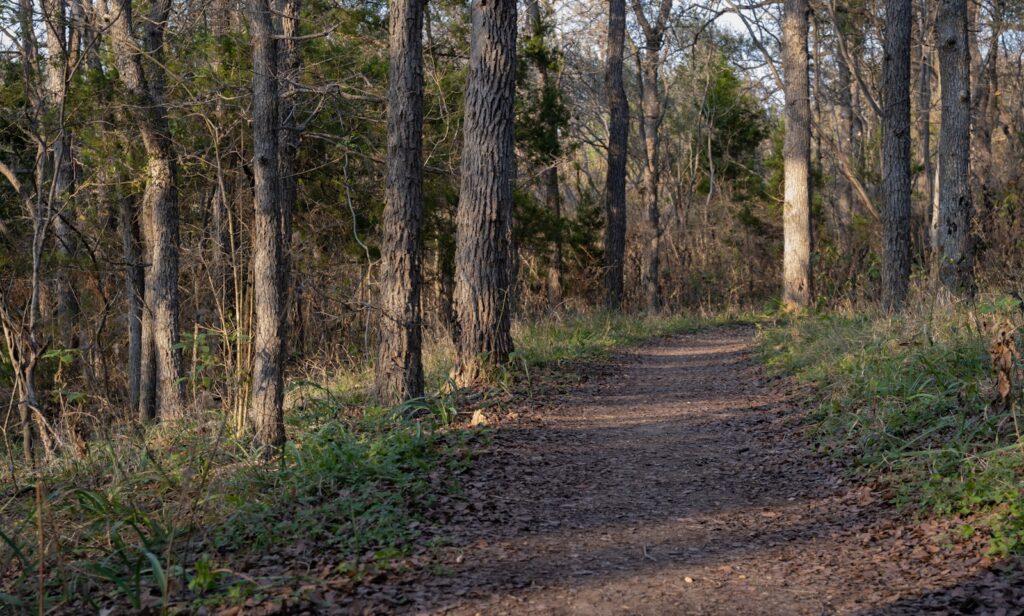
a dirt path in the middle of a forest
Blog

Best Fruit Tree To Grow in Austin Texas?

The best fruit tree to grow in Austin, Texas is the peach tree. Peach trees thrive in the warm climate and well-drained soil of the region, making them a top choice for home gardeners in Austin. Pecan trees are well-suited for Austin, Texas when it comes to nut trees. Pecans thrive in the warm climate and alkaline soils of the region, making them a popular choice for nut tree cultivation. Their delicious and nutritious nuts make them an excellent addition to home gardens in Austin. Austin, Texas, offers an ideal environment for a diverse range of trees, each uniquely suited to the region’s warm climate and well-drained soils. In this guide, we’ll explore ten trees that thrive in Austin, providing homeowners and landscapers with options for creating beautiful and sustainable green spaces. Oak is an excellent choice for Austin landscapes. Thriving in well-drained soils, it provides year-round greenery and contributes to the aesthetic appeal of outdoor spaces. Nestled in the heart of Texas, Austin boasts a climate and soil composition that creates an ideal habitat for a variety of trees. These trees not only contribute to the region’s aesthetic appeal but also play a crucial role in fostering a sustainable and green environment. In this comprehensive guide, we will delve into the unique characteristics of ten trees that thrive in Austin, offering homeowners and landscapers a palette of options to enhance the local scenery. Live Oak (Quercus virginiana) The Live Oak stands as an iconic and enduring symbol of Austin. Characterized by its evergreen foliage and expansive canopy, this majestic tree thrives in the region’s hot and dry conditions. Its resilience makes it a preferred choice for residential yards, public parks, and streetscapes, providing shade and beauty throughout the year. Pecan (Carya illinoinensis) The Pecan tree, renowned for its delectable nuts, holds a special place in the hearts of Austinites. This tree flourishes in Austin’s sunlight-rich environment and well-drained soils. Beyond its aesthetic value, the Pecan tree provides a valuable food source, making it a practical and delightful addition to both urban and rural landscapes. Texas Redbud (Cercis canadensis var. texensis) Adding a burst of color to Austin’s landscape, the Texas Redbud is a captivating ornamental tree. Its vibrant pink or lavender flowers, which grace the branches in spring, contribute to the city’s visual allure. Drought-tolerant and adaptable, the Texas Redbud is an excellent choice for homeowners seeking a tree that combines beauty with resilience. Crepe Myrtle (Lagerstroemia spp.) The Crepe Myrtle is a beloved tree in Austin, celebrated for its enchanting summer blooms that come in a variety of colors. Excelling in the city’s hot climate and well-drained soils, this versatile tree is often chosen for its ornamental value, enhancing gardens, streetscapes, and public spaces with its elegant and vibrant presence. Bald Cypress (Taxodium distichum) The Bald Cypress, a deciduous conifer, offers a distinctive appearance with its feathery foliage. Versatile and adaptable, this tree thrives in both wet and dry conditions, providing Austin with a unique contribution to its diverse urban forestry. Its presence adds a touch of charm and ecological diversity to the local landscape. Mexican Sycamore (Platanus mexicana) The Mexican Sycamore, with its large deciduous stature and appealing foliage, is a prominent tree in the Austin landscape. Tolerant of the region’s heat and drought, this tree not only contributes to the visual aesthetics of parks and neighborhoods but also stands as a resilient symbol of the city’s commitment to sustainable landscaping practices. Chinquapin Oak (Quercus muehlenbergii) Drought-tolerant and adorned with distinctive leaves, the Chinquapin Oak is a resilient oak species well-suited for Austin’s alkaline soils. Its elegant appearance and adaptability make it a popular choice, adding both beauty and ecological significance to the city’s green spaces. Chinese Pistache (Pistacia chinensis) The Chinese Pistache stands out for its breathtaking fall foliage, painting Austin’s autumn landscape with vibrant hues. Adaptable to warm climates and alkaline soils, this deciduous tree offers not only visual appeal but also a seasonal spectacle that enhances the diversity of the city’s urban forestry. Monterrey Oak (Quercus polymorpha) The evergreen Monterrey Oak graces Austin with glossy leaves, contributing to the city’s year-round greenery. Thriving in well-drained soils, this oak variety not only provides shade and aesthetic appeal but also symbolizes the enduring nature of Austin’s commitment to preserving its natural beauty. Southern Magnolia (Magnolia grandiflora) Closing our list is the Southern Magnolia, an evergreen tree that adorns Austin with large, fragrant white flowers. Flourishing in Austin’s climate, this magnolia species offers year-round interest, providing both visual beauty and a touch of aromatic charm to gardens, parks, and residential areas. Incorporating these diverse trees into Austin’s landscape not only adds to its visual splendor but also fosters a sense of environmental responsibility. When selecting and planting these trees, considering factors such as soil composition, sunlight exposure, and water requirements ensures their optimal growth and long-lasting contribution to Austin’s rich and diverse urban forestry.

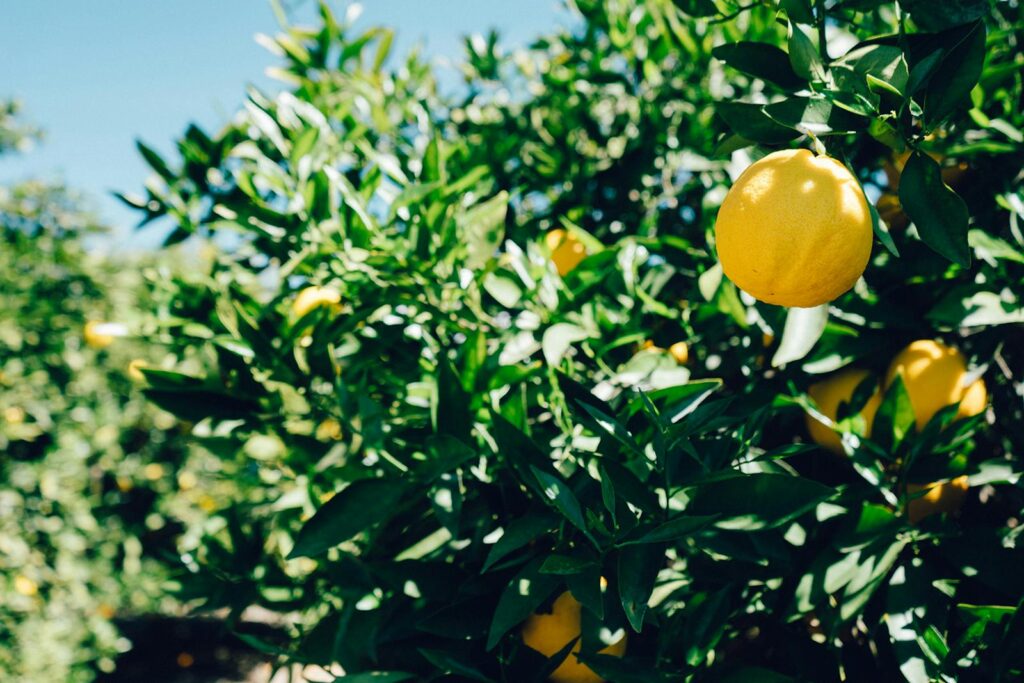
Lemon tree in austin texas
Blog

How Do You Take Care Of A Lemon Tree In Texas?

Lemon trees (Citrus limon) are a popular addition to many Texas gardens, providing not only lush greenery but also a bountiful harvest of refreshing citrus fruits. However, successful cultivation requires careful attention to specific considerations tied to the Texan climate. In this guide, we’ll explore the key steps to ensure your lemon tree thrives in the Lone Star State. Choosing the Right Lemon Tree for Texas When embarking on the journey of growing a lemon tree in Texas, the first crucial step is selecting the right variety. Varieties like Eureka and Lisbon are popular choices for their adaptability to the Texan climate. These lemon trees thrive in well-draining soil, making it essential to consider your garden’s soil type and drainage capacity. If you have heavy clay soil, amend it with organic matter to improve drainage and fertility, creating an ideal environment for your lemon tree to flourish. Planting and Location Timing and location play pivotal roles in ensuring the successful establishment of a lemon tree. Optimal planting time in Texas is during late winter or early spring when the soil is workable. Choose a sunny location for your lemon tree, providing it with a minimum of 8 hours of sunlight daily. Adequate spacing, typically between 12 to 15 feet, is essential to allow for proper light penetration and air circulation, fostering a healthy and productive lemon tree. Soil Preparation and Fertilization Understanding your soil composition is fundamental to providing the best conditions for your lemon tree. Conduct a soil test to determine nutrient levels and acidity. Amend the soil with well-rotted compost or other organic matter to enhance fertility. Lemon trees benefit from a balanced fertilizer with higher nitrogen content, applied in spring and late summer. This promotes lush foliage and supports robust fruit production. Watering Practices Managing water effectively is crucial in the variable Texan climate. Lemon trees prefer consistently moist soil, so regular watering is essential. Deep watering, allowing the soil to absorb moisture at a deeper level, is particularly important during dry spells. Mulching around the base of the tree helps retain soil moisture and regulates temperature. However, it’s crucial to strike a balance, as overwatering can lead to root rot. Pruning and Training Pruning is an art that shapes the growth and development of a lemon tree. Start pruning when the tree is young to encourage a strong and balanced structure. Remove dead or diseased branches, and establish a central leader by training the main trunk upwards. Regular pruning not only enhances the tree’s appearance but also promotes better air circulation, reducing the risk of diseases. Pest and Disease Management Texas is home to a variety of pests that can pose threats to lemon trees, including aphids, scale insects, and spider mites. Implementing natural predators like ladybugs can help control pest populations. Regular inspections for signs of diseases such as citrus canker or greening disease are vital. Prompt intervention, through natural or chemical means, can prevent the spread of diseases and protect the overall health of the lemon tree. Cold Protection Texan winters can be unpredictable, with unexpected frosts posing a threat to lemon trees. Protecting cold snaps by covering young trees with blankets or burlap can mitigate potential damage. Additionally, selecting cold-hardy lemon tree varieties, such as Meyer lemons, adds an extra layer of resilience against harsh winter conditions. Harvesting and Storage Knowing the right time to harvest is crucial for enjoying the fruits of your labor. Ripe lemons exhibit vibrant colors and yield slightly to gentle pressure. Harvest with pruning shears, leaving a small stem attached to the fruit. For short-term use, store freshly picked lemons at room temperature. For a longer shelf life, refrigerate them, ensuring you have a fresh supply of homegrown lemons whenever needed. Conclusion Cultivating a thriving lemon tree in Texas requires attention to detail and an understanding of the unique challenges posed by the climate. By selecting the right variety, providing proper care, and addressing potential issues promptly, you’ll be rewarded with a flourishing lemon tree that brings joy to your garden and delicious citrus to your table. Enjoy the journey of growing citrus bliss in the heart of Texas!

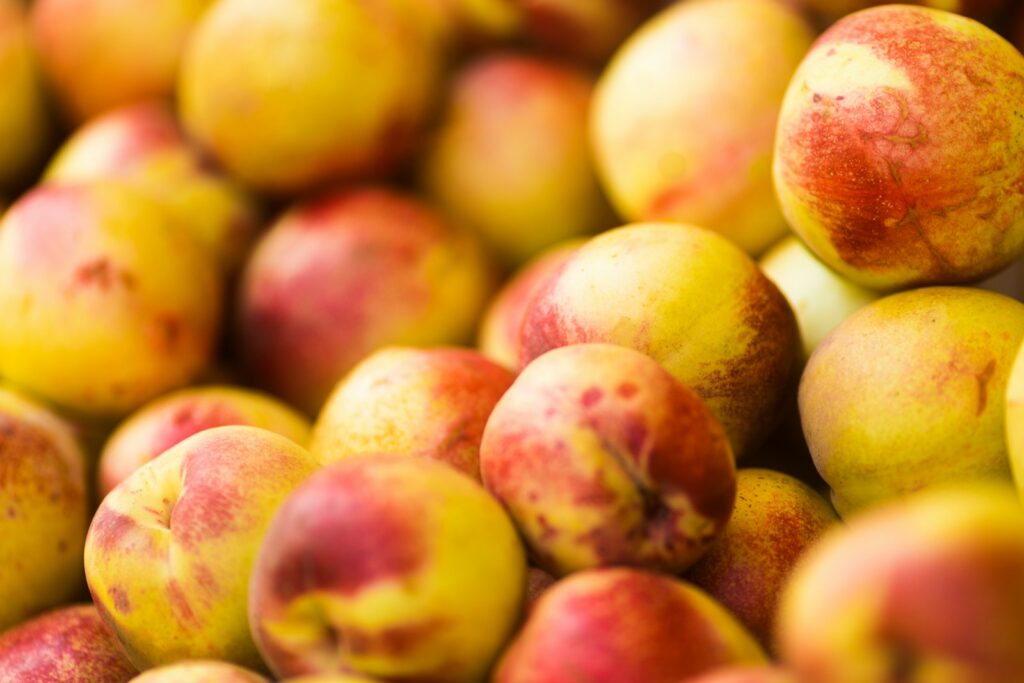
bunch of peach fruits
Blog, Arborist & Tree Health

How do you fertilize fruit trees in Texas?

In short: Fertilize most fruit trees in Texas between late February and mid-March, before bud break. Use a nitrogen-dominant fertilizer in early spring and switch to a phosphorus-potassium formula in mid-summer. Soil pH above 7.0 — the norm across Central Texas — suppresses iron, zinc, and manganese uptake, so micronutrient supplementation is often more important than NPK rates alone. Why Texas Soil and Climate Change Everything About Fruit Tree Fertilization Fertilizing a fruit tree in Austin is not the same as fertilizing one in California, Georgia, or the Pacific Northwest. The advice you find in most gardening books was written for loamy, moderately acidic soils with mild summers. Texas, particularly Central Texas and the Hill Country, operates on different rules. The dominant soil types in the Austin metro and surrounding areas — alkaline black clay (Houston Black series), shallow limestone-based soils, and caliche-heavy profiles — present three problems that cascade into everything else: These three conditions mean that Texas fruit tree fertilization is not just about adding nutrients. It’s about making nutrients accessible in a hostile soil chemistry environment, at the right time in the tree’s growth cycle. If you’ve ever wondered why your peach tree looks yellow and weak despite fertilizing it faithfully, the answer is almost never “not enough fertilizer.” It’s usually pH-driven micronutrient lockout — a problem that more 10-10-10 cannot fix. What Do N, P, and K Actually Do for Fruit Trees? Every bag of fertilizer carries three numbers representing nitrogen (N), phosphorus (P), and potassium (K) by percentage weight. Understanding what each does — and when fruit trees need more of one versus another — is the foundation of a good fertilization program. Nitrogen (N): The Engine of Vegetative Growth Nitrogen drives the production of chlorophyll, amino acids, and new tissue. In practical terms, it’s what makes a fruit tree push long shoots, produce dark green foliage, and fill out its canopy. For fruit trees, you want nitrogen working hardest in late winter through early spring, when the tree transitions from dormancy into active growth. The risk with nitrogen in Texas is timing. Applying high-nitrogen fertilizer after August encourages a flush of tender new growth that gets hit hard by the first cold snap. In Zone 8b and 9a (where most of Central Texas sits), that can mean real frost damage to young wood — especially on citrus. Phosphorus (P): Root Development and Fruit Set Phosphorus supports root system expansion, flower bud differentiation, and the energy transfer process (ATP) that powers cell division during fruit development. Young transplanted fruit trees and trees moving into their first fruiting years benefit most from phosphorus-forward fertilization. The irony in alkaline Texas soil is that phosphorus is often physically present in decent quantities but chemically unavailable because calcium binds it at high pH. This is why a soil test may show adequate phosphorus levels while a tree displays classic phosphorus deficiency symptoms — purplish leaves, weak root growth, delayed flowering. Potassium (K): Fruit Quality, Drought Resistance, and Disease Defense Potassium governs water regulation within plant cells, the transport of sugars from leaves to fruit, and the tree’s ability to resist fungal pathogens and environmental stress. Higher potassium during the late growing season — July through early September — supports fruit sizing, sugar development, and helps the tree harden off before winter. Texas’s heavy clay soils often have reasonable base potassium levels, but sandy soils in the eastern Blackland Prairies or around San Marcos can be potassium-deficient. A soil test is the only reliable way to know. Why Micronutrients Matter More in Texas Than Almost Anywhere Else This is the section that most fertilization guides skip. In Texas, it may be the most important one. Iron Chlorosis: The Most Visible Problem in Central Texas Fruit Trees Iron chlorosis is so common in Austin-area fruit trees that many homeowners assume yellowing leaves between green veins are just how their tree looks. They’re not. Interveinal chlorosis — where leaf tissue turns yellow while veins stay green — is the signature of iron deficiency, and it’s almost always caused by high-pH soil, not by absence of iron in the ground. At pH 7.5 and above, iron converts to ferric oxide compounds that roots cannot absorb. The fix is not to add more iron — it’s to add chelated iron (EDTA or EDDHA chelates) that remains plant-available in alkaline conditions, and ideally to address soil pH long-term through sulfur applications. This process is closely tied to overall tree fertilization management and benefits from professional assessment. Zinc Deficiency: Small Leaves, Poor Fruit Set Zinc deficiency in Texas fruit trees manifests as small, misshapen leaves, shortened internodes (the tree looks bunched and compact), and poor pollination and fruit set. Peaches, pecans, and citrus are especially susceptible. Like iron, zinc becomes insoluble above pH 7.0. Foliar zinc sulfate applications provide faster correction than soil applications in heavily alkaline conditions. Manganese: Reduced in Wet Springs, Critical for Photosynthesis Manganese is involved in chlorophyll synthesis and enzyme activation. Its deficiency looks similar to iron chlorosis but typically appears first on younger leaves rather than older ones — a useful diagnostic distinction. Texas’s alkaline soils suppress manganese availability as reliably as they do iron. Magnesium: Often Leached, Rarely Replaced Magnesium is the central atom in the chlorophyll molecule. When it’s deficient — common in sandy Texas soils or after heavy rainfall seasons — older leaves yellow starting at the edges while the center stays green. Epsom salt (magnesium sulfate) dissolved in water and applied as a drench or foliar spray is an inexpensive, fast-acting correction. When Should You Fertilize Fruit Trees in Texas? (Month-by-Month) The Texas growing calendar does not match the national gardening calendar. Here is how fertilization timing actually breaks down across the Central Texas and Austin region: Month What to Do Why January–early February Hold. Trees are dormant. No fertilizer. Fertilizing dormant trees wastes inputs and risks stimulating early growth vulnerable to late freezes. Late February–March First application: nitrogen-forward fertilizer (e.g. 8-2-4 or 10-6-4). Apply before

5 easiest trees to grow in texas
Blog

5 Easiest Tree To Grow In Texas?

The Live Oak (Quercus virginiana) is often considered the easiest tree to grow in Texas due to its adaptability to various soil types and climates. Known for its resilience and iconic spreading canopy, the Live Oak thrives in the diverse conditions found throughout the state. Texas, with its vast and varied landscapes, demands trees that are not only visually appealing but also capable of thriving in diverse climates and soils. In this comprehensive guide, we’ll explore some of the easiest trees to grow in Texas, shedding light on their characteristics, adaptability, and overall resilience. Live Oak (Quercus virginiana) The Live Oak, scientifically known as Quercus virginiana, stands as a testament to strength and beauty. With its distinctive spreading canopy and evergreen foliage, it adds a touch of majesty to any landscape. Live Oaks are renowned for their adaptability, thriving in a wide range of soil types and climates. Whether in the sandy soils of the coastal areas or the clayey soils further inland, Live Oaks manage to flourish, making them an excellent choice for diverse Texan regions. What sets Live Oaks apart is their resilience to harsh conditions, particularly drought. Once established, these trees require minimal maintenance, making them an ideal choice for those seeking a visually striking yet low-maintenance addition to their landscape. Crape Myrtle (Lagerstroemia spp.) Crape Myrtle trees, belonging to the Lagerstroemia genus, stand out for their vibrant and long-lasting blooms, injecting a burst of color into the Texan scenery. These trees thrive in well-drained soil, making them suitable for the often variable Texan climate. Crape Myrtles exhibit exceptional heat resistance and can endure periods of drought, making them a reliable choice for Texas gardeners. Crape Myrtles are prized for their showy flowers that bloom throughout the summer. The variety of colors and the extended flowering season make them a favorite among Texas residents looking to add a touch of vibrancy to their outdoor spaces. Texas Redbud (Cercis canadensis var. texensis) The Texas Redbud, a variant of the Cercis canadensis species, is a native Texan tree celebrated for its heart-shaped leaves and early spring blossoms. Thriving in well-drained soil and partial shade, the Texas Redbud is adaptable to various Texan landscapes. Its modest size makes it an excellent choice for smaller yards or as an accent tree in larger settings. Beyond its aesthetic appeal, the Texas Redbud provides ornamental value with its attractive seed pods and distinctive heart-shaped leaves. It’s a versatile tree that adds charm to gardens and landscapes. Chinese Pistache (Pistacia chinensis) The Chinese Pistache, scientifically known as Pistacia chinensis, is a deciduous tree known for its stunning fall foliage and overall hardiness. Chinese Pistache trees adapt well to the diverse soil and weather conditions in Texas. They are particularly drought-tolerant once established, making them an ideal choice for xeriscaping projects and water-conscious landscaping. One of the standout features of Chinese Pistache is its vibrant fall foliage, showcasing shades ranging from red to orange. This characteristic makes it a popular choice for those seeking a tree that adds seasonal interest to their landscape. Cedar Elm (Ulmus crassifolia) Cedar Elm, scientifically known as Ulmus crassifolia, is a native Texan tree appreciated for its adaptability and environmental benefits. Cedar Elms are well-known for their resilience to drought, making them a sustainable choice for water-conscious landscaping. They can withstand Texas’ hot and dry climate, proving their hardiness in challenging conditions. Apart from providing shade and beauty, Cedar Elms contribute to biodiversity by supporting various wildlife species. They are suitable for urban landscapes, offering both aesthetic and ecological advantages. Tips for Successful Tree Planting in Texas Before planting, it’s crucial to prepare the soil adequately. Considerations for drainage and soil amendments should be addressed. Planting techniques, such as proper depth and spacing, play a significant role in ensuring the tree’s successful establishment. Watering is a critical factor, especially during the establishment phase. Emphasize deep, infrequent watering to encourage strong root development. Provide maintenance tips, such as pruning and fertilizing, to support the overall health and longevity of the trees. Selecting trees based on their suitability to specific locations is paramount. Factors like sunlight exposure, soil type, and available space should guide the decision-making process. Consider the mature size of the tree to avoid future conflicts with structures or other plants. Conclusion In summary, Live Oak, Crape Myrtle, Texas Redbud, Chinese Pistache, and Cedar Elm emerge as some of the easiest and most resilient trees to grow in the diverse landscapes of Texas. By incorporating these resilient and visually appealing species, individuals can contribute to creating a green and vibrant environment that flourishes in the challenging conditions of Texas. Emphasize the long-term benefits these trees bring to both the aesthetic appeal and ecological balance of the region.

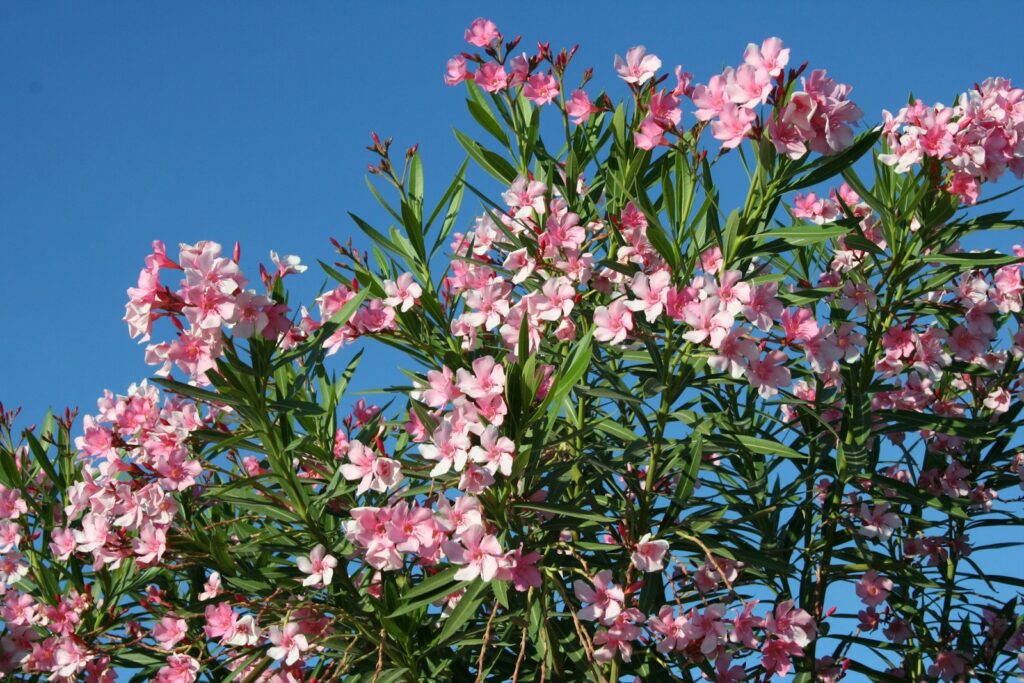
pink and white flowers under blue sky during daytime
Blog, Arborist & Tree Health

What is the best fertilizer for shrubs in Texas?

The best fertilizer for shrubs in Texas is not a single product — it depends on the shrub species, your soil’s pH, and which part of Texas you’re in. Most Austin-area soils are alkaline with pH levels between 7.5 and 8.5, which means standard balanced fertilizers like 10-10-10 often fail to deliver the results the label promises. Before you spend money on fertilizer, you need to understand why Texas soil works against you — and how to work with it. This guide covers every dimension of shrub fertilization in Texas: soil chemistry, NPK ratios, the specific shrubs most commonly planted in Central Texas landscapes, organic versus synthetic options, timing, application rates, and the signs that tell you something has gone wrong. If you want to skip to a specific section, use the headings below. Why Texas Soil Changes Everything About Shrub Fertilization Texas has more soil diversity than most states. In Central Texas and the Austin metro area, the dominant soil profile is alkaline clay over limestone — known locally as “caliche.” This high-pH environment causes a chemical reaction called nutrient lockout: even when fertilizer is present in the soil, the alkaline chemistry binds iron, manganese, and zinc into forms the shrub’s roots cannot absorb. This is why so many Texas homeowners fertilize their shrubs every season and still see yellowing leaves. The problem is rarely a lack of fertilizer — it’s nutrient availability at the wrong pH. Lowering soil pH through acidifying amendments is often more impactful than adding more NPK. In East Texas, soils shift to acidic sandy loam. In West Texas, you’re dealing with dry, nutrient-poor desert soils. In the Hill Country, shallow rocky soil drains so fast that water-soluble fertilizers leach away before roots can absorb them. None of these conditions respond the same way to the same product. If you haven’t done a soil test in the last two to three years, that is the single most important step before you buy any fertilizer. Texas A&M AgriLife Extension offers soil testing for under $20, and the results will tell you your pH, nutrient levels, and organic matter content — the three numbers that actually determine what your shrubs need. NPK Ratios: What the Numbers on the Bag Actually Mean for Shrubs Fertilizer bags display three numbers — nitrogen (N), phosphorus (P), and potassium (K) — as a ratio of their percentage by weight. A bag labeled 10-10-10 contains 10% nitrogen, 10% phosphorus, and 10% potassium. Understanding what each nutrient does helps you choose the right ratio for your shrubs’ current growth stage and condition. Nitrogen and Shrub Foliage Nitrogen drives leaf and stem growth. It is the nutrient most responsible for the deep green color in healthy foliage. Shrubs that look pale green or yellow, are producing fewer leaves than usual, or have slowed their growth significantly are usually nitrogen-deficient. However, too much nitrogen in alkaline Texas soils leaches quickly and can push excessive leafy growth at the expense of root development and flowering. Phosphorus and Root Development Phosphorus supports root development and flowering. It is most critical in the first year after planting when shrubs need to establish a strong root system. In most Texas soils — particularly in the Austin area — phosphorus is naturally sufficient or even elevated, meaning you often do not need to add it. A soil test will confirm this. Applying unnecessary phosphorus in clay-heavy soils contributes to runoff and does not benefit your shrubs. Potassium and Stress Resistance Potassium helps shrubs manage heat stress, drought, and disease resistance. In a state with 100°F summers and periodic drought, potassium is arguably the most important nutrient for long-term shrub survival in Texas. Shrubs with adequate potassium hold up better through the brutal July-August heat window and recover faster from dry spells. What NPK Ratio Is Best for Texas Shrubs? For established shrubs in alkaline Central Texas soils, a fertilizer with a higher nitrogen-to-phosphorus ratio and elevated potassium tends to perform best. A formulation like 16-4-8 or 15-5-10 is more appropriate than a balanced 10-10-10 for most Austin-area shrubs because it reflects what the soil actually lacks. If your soil test shows adequate phosphorus — which is common in Texas — avoid high-phosphorus fertilizers entirely. For acid-loving shrubs like azaleas and gardenias, use a fertilizer specifically formulated for acid-loving plants. These products contain ammonium-based nitrogen sources that acidify the soil slightly as they break down, gradually lowering pH around the root zone. The Most Common Shrubs in Texas and Their Specific Fertilizer Needs Not all shrubs have the same nutritional requirements. Treating every shrub in your landscape identically is one of the most common fertilization mistakes Texas homeowners make. Here are the most frequently planted shrubs in Central Texas and what each one actually needs. Texas Sage (Leucophyllum frutescens) Texas sage — also called cenizo or purple sage — is a native shrub that evolved in the alkaline, nutrient-poor soils of the Chihuahuan Desert. It actively dislikes rich fertilizer. Over-fertilizing Texas sage produces leggy, floppy growth and significantly reduces flowering. If you must fertilize it, apply a light application of a low-nitrogen, balanced fertilizer once in early spring — and only if the shrub appears stressed. Most healthy Texas sage in native soil needs no supplemental fertilizer at all. Indian Hawthorn (Rhaphiolepis indica) Indian hawthorn is one of the most commonly planted landscape shrubs in Austin and the surrounding suburbs. It tolerates alkaline soil reasonably well but benefits from an annual application of a slow-release fertilizer in early spring. A 15-5-10 or similar formulation applied at the base — not against the stem — promotes healthy foliage and flowering. Indian hawthorn is susceptible to Entomosporium leaf spot disease, and over-fertilizing with nitrogen can worsen disease pressure by pushing tender growth that the fungus colonizes easily. Loropetalum (Loropetalum chinense) Loropetalum, with its burgundy-purple foliage and hot-pink fringe flowers, has become one of the most popular shrubs in Texas landscapes. It prefers slightly acidic soil but is planted in Austin’s alkaline clay

Scroll to Top